Food in Hand Luggage: What Gets Through Security — and What You Cannot Bring Home
A sandwich clears every German security lane. A pot of yoghurt does not. And the cheese you bought on holiday may fail at a completely different point — customs on arrival, not the X-ray on departure. Both halves, with the rules they rest on.

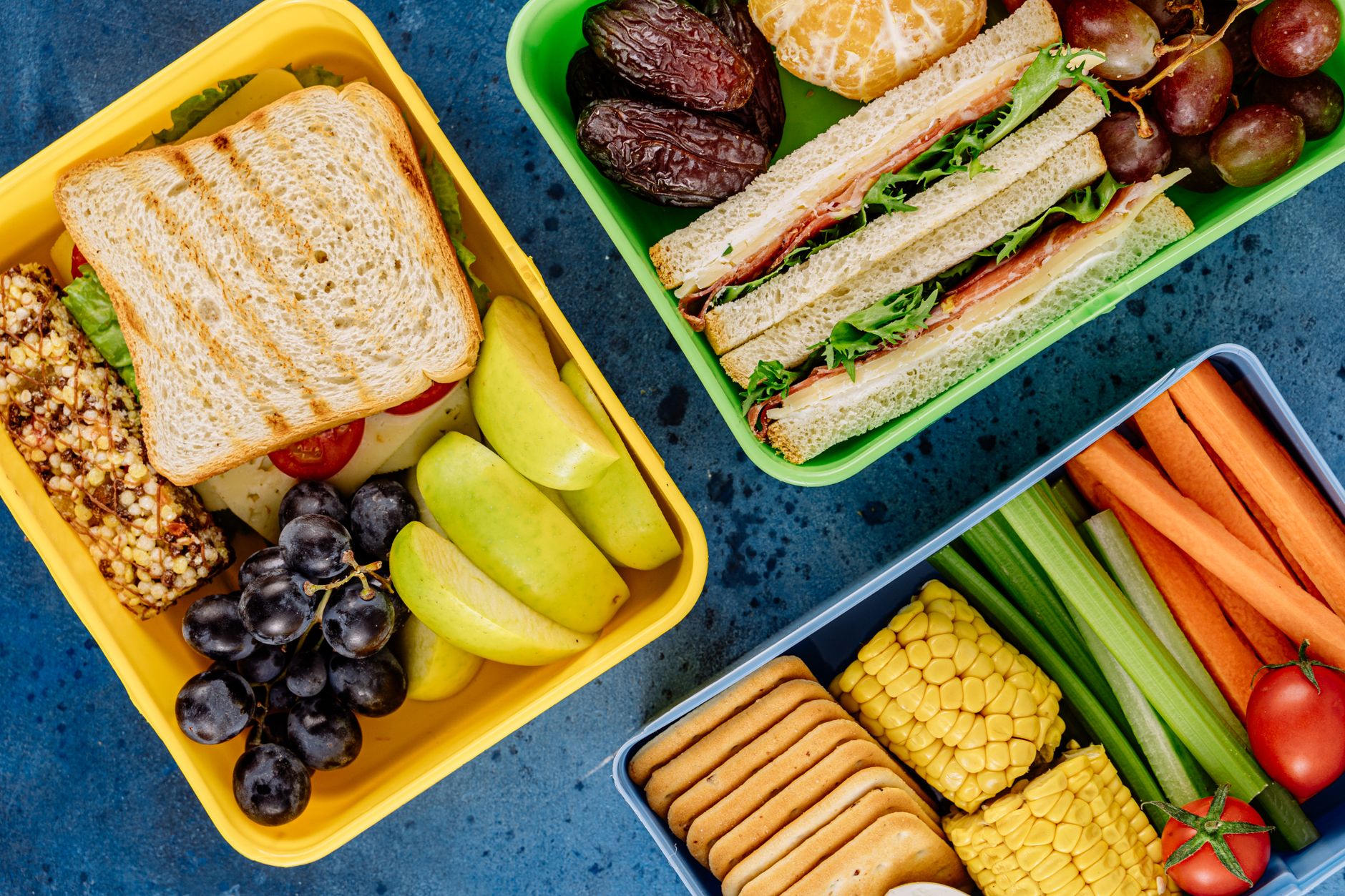
A sandwich clears every German security lane. A pot of yoghurt does not. Everything confusing about food in hand luggage sits between those two sentences, and it resolves with one question: what does the stuff behave like at room temperature?
The second half of the subject is less well known and more expensive. On the way home it is not the federal police deciding, it is customs — and customs does not care whether your cheese is runny. It cares which country it came from.
Where solid food ends and “liquid” begins
Security screening has no category called food. It has liquids, and the definition is broad. The German federal police treat as liquids all substances that at room temperature are runny, viscous, gel-like, creamy or of a similar consistency, naming pastes, lotions, mixtures of liquids and solids, soups and spreads explicitly.
That is the whole trick: consistency decides, not the label on the jar. Honey is not a drink, but it is viscous. Yoghurt is a dairy product, but it is creamy. Staff at the belt judge how the contents behave, not what they are called.
None of this is a German peculiarity. It is a single EU-wide standard — Implementing Regulation (EU) 2015/1998, which replaced the earlier Regulation (EU) No 185/2010 and is applied in Germany through the Aviation Security Act. That is why the rule works the same way in Palma as in Hanover. The limit itself — 100 millilitres per container, one transparent one-litre bag per passenger — is set out with the duty-free exemption and the transfer trap under liquids in hand luggage; this piece is about the part of it that ends up on a plate.
The borderline cases that get stopped at the belt
Once the consistency question sticks, almost everything sorts itself out. These count as liquids and will fail on a conventional lane:
Yoghurt, quark, skyr and kefir. The most common case — the pot looks like food rather than a drink. It goes in the bin anyway.
Soft cheese. Cream cheese, spreadable cheese, cottage cheese, mozzarella in brine and a ripe, oozing camembert all qualify. Hard cheese in a block is solid and entirely fine — parmesan, alpine cheese, a wedge of gouda or manchego travels without anyone asking.
Honey, jam, syrup and chocolate spread. The classics off the holiday shelf, and the reason so many souvenirs end their journey at security.
Soup, stew, hummus, guacamole and tzatziki — including in the plastic tub you brought from home. The tub does not make the contents solid.
Anything gel-like, from custard to jelly — and, less obviously, freezer blocks: gel-filled, and therefore subject to the same limit as shower gel.
What passes without comment is everything that cannot be poured or spread: bread, sandwiches, cake, biscuits, chocolate, nuts, whole fruit, boiled eggs, crisps, cereal bars, dried meat and hard cheese. There is no quantity limit on any of it — only the weight and dimensions of your cabin bag, which several airlines tightened in 2026. And in the grey zone, containers with no printed capacity are vulnerable: a 250-gram box of camembert carries no millilitre marking, and in case of doubt the officer decides.
Baby food: the exemption you can genuinely rely on
There is one real exemption, and it is more generous than most parents expect. Under federal police rules, liquid medicines and dietary special foods — explicitly including baby food — are exempt where they are needed during the journey, and the authority states plainly that no aviation-security quantity limit applies to them in hand luggage. No 100 ml ceiling, no one-litre bag.
Three conditions come attached, and it is the second that catches people out.
It has to be what the journey needs, not the holiday supply. Jars for the flight plus a buffer for delays are unproblematic. A fortnight’s worth for Crete belongs in the checked bag, where no quantity limit applies anyway.
It gets screened separately. Since 31 January 2014 it has been checked with dedicated detection equipment, which means taking it out of the bag before the belt and showing it to staff; jars and bottles can be opened and examined individually. Left at the bottom of a rucksack, they cost you the minutes you have least to spare with a toddler on your hip.
For medicines you have to evidence the need. A prescription or a doctor’s note is enough. For baby food the federal police ask for no document — the quantity still has to be plausible.
The most effective trick skips the exemption altogether: powder is not a liquid. Carry measured formula in a dispenser rather than pre-mixed bottles and security becomes a non-issue.
What the CT scanners change — and what they don’t
On CT lanes — three-dimensional computed tomography rather than a flat X-ray image — more can stay in the bag. Frankfurt is furthest along: the airport states that CT scanners are in use at most checkpoints in Terminal 1 and at all checkpoints in Terminal 3, where liquids up to two litres are permitted with no transparent bag. Explicitly excluded are gates C1, C2, C4 and C6, where the old rule stands at a maximum of 100 millilitres per container inside a one-litre bag (as of 2026).
For food that means something concrete: a 500-gram jar of honey clears a CT lane in Terminal 3. At C4 it does not. And you do not get to pick your lane — which checkpoint you end up at depends on terminal, allocation and queue length. What happens at the checkpoint itself, and how to spot a CT lane, is covered under the airport security checkpoint.
Two litres sounds like a lot, but it changes nothing about the second hurdle: customs on arrival has no interest in which scanner you went through.
Taking food on the plane: what is actually worth packing
Your own food is allowed on board, and on short-haul flights it is often the only way to eat for under five euros. What works: sandwiches and wraps, a wedge of hard cheese, nuts, dried fruit, cereal bars and chocolate. Boiled eggs work technically and fail socially. Add the empty water bottle — it goes through security, and most German airports have drinking fountains beyond it. A bread knife belongs in the hold.
Buy souvenirs solid rather than creamy, or buy them airside. In Frankfurt it is worth a look at the city first — the Frankfurt food and drink guide lists the addresses where apple wine, Grüne Soße and Handkäs actually come from. If you live outside the EU and want the VAT back, the customs stamp has to happen before security; the sequence is under VAT refunds at the airport. And if you are driving in, leave the cool bag in the car until you get out — what a spot near the terminal costs is in the guide to Frankfurt airport parking charges.
The journey home: why cheese and sausage cannot come in at all
Here responsibility changes hands, and most people notice too late. Under Delegated Regulation (EU) 2019/2122, bringing meat and milk, and products made from them, from non-EU countries into the EU in personal luggage is prohibited in principle. Not for tax reasons — for animal disease: pathogens such as foot-and-mouth disease and swine fever survive in meat, milk and their products.
Three points make the rule harder than it sounds.
It applies regardless of quantity. There is no allowance for sausage and none for cheese. A single salami sandwich is caught by it.
It applies to hand luggage and checked bags alike. Security at the departure airport has no view on it — your cheese can sail through the X-ray and still be seized on arrival.
Third country means every country outside the EU — including, since 2021, the United Kingdom. The cheese sandwich from a London station kiosk is prohibited goods on the way back in; Dutch customs confiscated sandwiches from arriving drivers in 2021 for exactly this reason.
Exempt from the regulation are products from Andorra, Iceland, Liechtenstein, Norway, San Marino and Switzerland — from there, cheese and sausage travel without restriction. The Faroe Islands and Greenland have their own allowance of up to 10 kilograms of meat and dairy products per person.
The quantities that are allowed anyway
The ban carries narrowly drawn exemptions, and they cover the cases where it would otherwise hurt.
Powdered infant milk, infant food and special foods required for medical reasons: up to 2 kilograms per person. The conditions are tightly worded: the product must not require refrigeration before opening, it must be a proprietary branded product packaged for direct sale to the consumer, and the packaging must be unbroken unless in use. The same limit covers pet food required for health reasons.
Fishery products: up to 20 kilograms per person, or the weight of one fish, whichever is higher. From Iceland and the Faroes there is no weight limit at all.
Other products of animal origin: up to 2 kilograms per person. That chiefly means honey, along with live oysters, mussels and snails. Two kilos of manuka honey from New Zealand are fine; 200 grams of cheese from Turkey are not.
The distinction looks arbitrary and isn’t: fish and honey do not carry the diseases in question, meat and milk do.
What actually happens at customs
The legal consequence is unambiguous: either you present the goods to a border control post under the veterinary import requirements — with a health certificate and a Common Health Entry Document, which nobody does for a lump of cheese — or you surrender them at the EU border for official destruction at the importer’s expense.
Then comes the part people skim past: failing to declare such products can attract a fine. No generally published standard amount exists, so no figure appears here. The point is that confiscation is not the end of the matter, it is the minimum outcome.
So the green channel is a declaration, not a reassurance. When in doubt, take the red channel yourself. What else awaits between the belt and the exit is described under Munich Airport arrivals.
If what you are carrying is permitted — two kilos of honey, the fish, the hard cheese from Italy — then from the terminal onwards only time matters. Check how long the drive home really takes with the distance and drive-time calculator at routefare.eu, and what a taxi from the Frankfurt terminal realistically costs in the Frankfurt taxi fare guide. With a cool bag that has had no power since take-off, neither is an academic question.
These are two checks with two entirely different logics. On departure someone asks whether your food is pourable — answerable with one look in the bag before you leave the house. On the way back someone asks which country it came from, and that question belongs in the delicatessen, not at the baggage belt.
Keep reading
Departure & Security
Airport Security Checkpoint 2026: How the Screening Process Actually Works
Airport security in Germany 2026: body scanners instead of arches, CT scanners that let laptops and liquids stay put, realistic queue times, and pat-down triggers.
Sophie Bauer5 August 2026
Departure & Security
Electric Toothbrush on a Plane 2026: The Battery Rules for Hand Luggage
Electric toothbrushes, power banks and e-cigarettes in hand luggage: watt-hour limits, loose versus built-in batteries and what happens at security (as of 2026).
Sophie Bauer2 August 2026
Departure & Security
Eurowings Hand Luggage 2026: BASIC, SMART and BIZclass Compared
Eurowings hand luggage 2026: dimensions for the small bag and the cabin case, what BASIC, SMART and BIZclass actually include, plus a comparison with Lufthansa and Ryanair. As of 2026.
Sophie Bauer14 August 2026
Departure & Security
Hand Luggage Sizes 2026: What Each Airline Actually Allows
Hand luggage sizes 2026 compared: Lufthansa, Ryanair, Eurowings, easyJet, Wizz and Condor — plus the one case size that clears all six airlines.
Sophie Bauer12 August 2026
Departure & Security
Wizz Air Hand Luggage 2026: 40 × 30 × 20 Free, a Trolley Only With WIZZ Priority
Wizz Air hand luggage in 2026: a free 40 × 30 × 20 cm bag up to 10 kg, a 55 × 40 × 23 cm trolley only with WIZZ Priority, what Priority costs online and at the airport, and what awaits at the gate (as of September 2026).
Sophie Bauer25 September 2026