Liquids in Hand Luggage 2026: The 100 ml Rule Still Applies — Mostly
The 100 ml rule was supposed to go in 2026. It didn't. Selected security lanes at Frankfurt and Munich now allow two litres — everywhere else nothing has changed. Where things actually stand, without the wishful thinking.

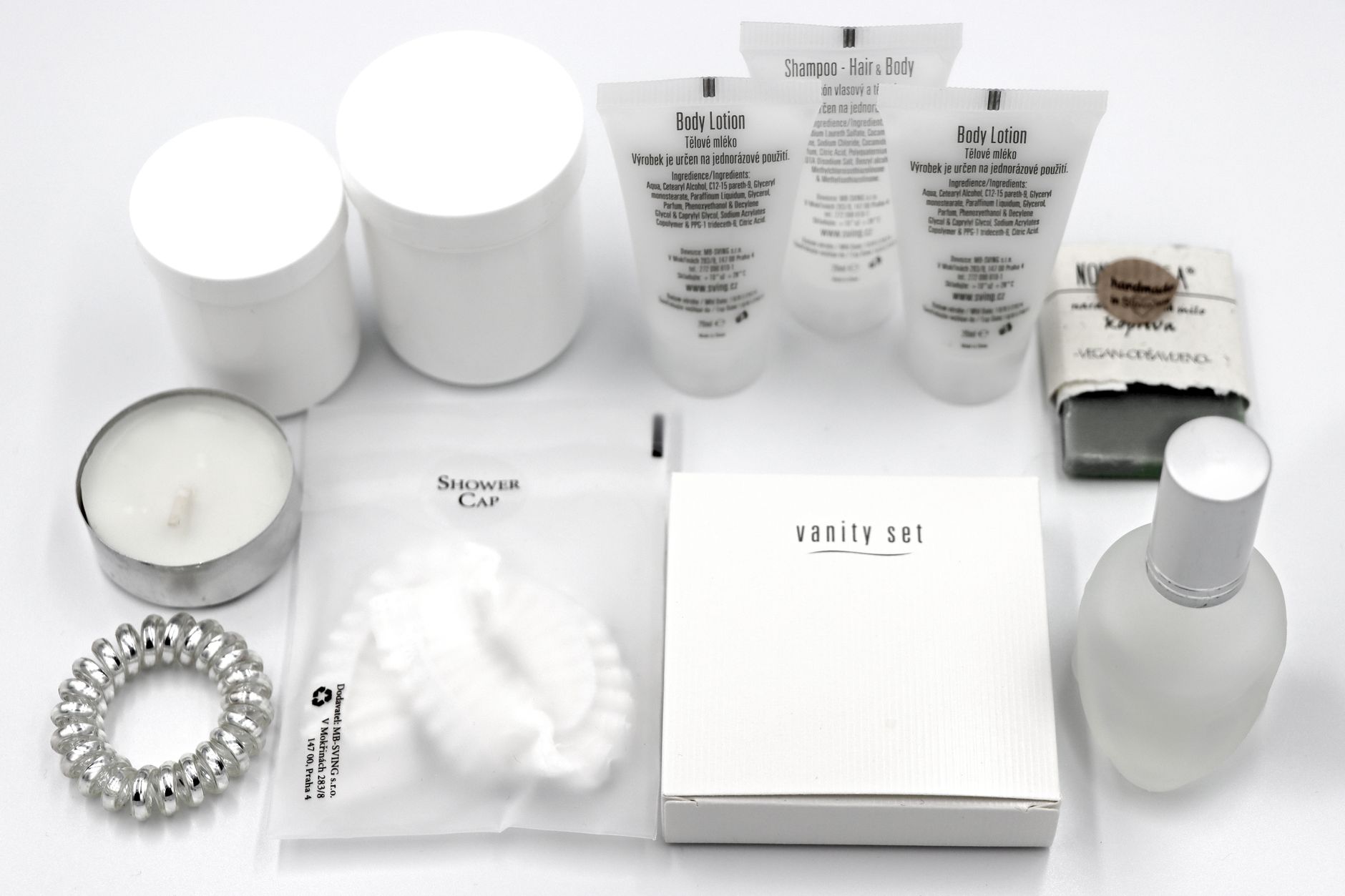
Few travel rules have had their abolition reported as often as the 100 ml limit on liquids. And few have proved as durable.
The 2026 position is awkward because it isn’t uniform: on selected security lanes at Frankfurt and Munich you may now carry two litres. On every other lane and at every other German airport the old rule still applies. Anyone who read about the new scanners and concluded they could pack the full-size shampoo bottle will be unpacking it again at the belt.
The basic rule, which applies almost everywhere
Liquids may be carried in hand baggage only in containers of no more than 100 millilitres. All containers together must fit inside one transparent, resealable one-litre bag, and each passenger is allowed one such bag.
Two misunderstandings cause arguments at the belt with some regularity.
It’s the container size that counts, not how full it is. A 200 ml bottle with 70 ml left in it is not permitted. What’s printed on the container decides the matter.
The bag has to close. One litre isn’t an approximation, it’s the limit. If you have to squeeze it shut, it’s too full.
At BER and most German airports this is unchanged daily routine: bag out, into the tray, through the belt.
The exception: CT scanners at Frankfurt and Munich
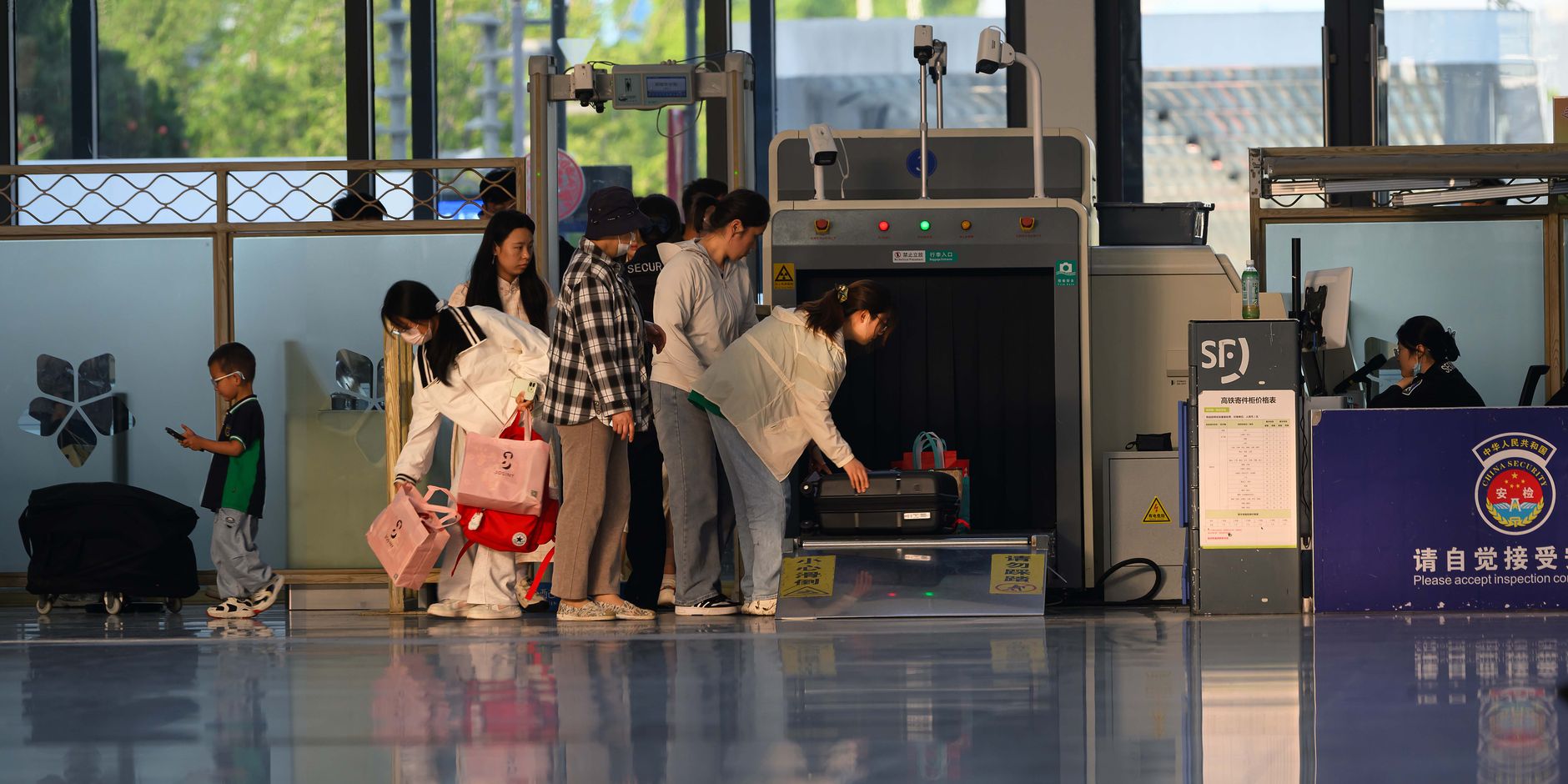
Selected security lanes at Frankfurt and Munich now have CT scanners. These produce a three-dimensional image of the bag, letting staff assess liquids without them being taken out individually.
There, the rule is: up to two litres of liquids, and the transparent bag is no longer required. Laptops and tablets can usually stay in your bag on these lanes too, which noticeably speeds things up.
That sounds like the long-awaited relief, but it comes with three catches worth knowing.
You don’t get to choose your lane. Which checkpoint you’re sent to depends on the terminal, the time of day and how busy it is. There’s no entitlement to a CT lane.
It applies only to departure from that airport. The rule attaches to the equipment, not to you or your ticket.
The EU has not lifted the restriction. Contrary to the original plans, the limit on liquids remains in force as a rule; the two-litre allowance is a technically justified exception at particular checkpoints, not a new standard.
In practice: pack as though the exception didn’t exist. Land on a CT lane and you get an easy few minutes. Don’t, and you have no problem.
The trap when you’re connecting
This is where the new rule genuinely catches people out.
Say you fly from Frankfurt via another airport, having cleared a CT lane with a litre and a half of liquids in your bag. At the transfer airport you’re screened again — and there the 100 ml rule may well apply. Your liquids won’t be waved through on the grounds that Frankfurt allowed them. They’ll be removed.
The same goes for the return leg: what you were allowed to bring at the outbound airport tells you nothing about what’s permitted at the other end.
So the one robust rule for anyone connecting or returning: treat 100 ml as the standard. Anything beyond that is a bonus on a single departure.
Exemptions that always apply
Regardless of scanner or airport, three categories fall outside the volume limit.
Medication. Liquid medicines you need during the flight — insulin, for instance — are exempt. You do have to demonstrate the need credibly; a prescription or a doctor’s note is sufficient. Carry the document where you can reach it, not at the bottom of your bag.
Special foods. Baby food and specialist dietary foods are likewise exempt. There’s no fixed volume ceiling, but the exemption covers only what is needed for the duration of the journey. A day’s supply for travelling is fine; a week’s supply for the holiday belongs in the hold.
Duty-free purchases. Liquids bought at the airport or on board are permitted — but only in a sealed security bag, the STEB. It must be tamper-evident, unopened and undamaged, with the receipt visible inside.
One warning about the STEB that has cost a lot of bottles: don’t open it. Not even to take something out and put it back. An opened STEB is worthless, and at the next security check the bottle is gone. If you’re connecting after a duty-free purchase, the bag stays sealed until you reach your destination.
What actually counts as a liquid
The category is broader than the word suggests. Alongside anything drinkable it covers creams, gels, pastes, lotions, sprays and foams — so toothpaste, shower gel, sun cream, deodorant spray, hair gel, mascara and liquid foundation.
Borderline cases that regularly surprise people: yoghurt, honey, jam and soft cheese all count as liquids. So does perfume. If you were planning to bring a jar of local honey home from your holiday, either give it up or buy it after security. Which other foods fail the consistency test — and which ones you may not bring into the EU at all on the way back — is covered under food in hand luggage.
Solid cosmetics, by contrast, are no problem at all: bar soap, solid shampoo, deodorant sticks and toothpaste tablets. If you fly hand-luggage-only often, switching to these versions removes the need for the bag almost entirely — which is the single most effective trick in this article.
The reverse case: what has to go in the cabin
With liquids the question is what you must leave out. With one other category it runs the other way — and that mistake costs more, because it concerns your checked bag.
Power banks and loose lithium batteries may not go in the hold. They belong in your hand luggage, in the cabin, where a fault can be noticed and dealt with. Leave a power bank in your checked case and at best the case gets reopened and the item removed; at worst it doesn’t travel.
The same principle applies to e-cigarettes: in the cabin, and not charged on board.
So when packing: batteries out of the case and into the cabin bag, liquids out of the cabin bag and into the case. Two movements in opposite directions, and both are regularly forgotten.
Packing so that it goes quickly
Security is a bottleneck, and you have more influence over your own pace than you’d think.
The bag belongs right at the top, not between your clothes. Ideally in an outside pocket you can pull it from while standing.
Decant in advance. Buying travel sizes is one option; filling small empty bottles is the cheaper one. Make sure the capacity is printed on the container — an unmarked bottle can be challenged.
Have electronics and the bag ready together. On conventional lanes, laptops and tablets go in the tray separately. With both accessible at the top, that takes seconds rather than a minute with a queue behind you.
Empty your water bottle, don’t bin it. Empty bottles go through security, and beyond it most German airports have water fountains or at least taps. That saves the cost of an airport bottle on every trip.
How much time to allow for security overall, and what else happens before the gate, is under Departure & Security. The permitted dimensions and weights for your cabin bag — which also changed in 2026 — are in the hand luggage size comparison, and if you’re flying from Frankfurt it’s worth reading up on the new terminal layout first.
What matters after landing rather than before departure, including customs and onward travel, is under Munich Airport arrivals.
Battery devices like electric toothbrushes and power banks follow their own rules, independent of the 100ml liquid limit; the detail is under electric toothbrush on a plane.
What actually happens at the checkpoint itself, from body scanner to CT scanner, is covered under airport security checkpoint.
All details are as of August 2026. Airports keep extending this equipment, and it’s entirely possible that within a year or two the two-litre allowance will apply at far more checkpoints. Until it’s universal, the 100 ml rule is the standard that can’t catch you out anywhere — and the one-litre bag remains the dullest but most reliable piece of travel kit you own.
Keep reading
Departure & Security
Airport Security Checkpoint 2026: How the Screening Process Actually Works
Airport security in Germany 2026: body scanners instead of arches, CT scanners that let laptops and liquids stay put, realistic queue times, and pat-down triggers.
Sophie Bauer5 August 2026
Departure & Security
British Airways Hand Luggage 2026: Two Bags Included, Even on the Cheapest Fare
British Airways hand luggage 2026: cabin bag and personal item dimensions, why even the Basic fare keeps both pieces, and what applies flying from Frankfurt, Munich and Düsseldorf. As of 2026.
Sophie Bauer27 July 2026
Departure & Security
Wizz Air Hand Luggage 2026: 40 × 30 × 20 Free, a Trolley Only With WIZZ Priority
Wizz Air hand luggage in 2026: a free 40 × 30 × 20 cm bag up to 10 kg, a 55 × 40 × 23 cm trolley only with WIZZ Priority, what Priority costs online and at the airport, and what awaits at the gate (as of September 2026).
Sophie Bauer25 September 2026
Departure & Security
Condor Hand Luggage 2026: Sizes, the 8 kg Rule and the Full Fare Matrix
Condor hand luggage 2026: 55 × 40 × 23 cm since 1 May, eight kilos for case and bag combined, Economy Zero from €9.99 — plus gate charges and the reservable overhead bin. As of 2026.
Sophie Bauer17 September 2026
Departure & Security
easyJet Hand Luggage 2026: Sizes, 15 kg and the €70 Gate Fee
easyJet hand luggage 2026: a free 45 × 36 × 20 cm bag at up to 15 kg, a paid 56 × 45 × 25 cm large cabin bag, €70 at the boarding gate — and why a better seat no longer buys you a second bag. As of 2026.
Sophie Bauer17 September 2026