Parking at Munich Airport: The Minutes You Have to Budget For
Depending on the car park, the gap between the barrier and the check-in desk is five minutes or twenty-five. Choose your parking on the day of travel and you spend exactly the reserve you will want later at security.

Airport parking is almost always discussed in terms of money and almost never in terms of time. Time is the part that can cost you the flight. Whether you paid 34 or 44 euros a day registers three weeks later on a card statement. Whether the distance between your parking space and the check-in desk is five minutes or twenty-five registers on the morning the alarm failed to go off.
In Munich that difference is unusually large, because the cheap surfaces genuinely are a long way out — three to three and a half kilometres, with a bus or a train in between. That is not a drawback as long as you build it in. It becomes one the moment you plan around the arrival time your satnav gives you for “Munich Airport”.
Terminal first, car park second
The order matters more than it sounds. Munich has two terminals, and they are not two halls side by side but separate buildings with separate approach roads.
Terminal 2 is used by Lufthansa and its Star Alliance partners, and it includes the satellite building out on the apron, which you reach from the main terminal on an underground people mover. That ride takes only a few minutes, but it is added to your journey, and it appears on no car park sign.
Terminal 1 is divided into modules A to E, each with its own check-in area and its own security control. This is where most of the time gets lost in Munich: module A and module E are a solid walk apart, and if you park at the wrong end you cover that ground with your luggage.
So look at your boarding pass or booking confirmation before you settle on a car park. It gives the terminal and usually the module too. Only then does the parking question have a sensible answer. The same logic applies at every large airport — how it plays out in Frankfurt is set out in Frankfurt Airport: terminals and routes.
The surfaces right at the terminal
Munich’s terminal parking comprises P5, P7, P20, P26 and P35. They differ less in price than in what they serve:
| Car park | Terminal | Notable for |
|---|---|---|
| P5, P7 | Terminal 1 | above ground, short walks to the modules |
| P20 | Terminal 2 | underground, covered connection |
| P26 | Terminal 2 | multi-storey, direct terminal access |
| P35 | Terminal 1 / central area | close to the terminal |
From any of these you are at the desk within a few minutes’ walk. P20 is the underrated special case: it sits underground and is connected to the terminal under cover. Anyone arriving in November with two children and a suitcase grasps immediately why that counts as an argument in its own right — staying dry is not a category that appears in a tariff table.
The new P8, open since 1 September 2026
Since 1 September 2026 a car park called P8 has been in service, and it shifts Munich’s parking logic noticeably. It holds roughly 3,700 spaces across eight levels, with about 20 per cent laid out for electric vehicles.
The decisive feature is the connection. P8 has an underground link into the southern connecting tunnel, which leads directly to Terminal 1, areas D and E, plus a pedestrian route towards Terminal 2. That makes it the first substantial surface serving both terminals without putting you on a bus.
For scheduling purposes that means you get terminal-length walks without having to pick your car park by terminal first. If you are collecting someone whose terminal you are not certain of, or working around connecting flights, it takes one decision off your hands.
Economy: what the shuttle costs in time
Munich’s cheaper surfaces are branded Economy parking and comprise P41, P43, P44 and P50. They sit outside the terminal area, and the transfer is included in your parking ticket — you need no separate fare.
P41 is about three kilometres out. The transfer runs on bus route 635 to the Terminalstraße Mitte stop and takes roughly eight to ten minutes. The bus runs every 10 minutes between 03:43 and 00:53.
That first departure at 03:43 is the single most important figure in this piece. Munich has a run of flights leaving shortly after six. Turn up at P41 at half past three for one of them and you wait. Turn up at quarter to three and you wait an hour. Check the first service before you book the surface — for a 6am departure that is not a detail, it is the question of whether the plan works at all.
P51 is a little further out at around three and a half kilometres, but it has the better link: S-Bahn lines S1 and S8 run every 10 minutes and take about 15 minutes. Bus 635 also serves it, though only every 20 minutes.
Realistically — and this is the figure to plan with — Economy parking costs you 20 to 25 minutes more than a terminal surface. That covers finding a space, walking to the stop with luggage, waiting for the next departure, the ride itself, and the walk from the stop into your terminal.
Working backwards from a 6.15am departure
The most useful exercise is to run the morning in reverse. Say you are flying within Europe at 6.15am from Terminal 1 with a bag to check.
| Time | What happens |
|---|---|
| 6.15am | departure |
| 5.45am | boarding starts, be at the gate |
| 5.00am | security, with a buffer |
| 4.15am | bag drop, desk open |
| 3.50am | arrive in the terminal |
| 3.25am | arrive at P41 for the 3.43 bus |
| approx. 2.30am | leave home, depending on the drive |
Two things stand out. First, the standard advice to be at the airport two hours before a European flight and three hours before long haul starts from the moment you are standing in the terminal — not from the barrier. Economy parking goes on top of it.
Second, check-in desks open only two to three hours before departure, depending on the airline. On an early flight you can therefore arrive before the desk does, and the extra half hour buys you nothing. If you are travelling hand luggage only and have checked in online, the whole calculation moves back by a good hour — which sizes actually get through is covered in airline hand luggage dimensions.
Two metres: the barrier where plans end
Munich’s multi-storey car parks have a height limit of 2.00 metres, and that includes the new P8. This is the mistake that costs most on the day, because it only reveals itself at the entrance — family in the car, luggage in the boot, a queue behind you.
More vehicles are affected than people expect: vans and high-roof estates, any car with a roof box, any car with a roof-mounted bike rack, and campervans as a matter of course. For those, the open-air surfaces at P50 are the intended answer.
If you have a roof box fitted and want a multi-storey, you have two options: take it off beforehand — ten minutes at home, impossible at the airport — or book an open surface from the outset. Either way it is a decision made the evening before, not at four in the morning at a red light beneath a height bar.
Collecting someone: which zone you need
Collecting works on a different logic from leaving the car, because you are not planning a duration but an uncertainty: you do not know exactly when the flight lands or how long the bags will take.
The visitors’ park and its P52 surface is the traditional answer. One current restriction matters: because of construction work there is currently no parking available at the visitors’ park, and the signposted alternative is P50. Drive by the old description and you will be looking for an entrance that is not there at the moment.
The more practical rule for collections is a different one anyway: set off not when the aircraft lands but when your passenger is at the belt. Between touchdown and baggage reclaim on a full long-haul flight you can easily count 45 minutes — taxiing, disembarking, the walk through the terminal, and passport control on non-Schengen arrivals. How that unfolds in the arrivals hall is described in Hamburg Airport: arrivals and baggage.
The return leg nobody plans
The outbound trip gets planned; the return rarely does. Yet it is the more trying half: you land at night, you are tired, and you last saw the surface your car is standing on a fortnight ago.
Three things make the difference. Photograph the level and the bay number before you walk away — not the row you are standing in, but the sign on the wall. Check the last departure of your transfer: bus 635 finishes at 00:53, and a delayed landing around midnight can drop you outside that window. And expect number-plate recognition: most surfaces use it, and if you come back in a different vehicle from the one on the booking, the barrier stays down.
If you are seeing somebody off or waiting on a landing, the alternative is under the Munich Airport visitors’ park.
Everything above reflects the position in 2026; the airport adjusts surfaces, frequencies and terminal assignments regularly, and the works around the visitors’ park are ongoing. What does not change is the direction of the calculation: you do not plan forwards from the car park to the flight, you plan backwards from boarding to the moment you pull your own front door shut. Work that through once for the early flight you usually take and you will know your time and never have to look for it again. More locations are covered under The Airports.
Keep reading
The Airports
Munich Airport Visitors' Park: What Is There and What It Costs
Munich Airport visitors' park: the one-euro viewing hill, three historic airliners, playground and minigolf, plus how to get there and the S1 train split.
Sophie Bauer14 August 2026
The Airports
Munich Airport Christmas Market: the Winter Market at the MAC-Forum in 2026
Munich Airport's Christmas and Winter Market: 2026 dates, the ice rink in the MAC-Forum, no boarding pass needed, and how it differs from a Christmas market in the city.
Sophie Bauer30 July 2026
The Airports
Hotels at BER Airport: Which Ones You Can Actually Walk From
Hotels at Berlin Brandenburg Airport: the two houses on the Terminal 1 forecourt, the Schoenefeld and Waltersdorf ring, napcabs in the station, shuttle costs and park-sleep-fly compared.
Sophie Bauer17 September 2026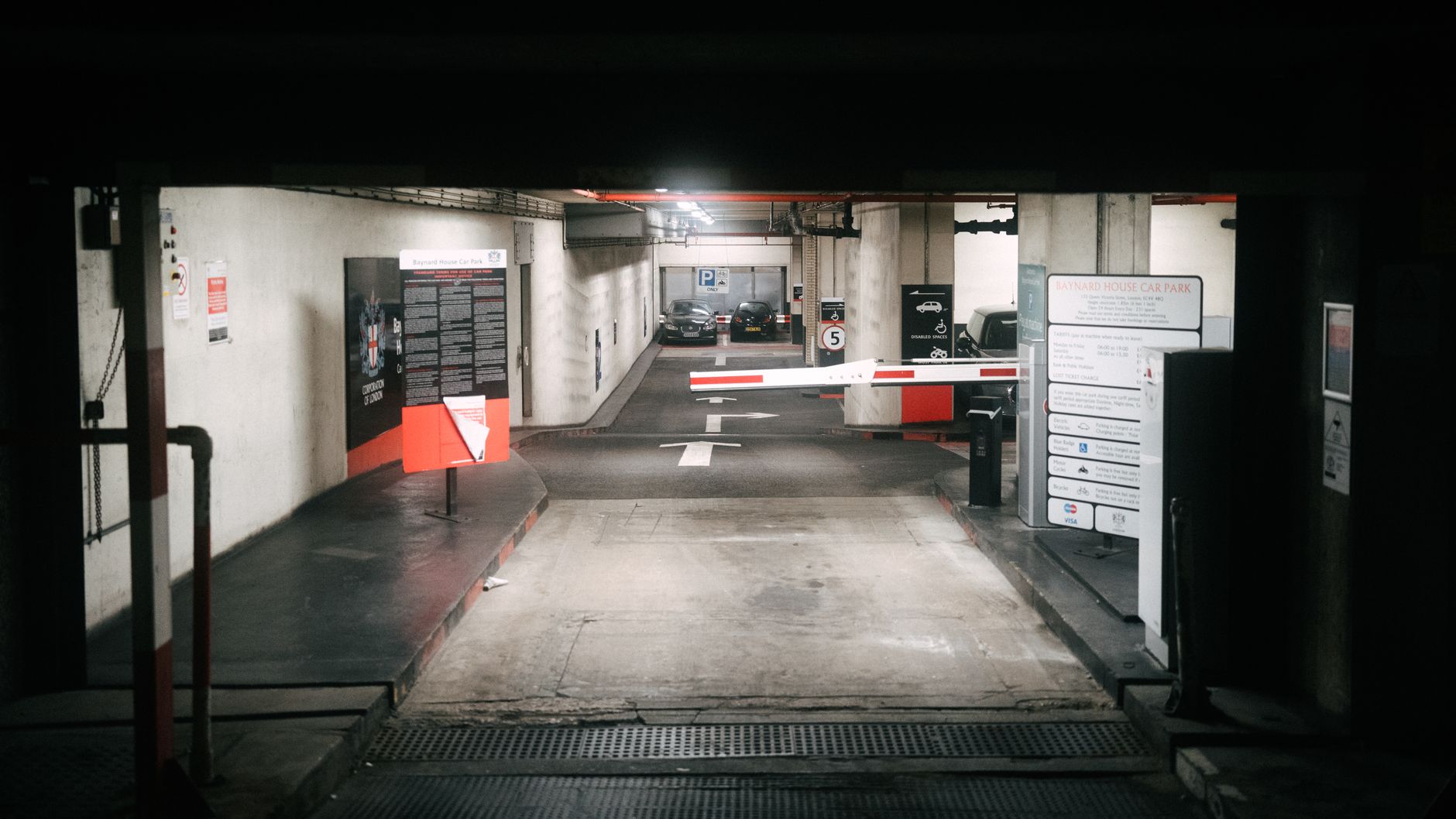
The Airports
Frankfurt Airport Terminal 1: Parking, Entrances, Levels
Parking at Frankfurt Terminal 1: the P2 and P3 entrances, the tunnel into the terminal, the 2.10 m height limit, where the pay machines are and the booking deadlines.
Sophie Bauer14 August 2026
The Airports
Nuremberg Airport: Terminal, Destinations and Getting There
Nuremberg Airport (NUE): one terminal, a record 4.5 million passengers in 2025, destinations from Antalya to Amsterdam, and the U2 subway into town in 12 minutes.
Sophie Bauer3 July 2026