Frankfurt Airport 2026: Which Terminal, Which Route, How Much Time
Fifty-seven airlines have moved, one terminal is shut, and the new Sky Line is running again — just slower than designed. Frankfurt Airport changed more in 2026 than in the preceding decade — here's where it currently stands.

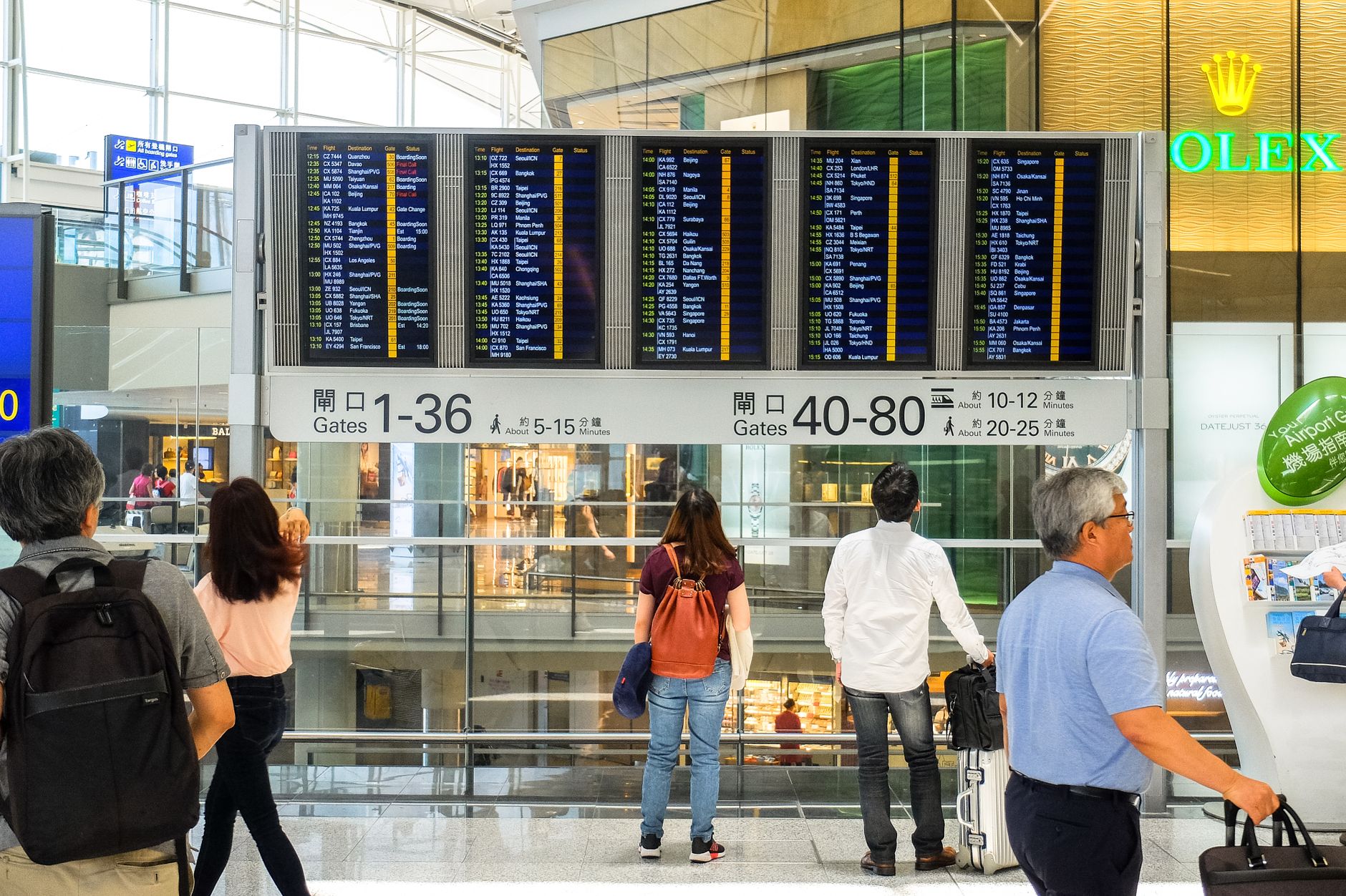
If you last flew through Frankfurt before 2026, your mental map is out of date. The airport rebuilt its terminal structure within a few weeks: Terminal 3 entered regular service on 23 April 2026 after roughly ten years of construction, and Terminal 2 closed to passengers on 9 June 2026 for a refurbishment expected to take about five years, with Fraport investing some €1.5 billion.
In between, 57 airlines relocated, in four waves. Anyone working from an old booking confirmation or a two-year-old guide has a good chance of standing outside the wrong building. In Frankfurt that isn’t a shrug — it costs twenty to thirty minutes.
Which terminal is yours?
The split is straightforward at its core.
Terminal 1 belongs to the Lufthansa Group and Star Alliance. Flying Lufthansa, Swiss, Austrian, United, Air Canada or Turkish? You’re in the right place, and nothing has changed for you.
Terminal 3 absorbed everyone else. That’s where the big international names now are: Emirates, Qatar Airways, British Airways, American Airlines, Delta Air Lines, Air France — essentially everything that used to stand in Terminal 2, plus a good number of carriers from T1.
Terminal 2 is closed. No check-in, no gates, no shops.
One thing to file away for later: Condor doesn’t move to Terminal 3 until summer 2027. Until then it operates from Terminal 1 alongside Lufthansa. If you’ve booked an itinerary combining Condor with a T3 carrier, that’s a terminal change, and it needs building into your connection.
Even so, don’t rely on this list alone. Your terminal is on your ticket, and airlines move. Check it again on the day of departure before you set off.
Between T1 and T3: what’s actually running
Here is the point where most guides are out of date.
The intended link is the new Sky Line (Line 2) — an elevated train connecting T1 and T3 in roughly eight to ten minutes, running at up to 80 km/h at intervals of about two minutes.
Fraport pulled that line out of service in late May 2026 after recurring technical faults. It has been running again since 15 June 2026 — but throttled: up to eight vehicles at 50 km/h rather than the 80 it was designed for, across a route of roughly 5.6 kilometres. So don’t budget the eight minutes from the brochure.
One gap remains: the train stops daily between 23:00 and 04:00. A shuttle bus covers the terminals in that window. If you land overnight and have to change terminal, plan around the bus, not the train.
In practice: don’t plan a terminal change around eight minutes. Plan around twenty. The train is running again, but you still have to reach the platform, wait, board, ride, and then find check-in at the far end — and the walking distances inside T3 are long. In the overnight window, on the bus, make that half an hour.
That’s the position in August 2026. Because this is exactly the kind of thing that changes, it’s the one detail in this article worth re-checking on the day you travel.
Arriving by train: watch out if you’re flying from T3
Frankfurt has two railway stations at the airport, and both are at Terminal 1:
- Fernbahnhof — ICE and IC services from across the country
- Regionalbahnhof — S-Bahn (S8/S9) and regional trains, a little over ten minutes from Frankfurt Hauptbahnhof
So if your flight leaves from Terminal 3, your train journey ends at the wrong terminal. You arrive at the long-distance station and still have a transfer ahead of you. Add the twenty minutes above on top of everything else.
This has been the commonest timing error in Frankfurt since April: people plan their train arrival to line up neatly with check-in and overlook that a complete change of transport mode sits between the platform and the T3 desk.
By bus you can reach Terminal 3 directly, including on routes X77, X14, X18 and 65 — coming from the surrounding region, that’s often quicker than routing via T1.
Connecting in Frankfurt: how much time to allow
For transfers between terminals the airport quotes around 45 minutes as an achievable connection time. That’s realistic — but it’s a floor, not a recommendation.
Three things run alongside it.
The walks are longer than they used to be. T3 is a large new building and you don’t know it. Allow orientation time the first time, particularly at the transitions between levels.
A terminal change costs more time than the ride itself suggests. Even with the Sky Line running again at reduced speed, I wouldn’t plan a self-booked T1–T3 connection at under 90 minutes.
Separate bookings come with no goodwill. If your outbound and onward flights are two distinct tickets, the risk is entirely yours — two hours is the sensible floor there, not 45 minutes.
On a single through-booking within one alliance, by contrast, almost everything stays in the same terminal, and Frankfurt is a pleasant airport to connect through.
The reverse case flips the sums: if your layover isn’t tight but long, the question becomes whether to leave at all — that’s worked through in the guide to a long layover at Frankfurt Airport.
By car: P11 at Terminal 3
Terminal 3 connects directly to the A5 autobahn and has its own multi-storey car park, P11, with up to 8,500 spaces — a separate facility that isn’t reached via T1.
Two practical points. First, book online in advance: at Terminal 3 that isn’t only cheaper, it’s what secures you a space at all in the school holidays. Second, take the correct exit. Follow signs for “Flughafen” out of habit and you’ll end up at Terminal 1 and have to transfer inside — see above, twenty minutes. And if you are still working out the drive itself, drive times and taxi bands between Frankfurt Airport and the towns around it are gathered in one place.
How long each stage takes
So you don’t have to guess, these are the blocks of time I currently work with in Frankfurt:
| Stage | Time |
|---|---|
| Long-distance station → check-in, Terminal 1 | 10–15 minutes |
| Long-distance station → check-in, Terminal 3 | 30–40 minutes |
| Terminal change T1 ↔ T3 (Sky Line, reduced speed) | about 20 minutes |
| Security, normal periods | 15–30 minutes |
| Security, first morning of school holidays | 45 minutes and up |
| Within T3: security → a distant gate | up to 15 minutes |
Which produces a simple rule of thumb: be there two hours before departure for Terminal 1, two and a half for Terminal 3. Add half an hour again for long-haul and for the Hessian school holidays.
That sounds generous. It’s precisely the time that disappears when the train hands over to the bus in the overnight window and you’re seeing the building for the first time. How to make the least predictable part of that sum predictable — a free time slot for security, and realistic queue lengths by hour — is covered under Frankfurt Airport departures.
What to actually do on the day
The routine that currently works reliably in Frankfurt:
Check your terminal, on the ticket and again on the boards that morning. Not from memory.
Allow thirty minutes more for T3 than you would for T1 — for the approach, the terminal change and the longer walks inside the building.
Travelling by train to T3: take the connection one departure earlier. Otherwise your buffer disappears into the terminal change.
Check your hand luggage beforehand, because those rules changed in 2026 too — current dimensions for all the major airlines are in the hand luggage size comparison, and what you may carry in the way of liquids is in the rules on liquids in hand luggage.
Germany’s major airports compared are under The Airports; the sequence from check-in to gate is under Departure & Security.
Where to park most cheaply at this airport is worked through under parking at Terminal 1.
How arrivals work at Germany’s largest airport by area, with a new terminal pier since 2026, is under Munich Airport arrivals.
If you’re after the piers, airline allocation and the SkyLine in Terminal 1 specifically, the deep dive is covered under Frankfurt Airport Terminal 1.
Frankfurt is a better airport after this rebuild than it was before — Terminal 3 is bright, new and generously laid out, and traffic is finally distributed more sensibly. It’s simply an airport that even frequent flyers are currently relearning. Factor that in, bring an extra half hour, and you’ll notice nothing. Arrive on the old mental map and you’ll be standing on a platform under Terminal 1, reading a board that says your flight leaves from T3.
Keep reading
The Airports
Frankfurt Airport Terminal 1: Parking, Entrances, Levels
Parking at Frankfurt Terminal 1: the P2 and P3 entrances, the tunnel into the terminal, the 2.10 m height limit, where the pay machines are and the booking deadlines.
Sophie Bauer14 August 2026
Arrival & Baggage
Frankfurt Airport Arrivals: Terminal 1 or 3, Baggage, Customs and the Way Out
Arriving at Frankfurt Airport in 2026: where you land now Terminal 2 has closed, how passport control, baggage reclaim and customs work, and how to get onward from Terminal 1 and Terminal 3.
Sophie Bauer25 September 2026
The Airports
Berlin Brandenburg Airport: Terminals, History and Getting There
Berlin Brandenburg Airport (BER): Terminal 1 and 2, fourteen years of delays before its 2020 opening, 26 million passengers in 2025, and how to reach the city.
Sophie Bauer21 July 2026
The Airports
Hotels at BER Airport: Which Ones You Can Actually Walk From
Hotels at Berlin Brandenburg Airport: the two houses on the Terminal 1 forecourt, the Schoenefeld and Waltersdorf ring, napcabs in the station, shuttle costs and park-sleep-fly compared.
Sophie Bauer17 September 2026
Departure & Security
Frankfurt Airport Departures: How Much Time You Actually Need
Departing from Frankfurt Airport: booking a free FRA SmartWay security slot, realistic queue times, and how early to arrive for Terminal 1 and Terminal 3 (as of 2026).
Sophie Bauer17 September 2026