Berlin Brandenburg Airport: Terminals, History and Getting There
Germany's youngest major airport took fourteen years longer than planned to open, and is now the country's third-busiest, with around 26 million passengers a year and a 23-minute express train straight into central Berlin.

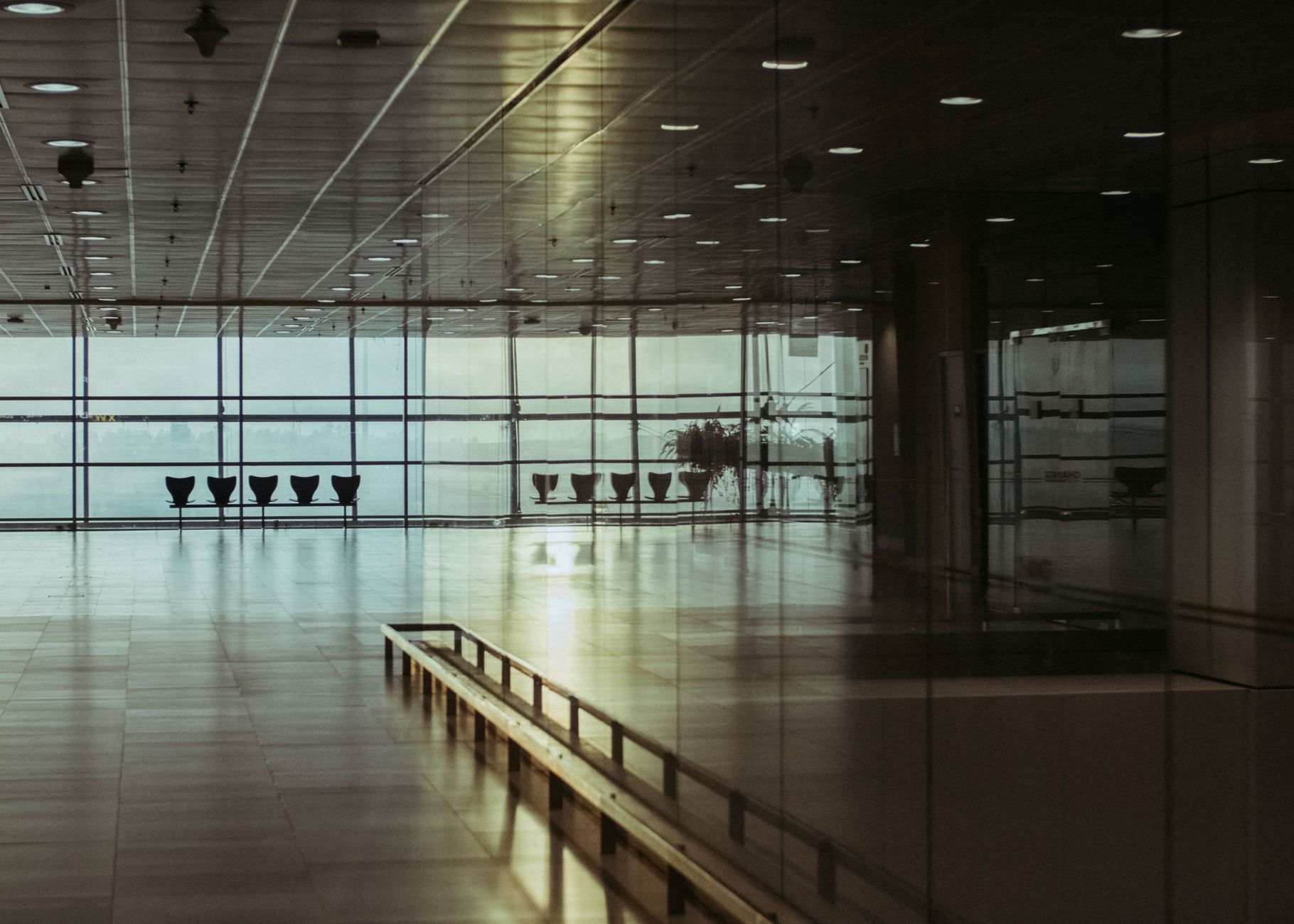
Berlin Brandenburg Airport, officially named after former chancellor Willy Brandt, finally opened on 31 October 2020 — fourteen years after its original target date, and after a construction saga that turned into an international byword for infrastructure gone wrong. Five years on, none of that drama is visible in day-to-day operations. With around 26.1 million passengers in 2025, BER (IATA code BER, ICAO EDDB) is Germany’s third-busiest airport after Frankfurt and Munich, and it’s still growing. Unlike the two airports it replaced — Tegel and the old Schönefeld, both retired in November 2020 — BER concentrates everything on a single site south-east of the city, roughly 18 kilometres from Alexanderplatz and technically on Brandenburg soil, in the municipality of Schönefeld. Land here and you’ll find a terminal layout considerably more compact than the years of headlines might suggest, plus rail connections that rank among the best of any German airport. This overview covers how Terminal 1 and Terminal 2 work together, what became of that infamous construction saga, who’s actually flying from here today, and the fastest ways into Berlin or back out again.
Terminal 1 and Terminal 2: One Complex, Two Halls
BER is really one large building complex split into two active terminals. Terminal 1 is the main, U-shaped structure that gives the airport its identity, built for around 30 million passengers a year across three piers. Most network and leisure carriers check in here, from Lufthansa and Eurowings to Condor and Turkish Airlines, and it’s where the bulk of the gate-side aircraft stands sit — 16 double-deck and nine single-deck jet bridges. Terminal 2, in operation since 24 March 2022, stands right next to T1 and connects to it via a walk of a few minutes — a separate building, but without gates of its own: check in at T2 and you then walk over to the gates in T1’s B-pier. It’s built for around six million passengers a year, has 16 check-in desks, and was conceived from the outset as a low-cost terminal, handling mostly Ryanair traffic for much of its life so far.
If you remember BER from its first months of operation, there was briefly a third building too: Terminal 5, the old Schönefeld airport terminal, pressed into temporary service alongside the 2020 opening. The pandemic-driven collapse in passenger numbers made it surplus to requirements, and it closed for good in February 2021 — everything now runs through T1 and T2. Combined, the two active terminals have capacity for around 36 million passengers a year; at 26.1 million in 2025, BER is roughly two-thirds full and, unlike many older German airports, still has genuine room to grow. By comparison, Nuremberg Airport manages with a single, considerably smaller terminal building built for around five million passengers a year — BER was planned from day one for an entirely different scale, even if it’s currently only using part of it.
Fourteen Years Late: BER’s Construction Story
Few German infrastructure projects have been mocked as relentlessly as the construction of BER, and the underlying facts are genuinely remarkable. Ground was broken in September 2006, with an opening originally pencilled in for 2011. It didn’t happen: the launch date slipped six times in total, most notoriously just weeks before the planned opening in May 2012, when inspectors discovered the smoke extraction system simply didn’t work as designed. The snag list kept growing in the years that followed — by 2017, the airport’s then technical director counted around 75,000 outstanding defects, and fixing the fire safety systems alone eventually required around 200,000 kilometres of cable to be relaid.
Costs spiralled in parallel. The original 2006 budget was roughly €1.9 billion; the first construction phase ultimately cost around €7.1 billion — nearly four times the estimate. The airport is run by Flughafen Berlin Brandenburg GmbH, jointly owned by the federal government and the states of Berlin and Brandenburg, and the resulting construction debt still shapes BER’s fee structure today — a point that matters later, when it comes to the airlines flying from here. BER finally went into service on 31 October 2020, with the new north runway taking the first flights; the south runway — essentially the old Schönefeld runway, extended and refurbished — followed on 4 November 2020. That same month, the inner-city Tegel airport closed for good after 60 years as Berlin’s principal airport, and the old Schönefeld was absorbed entirely into BER. For a city that had waited since reunification for a single central hub, it was a historic moment, if a spectacularly overdue one.
26 Million Passengers: BER Today
The current numbers make the construction saga feel almost beside the point. BER handled around 26.1 million passengers in 2025, up 2.3 percent on the 25.5 million recorded the year before. Roughly 193,000 take-offs and landings took place, with 70 airlines flying to 130 destinations worldwide from here. For 2026, the airport is forecasting further growth to somewhere between 26.5 and 27 million passengers (as of 2026).
Some context helps: in 2019, the last normal year before the pandemic, the two predecessor airports Tegel and Schönefeld together handled around 35.6 million passengers. The pandemic knocked the newly opened BER straight down to 9.1 million in 2020 and 9.9 million in 2021, before the recovery took hold: 19.8 million in 2022, 23.1 million in 2023, 25.5 million in 2024, 26.1 million in 2025. That old pre-crisis combined total hasn’t been matched yet — a gap that also suggests BER, in its current form, is still some distance from its roughly 36-million capacity ceiling.
Financially, the airport looks considerably steadier than it did in its first years of operation: revenue reached €666.5 million in 2025, EBITDA came in at €203.9 million, and the group’s annual net loss narrowed by €48.3 million to €86.1 million (as of 2026). BER is edging closer to the financial self-sufficiency its management has been aiming for — though with that enormous construction-era debt still on the books, it’s likely to take a while yet.
Airlines: easyJet, Ryanair, Eurowings and a Shifting Line-up
The airline mix at BER has shifted more than once since opening, and 2026 is proving an especially visible year for change. Ryanair was still the single biggest carrier in 2025, with just under 4.7 million passengers, ahead of easyJet on around 4.2 million (up 2.6 percent) and Eurowings, which grew its BER traffic by 9.3 percent to roughly 2.3 million passengers — the second-strongest growth of any airline at the airport. Lufthansa remains a solid presence at Terminal 1, while Condor posted the biggest percentage growth of any BER airline in 2025, carrying around 349,000 passengers, some 300,000 more than the year before.
And yet the market leader is pulling out. In April 2026, Ryanair announced it would close its Berlin base entirely by October 2026, withdrawing all seven aircraft stationed there and redeploying them to Sweden, Slovakia, Albania and Italy — countries that either charge no aviation tax or offer markedly lower operating costs. Ryanair itself expects passenger numbers on its Berlin routes to fall by more than half in 2027, from around 4.5 million to about 2.2 million, and cites Germany’s air passenger tax and airport charges as the reason. It’s a pattern the airline has followed elsewhere in the country: it previously closed bases in Frankfurt, Düsseldorf and Stuttgart, and, as covered in our piece on Dortmund Airport, pulled out of Dortmund entirely in October 2024. Berlin will still be served, but only by aircraft based outside Germany, which thins out the route network noticeably.
Eurowings is moving the opposite way. The Lufthansa subsidiary plans to grow its BER fleet from nine to eleven aircraft for the winter 2026/2027 season, adding new routes including Bologna and extra Canary Islands services. The practical upshot for travellers: with this much churn, it’s worth double-checking the current route map before you book rather than assuming this year’s network will still look the same next year — few German airports have seen an airline line-up this volatile in recent years.
The Airport Express: 23 Minutes to Hauptbahnhof
The fastest way from the terminal into central Berlin is the Airport Express, or FEX. It departs from the six-platform station directly beneath Terminal 1 and reaches Hauptbahnhof in around 23 minutes, with stops at Südkreuz (about 14 minutes) and Potsdamer Platz (about 19 minutes) along the way. During the day the FEX runs four times an hour — roughly every 15 minutes — from the early morning until just after midnight (as of 2026); overnight the frequency thins out and trains take a slightly different route via the Stadtbahn, calling at additional stops such as Ostkreuz and Friedrichstraße.
One practical difference from some other German airport expresses: the FEX isn’t a separate premium product with its own surcharge — it runs on the standard VBB fare. A normal ticket for fare zone Berlin ABC is valid on the FEX exactly as it is on any S-Bahn or regional train, and the nationwide Deutschlandticket is accepted without any fuss. That’s not a given everywhere: at Dortmund Airport, for instance, the local AirportExpress bus is its own commercial ticket, and neither the Deutschlandticket nor ordinary local tickets are valid on it. If you’re already travelling on a season ticket, the fast run into Berlin costs you nothing extra.
S-Bahn and Regional Trains: S9, S85 and the Lines into Brandenburg
Alongside the FEX, two regular S-Bahn lines and several regional services also call at the six-platform station beneath Terminal 1. The S9 connects BER via Schönefeld with south-eastern Berlin — Adlershof, Schöneweide — and runs right through the city centre: Friedrichstraße, Hauptbahnhof, Olympiastadion, all the way out to Spandau in the west. It runs every 20 minutes throughout the day, starting as early as around 3am towards the airport. Since the December 2025 timetable change, it’s joined by the new S85, which replaced the former S45: also on a 20-minute frequency, running via the eastern inner ring towards Wittenau/Frohnau on weekdays or Pankow at weekends.
Then there are the regional trains, which link BER to destinations well beyond Berlin itself. The timetable change on 14 December 2025 reorganised them: the RE20 runs from Berlin Hauptbahnhof via BER out to Lübbenau in the Spreewald — handy if your destination is Lusatia rather than the city centre. The RB24 connects Eberswalde via Berlin-Ostkreuz to the airport and terminates at Blankenfelde, while the RB32 comes down from Oranienburg over the same stretch and carries on to Ludwigsfelde. The RB22 still runs hourly between Potsdam Griebnitzsee, via Golm, and BER, continuing to Königs Wusterhausen — useful if you’re travelling to or from Potsdam without wanting to detour through central Berlin.
Two lines that still appear in older guides no longer call at BER: the RE7 has run only between Bad Belzig and Berlin-Wannsee since December 2025, and the RB14 is back on the Berlin Stadtbahn rather than the north–south tunnel. If you are planning around either of them, you are planning around last year’s timetable.
This density of rail links directly under the terminal is unusual by German standards, though not unheard of: Hannover Airport also has its S-Bahn station right beneath the terminal building. The difference is scale — where Hannover gets by with a single S-Bahn line, BER bundles two S-Bahn lines, three regional lines and the FEX into one underground station, topped off with stops from selected long-distance IC services.
Driving and Taxis: the A113
Drivers reach BER via the A113, which runs south-east out of Berlin and terminates right at the airport. From the city centre it’s roughly 18 kilometres, and depending on traffic and time of day you should allow 25 to 45 minutes — rush hour on the Berlin ring road and the city motorway can add noticeably to that. Signage to the airport is consistent and clearly visible across Berlin’s motorway network, a marked improvement on the old Tegel airport, whose access roads cut straight through dense residential areas.
Taxis wait right outside Terminal 1, with enough vehicles on hand even when several flights land close together. Journey time into the centre is broadly similar to driving, and the fare typically lands in the mid double-digit euro range depending on your exact destination (as of 2026) — for most travellers, the FEX or the S9 remains the cheaper and often faster option, especially at peak times. For destinations beyond the city centre — Potsdam, the south-eastern suburbs — there is a destination-by-destination breakdown of distance, journey time and fare. If you just need to drop someone off, signposted pull-in areas sit right outside the terminal for a quick stop; for a longer wait on a delayed arrival, the car parks are the better bet.
Parking at BER: From Kiss & Fly to Long-Stay
According to the airport, around 10,000 public parking spaces are spread across five multi-storey car parks and 13 further parking areas, with a separate 5,000 spaces reserved exclusively for airport staff. For a quick drop-off or pick-up, there’s a Kiss & Fly zone directly outside the terminal: the first ten minutes are free, though capped at three uses per number plate within any eight-hour window (0-8, 8-16 and 16-24) — go over that limit, or stay longer, and the standard short-stay tariff kicks in.
For longer stays, BER splits its car parks into several tiers. P1 is the premium option, sitting closest to Terminal 1’s check-in hall, ideal if you don’t want to walk far. P2 is similarly central, around a minute’s walk from T1 and about four minutes from T2, while P3 and the slightly more distant P7 and P8 are classed as comfort parking, with short, covered routes to the terminal. If you’re parking for longer and don’t need to be right on the doorstep, the economy areas a little further out offer noticeably lower daily rates, linked to the terminal by a short shuttle transfer. As at virtually every German airport, the rule of thumb holds at BER too: booking your space online in advance is, as a rule, considerably cheaper than paying at the barrier on the day (as of 2026) — a saving that adds up quickly over a longer stay while you’re away. If you would rather spend the evening before an early departure at the airport itself, the two houses on Willy-Brandt-Platz and the wider Schönefeld ring are covered in hotels at BER Airport.
What the walk actually looks like once you have landed — which pier ends on which level, where your suitcase surfaces, and where it makes sense to arrange a meeting — is set out step by step under arriving at BER Airport.
Before Berlin’s air traffic landed at BER, the city relied on Tempelhof for decades; the decommissioned history is covered under Berlin-Tempelhof Airport.
BER remains, in a sense, an airport with two identities. The fourteen lost years of construction will probably follow it around for a long time yet, turning up in documentaries, comedy sketches and the raised eyebrow that greets any Berliner explaining their capital’s airport to a visitor. Day-to-day operations tell a different story: a compact two-terminal layout with short walking distances, one of the densest rail connections of any German airport, and a route network that keeps visibly shifting — most recently with Ryanair’s withdrawal running alongside Eurowings’ expansion. Fly into or out of BER today and there’s no trace of the construction years left to see; use it well, and you can be in the middle of Berlin, without a car, in under 25 minutes. All figures on passenger numbers, journey times and flight connections reflect 2026 as reported by Flughafen Berlin Brandenburg GmbH, Deutsche Bahn and the VBB — schedules and fares change regularly, so check them again directly with the relevant operator shortly before you travel. More German airports are covered under Airports.
Keep reading

The Airports
Hotels at BER Airport: Which Ones You Can Actually Walk From
Hotels at Berlin Brandenburg Airport: the two houses on the Terminal 1 forecourt, the Schoenefeld and Waltersdorf ring, napcabs in the station, shuttle costs and park-sleep-fly compared.
Sophie Bauer17 September 2026
The Airports
Frankfurt Airport 2026: Which Terminal, Which Route, How Much Time
Frankfurt Airport 2026: Terminal 3 is open and Terminal 2 shut. Which airline flies from where, how to move between T1 and T3, and how much time to allow.
Sophie Bauer14 August 2026
The Airports
Frankfurt Airport Terminal 1: Parking, Entrances, Levels
Parking at Frankfurt Terminal 1: the P2 and P3 entrances, the tunnel into the terminal, the 2.10 m height limit, where the pay machines are and the booking deadlines.
Sophie Bauer14 August 2026
The Airports
Nuremberg Airport: Terminal, Destinations and Getting There
Nuremberg Airport (NUE): one terminal, a record 4.5 million passengers in 2025, destinations from Antalya to Amsterdam, and the U2 subway into town in 12 minutes.
Sophie Bauer3 July 2026
The Airports
Berlin-Tempelhof Airport: History, the Airlift and Tempelhofer Feld Today
Berlin-Tempelhof Airport: opened 1923, stage of the 1948/49 Airlift, closed to flights since 2008 — today Tempelhofer Feld, with a runway cycle loop, community gardens and terminal tours.
Sophie Bauer8 August 2026