Munich Airport Departures: Terminal 2 for Star Alliance, Terminal 1 for Everyone Else
At Munich Airport, it isn't your ticket that decides which terminal you need — it's your airline's alliance. Know that before you set off and you won't end up walking between buildings.

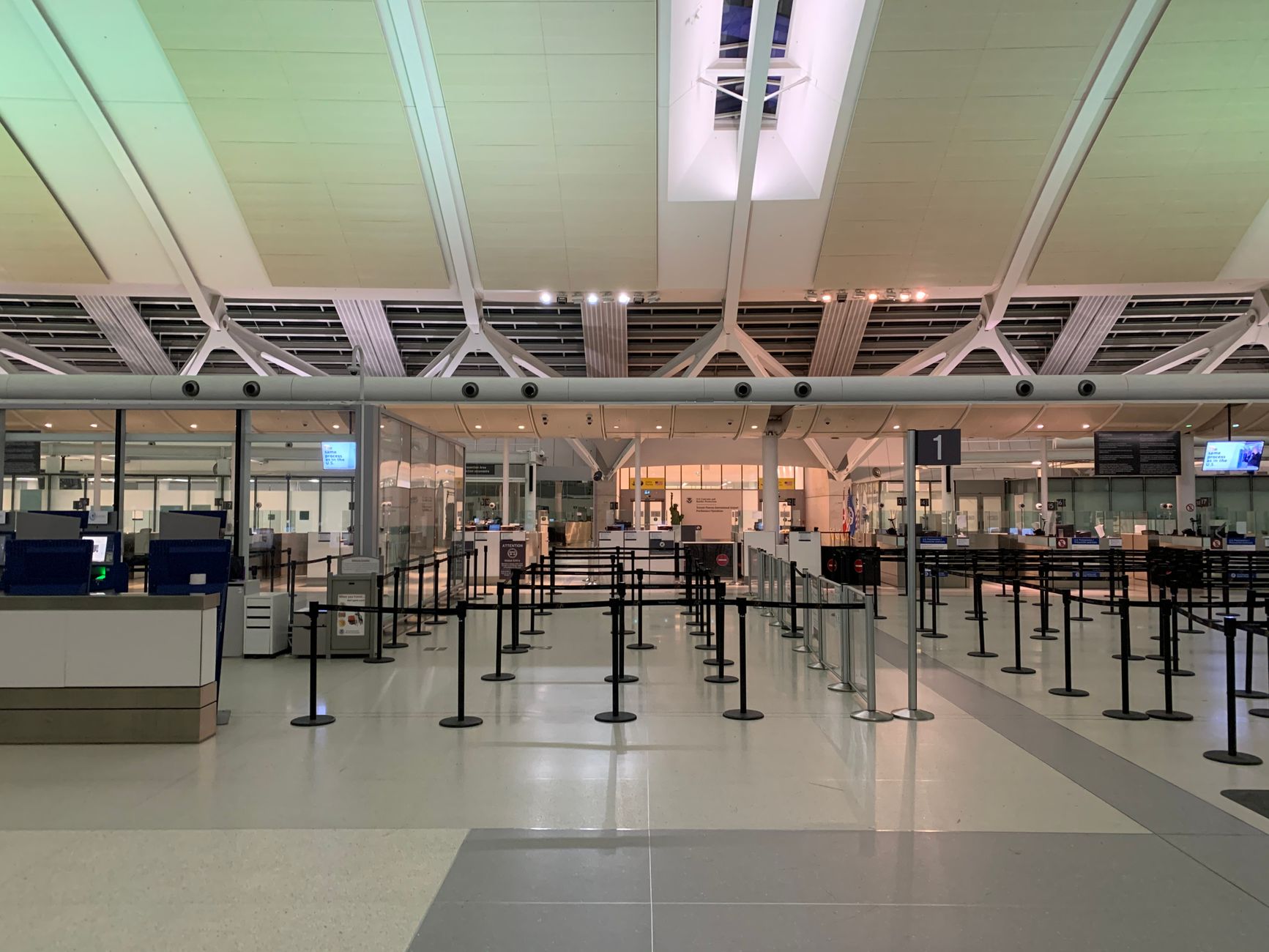
Departing from Munich Airport raises a different question from landing there. On arrival, what matters most is where your bag comes out. On departure, what matters is which building you even need — and the answer has less to do with a feel for the airport than with your airline’s alliance. Munich is the only German airport where an entire terminal belongs, exclusively, to a single airline and its partners, and travellers who don’t know that end up hunting for the right desks in the wrong building.
Unlike the arrivals route, which is largely fixed the moment the aircraft parks, departure hands several decisions to you: check in online or at a counter, which security checkpoint to head for, how much time you genuinely need. That’s what this piece covers — not baggage claim or customs, but the route from booking confirmation to gate.
Terminal 2: Star Alliance and no one else
If your booking confirmation says T2, or simply your airline’s name with no other terminal note, you’re almost certainly flying from Terminal 2. The building formally belongs to a joint company in which Munich Airport holds 60 per cent and Lufthansa 40 per cent — an arrangement that exists in this form at no other airport in the world. Terminal 2 is used exclusively by Lufthansa and its Star Alliance partners: around 20 airlines, including, alongside Lufthansa itself, Air Dolomiti, Air Canada, All Nippon Airways, EVA Air, Singapore Airlines, Thai Airways and United Airlines (as of 2026).
Fly with an airline outside that circle and Terminal 2 is the wrong building for you, however close it sits on the approach road. Check-in happens centrally in Terminal 2’s departures hall, with screens showing the right desk area for your flight. Unlike Terminal 1, there’s no set of checkpoints spread across separate modules here — handling runs through one central area, which makes the whole process noticeably simpler.
The Satellite: Gates K and L, a ride beneath the apron
Fly from Terminal 2 and, after security, there may be one more leg ahead of you that exists nowhere else at a German airport. Gates G and H sit in the main building; Gates K and L sit in the separate Satellite building out on the apron. You reach it by a driverless underground train that runs continuously and covers the distance in under a minute.
The point that matters: you clear security only once, in the Terminal 2 main building, before boarding the train. A second check at the Satellite doesn’t apply to you if your flight originates in Munich — only transfer passengers on certain connections use dedicated transfer lanes there. Even so, allow around 15 minutes on top between the checkpoint and your gate at the Satellite: the ride itself is short, but waiting for the train and walking to your gate within the Satellite add to it. If your boarding pass shows a K or L gate, build that leg in from the start rather than noticing it only when a gate-change alert lands.
Terminal 1: five modules — and which one is yours
Everything that isn’t Lufthansa or Star Alliance checks in at Terminal 1 — from British Airways to Emirates and Qatar Airways, easyJet, Eurowings, Condor and TUI fly Deutschland. One exception catches people out: Turkish Airlines is a Star Alliance member but still checks in at Terminal 1 in Munich, in Module A. Terminal 1 isn’t a single building with one processing area; it’s split into modules A, B, C, D and E, strung out over more than a kilometre. Module E is arrivals-only and doesn’t come into play on departure.
Historically, modules A and D handled flights within the Schengen area, B and C flights to destinations outside it. That split still works as a rough guide, but since the new pier opened in April 2026, a good share of non-Schengen traffic has shifted there from the classic modules (more on that below). Don’t rely on the old rule of thumb — go by the specific module printed on your boarding pass or booking confirmation, usually as a suffix to the terminal, such as T1B or T1D.
One further option sits outside the modules: area T1Z, directly opposite the central information desk near the S-Bahn entrance. Some airlines use this central desk area instead of a module of their own — again, your booking confirmation will say so if it applies.
The contrast with smaller airports is noticeable here: in Stuttgart, every terminal is directly connected and any gate can be reached from any checkpoint; in Munich, your module decides your route from the outset, and over a kilometre of total length, that’s not a walk you casually correct. How that plays out differently at a smaller airport is covered in Stuttgart Airport departures.
The new Pier: dedicated control for non-Schengen flights
Since 21 April 2026, the new Terminal 1 Pier has been in operation in the Module B area, after seven years of construction and roughly €665 million invested. Across 360 metres, it has room for six wide-body aircraft or twelve smaller ones, and around 40 airlines flying non-Schengen routes have moved there, among them Emirates, Etihad Airways and Delta Air Lines (as of 2026).
The practical difference: the Pier has its own centralised security and passport control with modern CT scanning, replacing what used to be spread across separate modules. Right behind it sits Germany’s first walk-through duty-free of its kind for non-Schengen departures — you walk through the shop, not past it. Level 4 adds dining and retail space that Terminal 1 simply didn’t have in this form before the expansion.
For route planning, that means checking the screen or app to see whether your gate sits in the classic module area or the new Pier. Signage inside the terminal will get you there reliably, but if you’re still planning around the old routes from memory in this first year after opening, it’s easy to underestimate how much has changed since April.
Check-in: online, kiosk or counter
Munich offers three parallel routes for check-in itself: online from home or on the go, at a check-in kiosk in the terminal, or — not available with every airline — at a staffed counter. Check in online and you’ll typically only need the terminal for bag drop, which usually makes the kiosk detour unnecessary.
For bag drop alone, self-service bag drop machines are available: in Terminal 1 in modules D and Z, in Terminal 2 on levels 3 and 4, and additionally at the side entrances to the car drop-off and the taxi/bus drop-off lanes. You scan your boarding pass, print the tag, attach it to your case yourself, and feed it onto the belt — quicker than a counter, provided nothing technical gets in the way. Travellers in business, first, or with status benefits will also find dedicated premium bag drop counters in Terminal 2’s departures hall.
Some airlines also offer evening-before check-in, letting you drop your bag the day before you fly — usually only for departures before noon the following day, sometimes for a fee. Whether that applies to your flight is down to the airline, not the airport; ask directly if you have a very early flight ahead.
Security: CT scanners and EasyPASS
Munich has brought 18 new CT scanners into service across Terminal 1 and Terminal 2 in recent years (as of 2026). The practical difference: at checkpoints with this technology, liquids and laptops can generally stay in your hand luggage instead of going into the tray separately — a noticeable speed-up, provided that particular lane has already been upgraded. Checkpoints equipped with modern CT technology include the Terminal 1 Module D checkpoint on level 5, the central checkpoint in the new Pier, and the central Terminal 2 checkpoint; elsewhere, screening still runs the conventional way. What’s actually allowed in your liquids bag, regardless of checkpoint type, is covered in liquids in hand luggage.
For passport control on non-Schengen flights, both terminals offer automated EasyPASS gates that noticeably cut waiting time for passengers aged 12 and over with a biometric passport. Younger children still need the staffed counter with their own valid document — don’t plan on the faster lane automatically with small children. Who can use the gates and how they work is covered in EasyPASS at German airports.
For travellers with reduced mobility, non-visible conditions, or small children, Terminal 2 has its own accessible checkpoint with more space, modern CT technology and personal assistance from staff. If that applies to you, flag it on entering the security area rather than only at the lane itself — watch for the signage.
How much time you actually need
Munich Airport itself doesn’t set a fixed number of hours; its advice is deliberately simple — add roughly 50 per cent to whatever time your airline recommends, and you’ll have a healthy safety margin. As a benchmark that lines up with most airlines’ own guidance, the standard still holds: at least two hours before departure for flights within the Schengen area, at least three hours for destinations outside it — a little more on peak days with several long-haul departures clustered together.
That clock starts once you’re in the terminal, not when you reach the car park or the S-Bahn platform — drive in and you need to add shuttle time and the walk in on top, before the two or three hours even begin to run.
Check-in counters themselves typically stop accepting passengers around 45 minutes before departure if you’re checking a bag, and around 35 minutes before departure for hand luggage only — though the exact cut-off is set by each airline, so treat your booking confirmation as the authority rather than a blanket rule. Boarding usually starts 30 to 45 minutes before departure, and the gate typically closes around 20 minutes before that. Still at the security checkpoint by then, and it’s your own timing that costs you the flight, not the airport.
Departure isn’t arrival: the practical difference
The arrivals route in Munich is largely fixed for you: you land, follow the signage to your terminal’s baggage claim, and walk through customs — the one real choice is which exit you take through customs. The detail behind that, including the two different arrivals levels and Terminal 2’s centralised baggage claim, is covered in Munich Airport arrivals.
On departure, the order of decisions is yours, and it starts earlier: which terminal even applies to you, before you’ve set off? Check in online or on arrival? Is there time for the bag drop machine, or do you need the counter? Leave those questions until you’re at the airport and you lose time you could have saved with a glance at your booking confirmation the evening before. That’s the structural difference between the two: on arrival, you react to the signage; on departure, you plan the route yourself.
Getting there: what matters on departure day
Getting to the airport on departure day follows the same basic logic as any other visit to Munich Airport: S-Bahn lines S1 and S8 connect central Munich with the airport in roughly 40 to 45 minutes, with direct access to both terminals. Driving in, don’t leave the choice of car park to chance — which area suits which terminal, how much time the shuttle from the cheaper economy car parks costs you, and where the height limit turns a roof box into a problem, is covered in detail under parking at Munich Airport.
One addition specific to departure: if you’re driving and aren’t sure whether your gate sits in Terminal 1’s main building or the new Pier, choose the terminal-adjacent area for the main building regardless — the internal signage makes the walk from there to the Pier shorter than any detour through a different parking area.
A considerably smaller airport with just two terminals rather than five modules is Cologne Bonn, covered under Cologne Bonn Airport departures.
All details reflect the position in 2026, based on Munich Airport’s own information and independent research; module assignments, opening hours and the split between the classic modules and the new Pier are still shifting noticeably in these first months after opening. If there’s one thing to take from this, it’s this: check your booking confirmation before you leave home, not the display board once you’re at the airport — with two terminals, five modules and a brand-new pier, getting the airline match right is the first step, not an afterthought. More locations are covered under The Airports.
Keep reading
Departure & Security
BER Airport Departures: Terminal 1 or 2, security without a slot, and a detour-prone journey
Departing Berlin BER in 2026: the three airlines that check in at Terminal 2, why Terminal 5 is gone, evening-before bag drop, CT scanners instead of BER Runway, the 2.5-hour rule and this autumn's rail engineering works.
Sophie Bauer25 September 2026
Departure & Security
Düsseldorf Airport Departures: one hall, three piers, three security checks
Departing Düsseldorf Airport: the central check-in hall, the checkpoints at piers A, B and C, DUSgateway, the SkyTrain from the long-distance station, the S11 and U80, and how much time to allow (as of 2026).
Sophie Bauer25 September 2026
Departure & Security
Hamburg Airport Departures: two terminals, one security check, one slot
Departing Hamburg Airport: which airlines check in at Terminal 1 or 2, the central security checkpoint in the Airport Plaza, Slot & Fly, evening-before check-in and how much time to allow (as of 2026).
Sophie Bauer25 September 2026
Departure & Security
Departures at Stuttgart Airport: Four Terminals, One Booked Slot
Departing from Stuttgart Airport: which terminal, when you need to be there, and how to book a free time slot for the security check in advance.
Sophie Bauer14 August 2026
Departure & Security
Cologne Bonn Airport Departures: two terminals, one time-slot system, round the clock
Departing from Cologne Bonn Airport: which terminal your airline uses, how CGN Gateway works, and why planes still take off here in the middle of the night.
Sophie Bauer24 July 2026