EasyPASS in Germany 2026: Who Can Use the Border eGates and How They Work
Scan your passport, look at the camera, walk through: at eight German airports you clear border control yourself. Who the Federal Police eGates are for, why some passports get bounced, and how EasyPASS differs from the new Entry/Exit System.

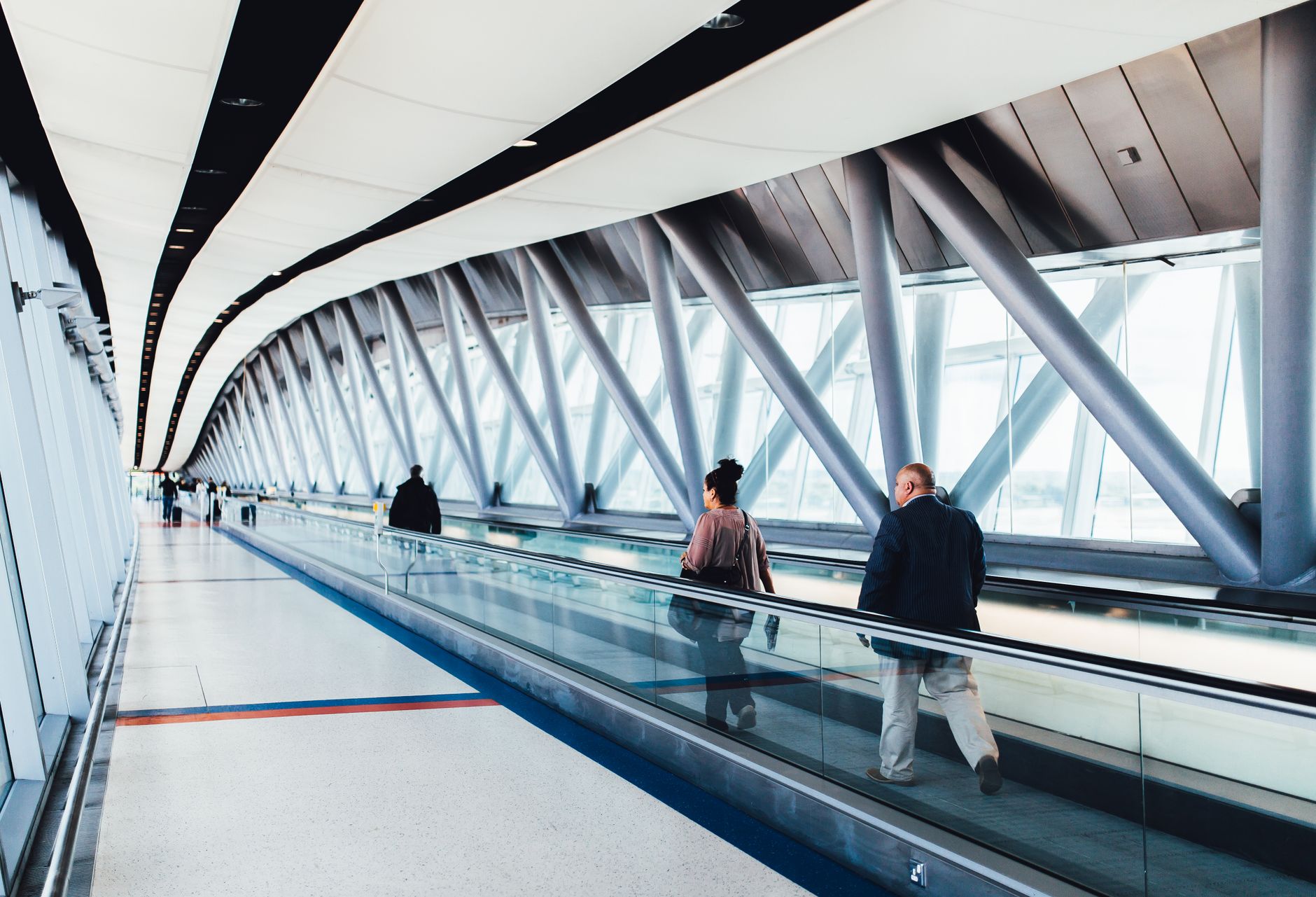
Just before passport control the queue splits in two. On one side, people wait for staffed desks. On the other, a row of grey booths with glass doors lets someone through every few seconds without a word exchanged with an officer. That is EasyPASS, the partly automated border control system run by Germany’s Federal Police, the Bundespolizei. Which side you belong on has nothing to do with your ticket or your frequent-flyer tier. It comes down to your passport, your age and — if you are not an EU citizen — a registration you have to have done beforehand.
Since April 2026 the question matters more, because a lot more now happens at the staffed desks and the airports themselves warn of longer waits. More on that below.
Who can use the eGates
The Federal Police recognise three groups, and one requirement applies to all of them: a valid electronic passport. German nationals may also use the credit-card-sized electronic identity card.
Citizens of the EU, the EEA and Switzerland holding an electronic passport who are at least 12 years old when they cross the border.
EasyPASS-RTP participants — more on this shortly — holding passports from the United States, Hong Kong, the Republic of Korea, Taiwan or the United Kingdom, again from age 12.
Holders of a German residence permit with an electronic passport of any nationality, also from 12. If you hold a German long-stay visa rather than a residence title, you can use EasyPASS on departure only, not on arrival.
It is free and voluntary, and you can always choose the staffed desk instead.
A word on age, because plenty of stale information is still floating around: an older Federal Police page from 2025 gives a minimum age of 18 for RTP participants and does not list the UK. The current EasyPASS pages, last updated in August 2026, give 12 for all three groups and name the UK explicitly. Go by the current version.
You can tell an electronic passport by the chip symbol on the cover. Germany has issued nothing but electronic passports since 1 November 2005, and the card-format ID since 1 November 2010.
The eight airports with EasyPASS
The Federal Police list exactly eight locations: Frankfurt, Munich, Cologne/Bonn, Düsseldorf, Berlin Brandenburg, Stuttgart, Hanover and Hamburg, with 255 control lanes in operation across them. Flying out of Schengen from Nuremberg, Leipzig/Halle or Dortmund, you will not find your airport on that list — expect a staffed desk.
The eGates sit wherever the border is, which means only on routes leaving or entering the Schengen area: London, Istanbul, Dubai, New York. Within Schengen there is no passport control and so no EasyPASS. How that split works at Germany’s biggest hub is covered in connecting at Frankfurt Airport; what happens either side of the border when you land from outside Schengen is in Frankfurt Airport arrivals.
At the gate, step by step
The Federal Police break the process into three steps, and the small details decide whether you are through in ten seconds or sent to a secondary check.
1. Put your passport down. The photo page goes face-down on the document reader at the entrance kiosk, with the other half of the passport pressed against the kiosk at a right angle. The system reads the chip and checks that you belong to one of the three user groups. If you do, the entrance door opens. As soon as it closes behind you, the next person can already put their passport down — which is why the lanes move so quickly.
2. Face capture. Hats, sunglasses and face masks have to come off by now; those three are the items the Federal Police name. Walk towards the camera in the exit door until the silhouettes on the display roughly line up, and look straight ahead. The camera moves up and down by itself to match your height, then compares your live image one-to-one with the photo stored on the chip.
3. Green arrow or police officer. A green arrow on its own means the exit door opens and you have crossed the border. If the symbol of a police officer appears, an officer opens the door by hand and asks you to step over to the secondary check position directly behind the gates. That is not an accusation, just a normal second step.
According to the Federal Police, data from an EasyPASS check is kept for 48 hours, extendable to a maximum of 30 days for police investigations. Under the German Passport Act the facial image is used solely to identify you at the gate, not for wanted-person searches.
Why the gate turns you away
Most rejections have mundane causes. The Federal Police spell them out for residence-permit holders, and they apply more widely:
- The wrong document. Only the electronic passport is checked. Put your residence card on the reader and nothing happens — your permit is looked up in the background via the passport.
- Placed badly. Passport not flat on the photo page, or the other half not pressed against the kiosk.
- Too young. Under 12, no door opens. That matters for families: travelling with a child under 12, you go through a staffed desk together rather than splitting across two lanes.
- The chip. Depending on the issuing country, Germany may be unable or not permitted to read the chip, or there may be no biometric photo stored on it.
- Your record in the Central Register of Foreigners. If you hold a German permit, do everything right and are still rejected, the Federal Police advise asking your local immigration office to check that your name, date of birth, current passport and current permit are recorded correctly. That is worth doing after any new passport or renewed permit.
Not every secondary check means something is wrong. The Federal Police explicitly name follow-up questions and their duty of care towards minors as reasons, so if you pass through with children aged 12 to 17, don’t be surprised if one of them is asked to step aside behind the gates.
One last point for Germans using the ID card: it gets you through the German gate, but that says nothing about whether your destination accepts it for entry. The Federal Police themselves suggest checking with the Federal Foreign Office or the destination country’s mission first.
EasyPASS-RTP: the route for non-EU travellers
The Registered Traveller Programme is aimed at frequent travellers from countries that have a reciprocity arrangement with Germany: the US, Hong Kong, the Republic of Korea, Taiwan and the United Kingdom. Registration is free and in person only, at a Federal Police service office at one of the eight EasyPASS airports, usually without an appointment. The check is much like a border control — document authenticity, police database queries — and you can use the gates straight afterwards.
The Entry/Exit System changed RTP from 10 April 2026. Participation now lasts up to six years, ending earlier if your passport, visa or residence permit runs out first. The first registration is valid for no more than a year, and eligibility is then reassessed every year, either during a border check or at a service office, within the last 90 days before the year is up. Miss that window and your participation lapses automatically, although you can re-register. The benefit: RTP members no longer have to prove the purpose of their trip or their means at entry, and their participation is recorded in their personal EES file. Unlike EU citizens, RTP users still stop briefly at the border desk directly behind the gates.
Service office hours vary widely (as of 2026): Berlin Brandenburg, Cologne/Bonn and Hanover around the clock; Hamburg (Terminal 2, level 1) 04:30 to midnight; Munich (Munich Airport Center, level 04) 06:30 to 21:00; Düsseldorf only Monday to Thursday 08:00–15:00 and Fridays until 14:00; Stuttgart by appointment. Frankfurt has two, both open daily 06:30–21:30: one in Terminal 1, hall B, level 3 by the stairs to the Sky Line, and since 23 April 2026 a second in the new Terminal 3, which took over the airlines of the now-closed Terminal 2 in 2026, in the left-hand corner of the check-in hall on the departures level.
It works the other way round too. German nationals can join the US Global Entry programme, with the mandatory pre-check carried out by the Federal Police at the same service offices. And Germans can use the UK’s eGates from age 10 without registering, provided they hold an electronic travel authorisation (ETA).
EasyPASS and the Entry/Exit System
This is where most people get muddled in 2026. The EU’s Entry/Exit System, EES, went live on 12 October 2025 and, according to Germany’s Federal Office of Administration, has been fully operational at German air and sea ports since 10 April 2026. It covers non-EU nationals entering for a short stay of up to 90 days in any 180: a facial image and fingerprints instead of a passport stamp. The record of each entry and exit is kept for three years.
EasyPASS and the EES are separate things. For EU citizens and people with a German residence permit the EES changes nothing — they stay with EasyPASS. Arrive as a visitor from outside the EU, though, and you go through EES registration. On arrival, some airports have self-service kiosks in front of the desks for this: scan your passport, capture your face, then the four fingers of your right hand. Munich has installed 119 of them, and BER has them too. On departure BER has no kiosks, so you go straight to the desk. Fingerprints are only taken from age 12; younger children are registered at a staffed desk at both Munich and BER. At the BER kiosks, incidentally, glasses and piercings can stay on as long as your face is clearly visible — that applies to EES registration there, not to the EasyPASS gate.
A side note: some airport pages still describe the EES as being rolled out gradually — Munich’s, for one. That is out of date; the transition period ended in April.
In practice: travel with someone who doesn’t hold an EU passport and you will split into two queues moving at very different speeds before the border. On departure, passport control comes after security, and the boarding gate won’t wait because the EES queue was long. The same applies when you are collecting someone off a flight from London or Istanbul — there is more than the baggage belt between touchdown and the arrivals hall, which turns how long you can wait in Munich’s short-stay parking into a very practical question. For the journey on from the terminal, it is worth checking estimated taxi fares from the major German airports, and in Frankfurt what the regulated taxi tariff means for a ride into town.
What I do myself
I hold my passport open in my hand while I’m still queuing, photo page down, and take off my hat and sunglasses before it is my turn. It sounds fussy, but it saves exactly the seconds otherwise spent watching someone ahead dig through a jacket pocket. And when I travel with someone on a non-EU passport, we agree a meeting point beyond the border before we split up, rather than waiting for each other.
The single most useful thing to take away, though, is this: EasyPASS is not a frequent-flyer lane, it is a question of documents. With a valid EU passport and aged 12 or over, you belong in the gate queue, no sign-up required. If you are flying with skis or a bike, you tend to lose that saved time earlier on at the oversize baggage desk — how that works is covered in sports equipment on a plane.
Keep reading
Departure & Security
Flying With a Dog or Cat: Eight Kilos, the Microchip and the Cabin-or-Hold Question
What a dog or cat may weigh in the cabin, the point at which the animal has to travel in the hold, why snub-nosed breeds are excluded, what the EU pet passport actually requires — and where animals are handed over at Frankfurt and Munich.
Sophie Bauer17 September 2026
Departure & Security
Sports Equipment on a Plane 2026: Skis, Bikes, Golf Bags and Surfboards — Fees and Rules at Five Airlines
Flying with sports equipment in 2026: what skis, bikes, golf bags and surfboards cost at five airlines, the size and weight limits, how a bike must be boxed, and where the oversize desks are at Frankfurt and Munich.
Sophie Bauer25 September 2026
Departure & Security
Condor Hand Luggage 2026: Sizes, the 8 kg Rule and the Full Fare Matrix
Condor hand luggage 2026: 55 × 40 × 23 cm since 1 May, eight kilos for case and bag combined, Economy Zero from €9.99 — plus gate charges and the reservable overhead bin. As of 2026.
Sophie Bauer17 September 2026
Departure & Security
Düsseldorf Airport Departures: one hall, three piers, three security checks
Departing Düsseldorf Airport: the central check-in hall, the checkpoints at piers A, B and C, DUSgateway, the SkyTrain from the long-distance station, the S11 and U80, and how much time to allow (as of 2026).
Sophie Bauer25 September 2026
Departure & Security
Power Banks on a Plane in 2026: Cabin Bags, Watt-Hours and Which Airlines Ban Using Them
Power banks on a plane in 2026: cabin baggage only, two at most, the 100 and 160 Wh thresholds — and which airlines ban charging on board, from Lufthansa to Ryanair and Wizz Air (as of September 2026).
Sophie Bauer25 September 2026