Turkish Airlines Hand Luggage 2026: 8 kg overhead, 4 kg under the seat, and the AJet exception
Turkish Airlines is one of the generous ones on hand luggage: a cabin bag and a personal item come with every Economy fare. Its subsidiary AJet has dropped the cabin bag from its cheapest international fare. Mix the two up and you pay €50 at the aircraft door.

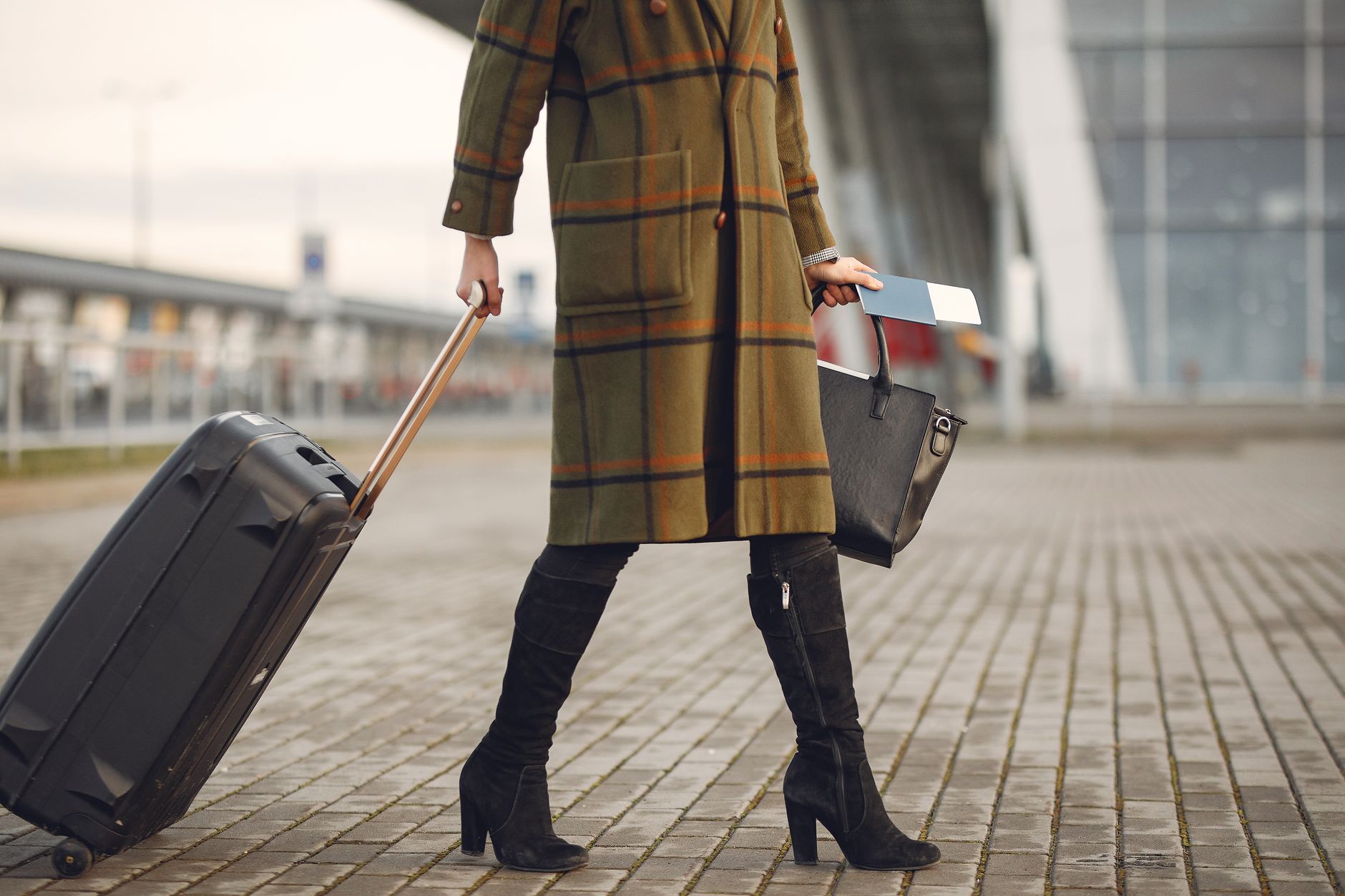
With Turkish Airlines, hand luggage is one of the few questions in air travel that still has a simple answer in 2026: in Economy you may bring one cabin bag and one personal item, whichever fare you’ve booked. The complication lies elsewhere. Under the Turkish umbrella also flies AJet, the group’s low-cost brand, which scrapped the cabin bag from its cheapest international fare at the end of 2025. Both fly from Germany to Turkey, often from the same airports. At Hamburg, for instance, both check in at Terminal 1.
So there are two rulebooks here, side by side: Turkish Airlines first, then AJet, then the comparison. How Turkish measures up against Lufthansa, Ryanair, easyJet and the rest is also covered in the hand luggage size comparison across the major airlines.
Economy: 55 × 40 × 23 cm and eight kilos, plus a bag
Turkish puts it plainly on its cabin baggage page: in Economy Class you may take one piece of cabin baggage up to 23 × 40 × 55 cm and 8 kg, plus one personal item up to 40 × 30 × 15 cm and 4 kg (as of September 2026). The case goes in the overhead locker, the bag under the seat in front. Turkish specifically asks for the personal item to stay under the seat during the flight, not up top.
These figures apply across all three Economy brands, EcoFly, ExtraFly and PrimeFly. In the fare table for domestic flights, all three carry the same line: eight kilos of cabin baggage. The brands differ on checked baggage, seat selection and change rules, not on the case in the cabin. That’s the real contrast with Lufthansa, whose entry-level Economy Basic fare has allowed only the personal item since May 2026. The detail is in Lufthansa hand luggage.
Two practical points. First, the weight of the bag: four kilos go quickly once a laptop, charger and camera are inside. Second, the dimensions include wheels and handles. A case advertised at 55 cm on its body measurement is often 57 or 58 cm tall with the wheels.
Then the special items. A garment bag up to 114 × 60 × 11 cm counts as cabin baggage at Turkish, so it replaces the case. Tennis and squash racquets may come on board in a proper bag.
Business Class: two cases, 16 kg in total
In Business Class you may carry two pieces of cabin baggage, each up to 23 × 40 × 55 cm and 8 kg, no more than 16 kg combined, plus the 40 × 30 × 15 cm, 4 kg personal item. There’s one exception, on flights departing the USA: under TSA rules only one case and one personal item go through security there, so the second Business case is checked into the hold free of charge.
Star Alliance Gold members get the same as their booked cabin, so a case plus a bag in Economy and two cases plus a bag in Business. Turkish has been a Star Alliance member since 2008.
For infants, Turkish lists a separate piece of up to 8 kg on domestic and international flights, in either cabin. The English and German versions of the page word this differently: the English says the infant is entitled to it, the German talks about passengers travelling with an infant. Either way, it’s an additional piece for the child.
At the gate: a fee, the hold, and at worst a later flight
Turkish is unusually explicit about what happens to an oversized case. Cabin baggage that doesn’t comply with the rules and isn’t tagged is taken into the hold for a fee at the gate check. If there’s no room in the hold of your flight, the bag goes on the next available flight. The page doesn’t state the fee.
That’s the clause to take seriously. A case that reaches Istanbul one flight after you is a real problem when you’re connecting to Bangkok or Cape Town. Turkish therefore recommends showing your cabin bag at check-in and having it tagged. If you’re carrying a borderline case, go via the desk rather than straight to the gate.
The reverse can happen too: on full flights staff may ask you to hand in a compliant cabin bag at check-in, in which case it travels free as checked baggage. Take out your passport, medicines, keys and valuables first, as Turkish specifically says those don’t belong in the hold.
Connecting in Istanbul: liquids and partner flights
Most Turkish flights from Germany route through the Istanbul hub, and two of the airline’s rules bear directly on that connection.
Liquids and duty-free. Turkish warns that at some transfer airports, connecting passengers may not take liquids over 100 ml through transit security, sealed duty-free bags included. Buy a bottle of perfume in Düsseldorf or Hamburg and connect in Istanbul, and you risk handing it over there. Shop on the last leg, not the first.
Partner flights. On journeys involving more than one airline, IATA rules make the operating carrier responsible for the cabin allowance. If you continue from Istanbul with a partner, their dimensions apply from there.
And once you’ve landed: Istanbul’s new airport is a long way from the centre. How to get in by Havaist bus, M11 metro or taxi, and what it costs, is set out in the guide to the Istanbul airport transfer.
Power banks: two at most, never in the overhead locker
Since the ICAO change of 27 March 2026, stricter power bank rules apply, and Turkish has adopted them in full. You may carry no more than two power banks, each up to 100 Wh (lithium metal up to 2 g), in hand luggage only. They must not go in the overhead locker but under the seat in front or in the seat pocket. You may not charge them at any stage of the flight, nor use them to charge other devices, and wireless power banks must be switched off completely. Anything over 100 Wh is banned outright at Turkish. AJet’s wording is identical. What other airlines say is in power banks on a plane.
In practice, the power bank lives in the small bag, not the trolley. If your trolley gets collected at the gate for the hold on a full flight, take it out first.
Domestic flights in Turkey
With Turkish itself, nothing changes on hand luggage within Turkey: every Economy brand gets eight kilos of cabin baggage, Business two pieces. According to the domestic fare table, the brands differ only in checked baggage, 15 kg on EcoFly, 20 on ExtraFly, 25 on PrimeFly and 30 in Business, and in free seat selection, which starts at PrimeFly (as of 2026). On international flights, checked baggage depends on the brand and the route; your ticket shows how many kilos you have.
Plenty of domestic Turkish routes, though, are flown not by Turkish but by AJet. That’s where it gets more involved.
AJet: two rulebooks, depending on where you fly
AJet, formerly AnadoluJet, is Turkish Airlines’ low-cost brand, with its own fares, its own rules and, since 16 December 2025, a sharp dividing line.
On domestic flights within Turkey, all three packages, Basic, Flex and Premium, include a cabin bag up to 55 × 40 × 23 cm and 8 kg, an under-seat bag and checked baggage.
On international flights, and to Ercan in Northern Cyprus, the Basic package now includes only an under-seat bag of no more than 40 × 30 × 15 cm and 4 kg. There is no cabin bag. Only the EcoJet, Flex and Premium packages include the 55 × 40 × 23 cm, 8 kg case. On Basic you can add one at booking, afterwards or at check-in. The price is per flight, so every connecting leg counts separately. AJet’s own worked example uses €15 per flight, making €30 for a return without a connection (as of 2026). The price for your route shows up in the booking.
Turn up at the aircraft door with an oversized or extra piece and AJet charges €50 per item on international flights, 1,600 lira on domestic ones, and the bag goes in the hold, even if you’ve already booked checked baggage. Size is checked with a measuring frame, weight with a hand scale.
Two finer points that catch travellers from Germany. First, on journeys with an international leg, the international leg’s rules apply to the whole trip. Book Basic from Germany to Istanbul Sabiha Gökçen and connect onto a domestic flight to Trabzon, and you only have the under-seat bag on the domestic flight too. Second, infants have no cabin baggage allowance at AJet, and AJet doesn’t sell one for them.
And one inconsistency on AJet’s own page: the general paragraph still describes cabin baggage up to 55 × 40 × 23 cm as carried “without charge”. Only a footnote beneath it explains that this service has been chargeable since 16 December 2025. The package table is what counts, not the old sentence above it.
The comparison at a glance
| Cabin bag | Personal item | |
|---|---|---|
| Turkish Economy (all brands) | 55 × 40 × 23 cm, 8 kg | 40 × 30 × 15 cm, 4 kg |
| Turkish Business | 2 × 55 × 40 × 23 cm, 16 kg combined | 40 × 30 × 15 cm, 4 kg |
| AJet Basic, international | not included, can be added | 40 × 30 × 15 cm, 4 kg |
| AJet EcoJet, Flex, Premium | 55 × 40 × 23 cm, 8 kg | 40 × 30 × 15 cm, 4 kg |
| AJet, all packages, domestic | 55 × 40 × 23 cm, 8 kg | included |
There’s a neat parallel with Germany here: AJet Basic on international routes and Lufthansa Economy Basic follow the same principle, personal item yes, case only at extra cost. Turkish itself hasn’t taken that step so far. SunExpress and Pegasus, the second and third options for many Turkey trips, are separate companies with their own rules, and the Turkish or AJet figures don’t carry over to them.
A worked example: four people, two weeks in Turkey
A family from Hamburg, two adults and two children over two, is flying to Turkey for a fortnight. Everyone wants a trolley.
With Turkish Airlines on EcoFly: four cases and four bags are included, so hand luggage adds nothing. Whether checked baggage is included depends on the route and brand.
With AJet Basic, connecting at Istanbul Sabiha Gökçen: each direction is two flights, so four in all. Using AJet’s €15-per-flight example, a case costs €60 per person, €240 for the four of them. EcoJet, with a case and checked baggage included, can then easily be the cheaper choice. Only the total in the booking tells you.
Driving to the airport for two weeks adds another line. What the second week in the car park costs, and when an off-site operator saves money, is covered in the guide to long-stay parking at Hamburg Airport. If you’d rather take a taxi, check the indicative taxi fares to German airports first. Where the family checks in at Hamburg and how Slot & Fly gets them through security is in Hamburg Airport departures. Flying from Frankfurt instead? Many airline allocations there shifted in 2026 when Terminal 3 opened. Your booking tells you where to check in, and the map of all Frankfurt terminals shows you how to get there.
What the EU reform changes
The European Parliament passed the reform of air passenger rights in July 2026. Among other things it provides for a right to a free personal item in the cabin. It’s expected to apply from around 2027, and the text sets no fixed dimensions for that item. Turkish already meets it with a case plus a bag, and AJet Basic lets the under-seat bag travel free too. For 2026, the reform changes nothing.
So the simple rule for Turkey trips is this: look at the flight number, not the logo on the search site. If it starts with TK, you’re flying Turkish, and the case and bag are included. If it starts with VF, you’re flying AJet, and on an international Basic fare you take only the bag unless you’ve added a case. Everything here reflects the position as of September 2026, based on the Turkish Airlines and AJet websites. Both airlines change fares and fees regularly, and what counts is what your booking says.
Keep reading
Departure & Security
Backpack as Hand Luggage: Personal Item or Cabin Bag?
Backpacks as hand luggage: when one counts as a free personal item under the seat, when it counts as a full cabin bag, which styles cause gate trouble, and how to pack them right.
Sophie Bauer17 August 2026
Departure & Security
Eurowings Hand Luggage 2026: BASIC, SMART and BIZclass Compared
Eurowings hand luggage 2026: dimensions for the small bag and the cabin case, what BASIC, SMART and BIZclass actually include, plus a comparison with Lufthansa and Ryanair. As of 2026.
Sophie Bauer14 August 2026
Departure & Security
Hand Luggage Sizes 2026: What Each Airline Actually Allows
Hand luggage sizes 2026 compared: Lufthansa, Ryanair, Eurowings, easyJet, Wizz and Condor — plus the one case size that clears all six airlines.
Sophie Bauer12 August 2026
Departure & Security
Wizz Air Hand Luggage 2026: 40 × 30 × 20 Free, a Trolley Only With WIZZ Priority
Wizz Air hand luggage in 2026: a free 40 × 30 × 20 cm bag up to 10 kg, a 55 × 40 × 23 cm trolley only with WIZZ Priority, what Priority costs online and at the airport, and what awaits at the gate (as of September 2026).
Sophie Bauer25 September 2026
Departure & Security
British Airways Hand Luggage 2026: Two Bags Included, Even on the Cheapest Fare
British Airways hand luggage 2026: cabin bag and personal item dimensions, why even the Basic fare keeps both pieces, and what applies flying from Frankfurt, Munich and Düsseldorf. As of 2026.
Sophie Bauer27 July 2026