Power Banks on a Plane in 2026: Cabin Bags, Watt-Hours and Which Airlines Ban Using Them
Until 2025 a power bank was a packing question. In 2026 it's a question of what you do with it once you're seated: ICAO has banned recharging them in flight, and many airlines now also forbid using one to charge your phone. The rules differ between airlines more sharply than they ever have.

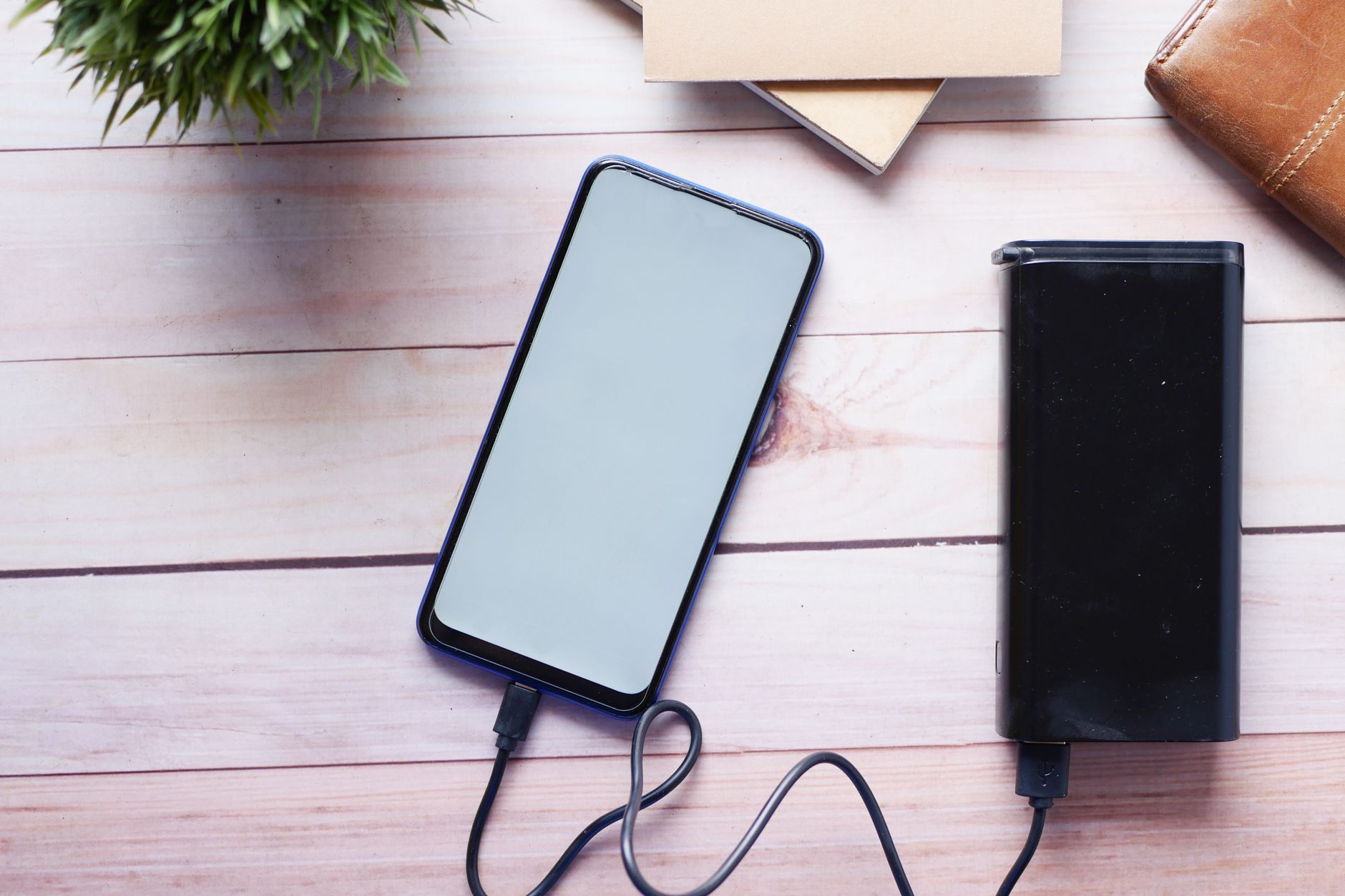
If you flew with a power bank in 2024, there was exactly one rule to remember: not in the suitcase. Fly in 2026 and you need three more, and they depend on which airline sold you the ticket. Can the power bank go in the overhead locker? Can I top up my phone from it during the flight? And how many am I allowed to carry at all? In autumn 2026, Lufthansa, Ryanair and Wizz Air give three different answers to those three questions.
The general battery rules for small devices with a built-in battery — toothbrushes, shavers, earbuds — are covered in the piece on taking an electric toothbrush on a plane. This one is only about the power bank: the loose battery whose sole purpose is to feed other devices. That’s precisely the category regulators pulled out of the general “spare battery” pile in 2026.
The fixed baseline: cabin only, never the hold
This hasn’t changed and isn’t going to: power banks travel only in your hand luggage or on your person, never in checked baggage. That holds for every airline and every capacity. The reason is detection. A battery that starts smoking in the cabin gets noticed and dealt with by the crew; in the hold, nobody sees it until it’s too late.
If a power bank shows up when your suitcase is X-rayed, the bag is pulled from the system and opened. Best case, you wait at the desk; worse case, the case flies without you, or you without the case. On top of that comes the short-circuit rule: original packaging, taped-over terminals, or a separate pouch for each power bank. One rattling loose in a coat pocket alongside keys and coins doesn’t meet it.
100 Wh, 160 Wh — and how to read the number off the casing
The limits are measured in watt-hours (Wh), but most power banks are labelled in milliamp-hours (mAh). Lufthansa’s own battery page gives the conversion: watt-hours = milliamp-hours × voltage ÷ 1,000. At the usual cell voltage of 3.7 volts, that works out as follows:
| Label | Watt-hours at 3.7 V | Where it stands |
|---|---|---|
| 10,000 mAh | 37 Wh | no issue |
| 20,000 mAh | 74 Wh | no issue |
| 26,800 mAh | about 99 Wh | just under the line |
| 30,000 mAh | about 111 Wh | over 100 Wh — already banned by several airlines |
Under ICAO’s international dangerous goods rules: up to 100 Wh needs no approval, over 100 and up to 160 Wh needs the airline’s consent, and over 160 Wh is not allowed at all. That’s only the framework, though — individual airlines draw the line tighter, as the table below shows. And one rule Wizz Air spells out applies in practice everywhere: a power bank with no visible Wh rating, where the figure can’t be worked out from volts and mAh either, is forbidden.
What changed on 27 March 2026
On that date an addendum to ICAO’s Technical Instructions — the rulebook for dangerous goods in aviation — took effect. For the first time it treats power banks separately from ordinary spare batteries, and for personal use it sets out:
- no more than two power banks per person, whatever their capacity;
- no recharging of power banks on board — not from the seat socket, not from another power bank;
- as a recommendation: don’t use a power bank to charge other devices on board.
In its guidance to airlines, IATA explains the move with concern over cheaply made power banks that lack dependable testing to the UN 38.3 standard. It singles out wireless power banks that charge a phone by induction, noting reports from passengers whose devices of this kind went into thermal runaway.
That third point is only a recommendation — and it’s exactly where airlines part company.
Airline by airline: who bans what (as of September 2026)
The overview below is based on the airlines’ own baggage and dangerous goods pages, checked in September 2026.
| Airline | Power banks per person | Over 100 Wh | Charging your phone from it | Recharging the power bank | Overhead locker |
|---|---|---|---|---|---|
| Lufthansa | 2 | 100–160 Wh with approval | banned | banned | no |
| Eurowings | 2 | 100–160 Wh with approval | banned | banned | no |
| Condor | 2 | not separately stated | banned | banned | no |
| Ryanair | 2 | not allowed | allowed, except during taxi, take-off and landing | banned | no |
| easyJet | 2 | not separately stated | banned | banned | – |
| Wizz Air | 1 | not allowed | banned in every phase of flight | banned | no |
| Emirates | 1 | not allowed | banned | banned | no |
A few details that won’t fit in a table cell:
Lufthansa keeps it short: charging and using power banks is prohibited, with an exception for approved medical devices. The power bank belongs under the seat in front, in the seat pocket, on your person or in your hand luggage. Anything between 100 and 160 Wh that needs approval is registered through the Service Center when you book.
Eurowings announced its two-power-bank limit as applying from 15 January 2026 on its German page and from 1 January on its English one — the airline contradicts itself. The ban on use isn’t in that announcement, but according to the German motoring club ADAC it applies to Eurowings as it does to the rest of the Lufthansa Group.
Ryanair is the only major airline on this list that still lets you top up your phone from a power bank in the cruise. It’s stricter on capacity instead: devices and batteries over 100 Wh aren’t permitted in the cabin or the hold, approval or not. And the power bank may only be carried on your person or in the bag under the seat in front.
Wizz Air is the strictest: one power bank at most, anything over 100 Wh is banned, and according to Wizz it may not be used during any phase of the flight. It’s only allowed under the seat in front or in the seat pocket. If you’re flying without Priority you’ll only have the free under-seat bag anyway, so you’ll barely notice — more on that in the piece on Wizz Air hand luggage.
Emirates moved early: since 1 October 2025, using any power bank on board has been prohibited, and you may carry just one under 100 Wh. The airline points to the in-seat charging it offers across its entire fleet.
Why the overhead locker suddenly matters
Banning power banks from the overhead locker looks like red tape at first glance, but it follows the same logic as the hold ban. A battery that starts to smoke under the seat in front is noticed by you or your neighbour within seconds. One inside a closed locker above everyone’s heads is noticed only when smoke starts leaking from the seams.
In practice, the power bank doesn’t go into your wheelie case at boarding — it goes into your jacket or the bag that fits under the seat. Travelling without a small second bag? Put it in the seat pocket. This matters most if you board in the last group: if your case gets tagged at the gate for the hold, the power bank has to come out first. Leave it in the outside pocket and you’ll relive the check-in-desk scene at the aircraft door.
100 to 160 Wh: an approval that may soon disappear
If you travel with a large laptop power bank, camera gear or batteries for camping equipment, there’s a development worth knowing about. ICAO still allows power banks between 100 and 160 Wh with the airline’s approval. But in its March 2026 guidance to airlines, IATA announced that it will not carry that provision into the 68th edition of its Dangerous Goods Regulations, which take effect on 1 January 2027. Its reasoning: weak oversight of manufacturers, and the fact that even power banks used by crew are capped at 100 Wh.
What that means for each airline is still open, because implementation sits with the carriers and national authorities. But if you’re buying a 130 Wh power bank today, assume that many airlines won’t take it in 2027. Ryanair, Wizz Air and Emirates already don’t.
If your power bank gets stopped at security
A power bank with no Wh rating, a third one on an airline that allows two, or a swollen casing — at security you then have the same options as with an oversized liquid. How the checkpoint works, and why bigger batteries sometimes have to go in a tray of their own, is covered under airport security checkpoints.
Frankfurt has a way out that few people know about: according to Fraport, items taken from you at security can be packed into white bags and lodged at the left-luggage office. Whether that stretches to a battery in any given case is the staff’s call on the spot. Where the left-luggage office and lockers are is shown in the Frankfurt Airport A to Z, from lounges to luggage storage. If you drove, the fix is simpler: back to the car park, power bank in the glovebox, second attempt. Whether that’s worth the time depends on how far your space is from the terminal — the rundown of Frankfurt Airport’s car parks and prices shows which ones sit right by the terminals.
Landing with a flat phone
The side effect of the new rules shows up not on board but after landing. If you used to top up your phone from a power bank on long flights, on Lufthansa or Wizz Air you may now step off with five per cent. With no seat socket on the way, you lose the rail app, the car-hire confirmation and the ride booking at exactly the wrong moment.
Three things help. First: charge the phone fully before boarding and keep it in flight mode. Second: use the seat socket where there is one — plugging your phone straight into the seat isn’t affected by any of these rules. Third: plan the onward journey so it works even without a battery. A transfer booked in advance, with a driver waiting at the exit, needs no phone once it’s confirmed. If you’d rather take a cab from the rank, know roughly what the ride costs beforehand — the indicative taxi fares for Germany’s major airports can be looked up before you fly, not with a dead battery at the taxi rank. How to get from the aircraft to the train, the taxi or the hotel shuttle at Frankfurt is set out in the guide to Frankfurt Airport arrivals.
The simplest summary for 2026: one or two power banks under 100 Wh, on your person or under the seat in front, and left unused on board unless the crew says otherwise. That keeps you on the right side of every airline listed here — Ryanair included, where you’d be allowed more. And if the only reason you pack a power bank is to charge your phone in flight, check before booking whether your seat has a socket. That question now matters more than the watt-hour figure on the casing.
All details are as of September 2026, based on the pages of ICAO, IATA and the airlines named. Power bank rules are currently changing faster than any other baggage regulation — check your airline’s dangerous goods page before every flight, even on a route you flew three months ago.
Keep reading
Departure & Security
Electric Toothbrush on a Plane 2026: The Battery Rules for Hand Luggage
Electric toothbrushes, power banks and e-cigarettes in hand luggage: watt-hour limits, loose versus built-in batteries and what happens at security (as of 2026).
Sophie Bauer2 August 2026
Departure & Security
Wizz Air Hand Luggage 2026: 40 × 30 × 20 Free, a Trolley Only With WIZZ Priority
Wizz Air hand luggage in 2026: a free 40 × 30 × 20 cm bag up to 10 kg, a 55 × 40 × 23 cm trolley only with WIZZ Priority, what Priority costs online and at the airport, and what awaits at the gate (as of September 2026).
Sophie Bauer25 September 2026
Departure & Security
Ryanair Hand Luggage 2026: The Free Bag, the Priority Upgrade and the Gate Fee
Ryanair hand luggage 2026: the free bag's dimensions, what Priority & 2 Cabin Bags really buys you, and why the gate fee is so steep (as of 2026).
Sophie Bauer15 July 2026
Departure & Security
Lufthansa Hand Luggage 2026: The Cabin Bag, the Personal Item and the New Basic Fare
Lufthansa hand luggage 2026: cabin bag and personal item dimensions, how Light, Classic, Flex and Business differ, and what the new Economy Basic fare now costs. As of 2026.
Sophie Bauer18 July 2026
Departure & Security
Turkish Airlines Hand Luggage 2026: 8 kg overhead, 4 kg under the seat, and the AJet exception
Turkish Airlines hand luggage 2026: a 55 × 40 × 23 cm cabin bag up to 8 kg plus a 40 × 30 × 15 cm personal item up to 4 kg, two bags in Business, domestic flights, and why AJet's Basic fare no longer includes a cabin bag (as of September 2026).
Sophie Bauer25 September 2026