Backpack as Hand Luggage: Personal Item or Cabin Bag?
A backpack has no fixed edges, and that is exactly what makes it unpredictable at the gate. Hiking pack, laptop backpack or simple daypack — depending on the shape, you either count as a personal item or as full cabin baggage, and the difference can cost you at boarding.

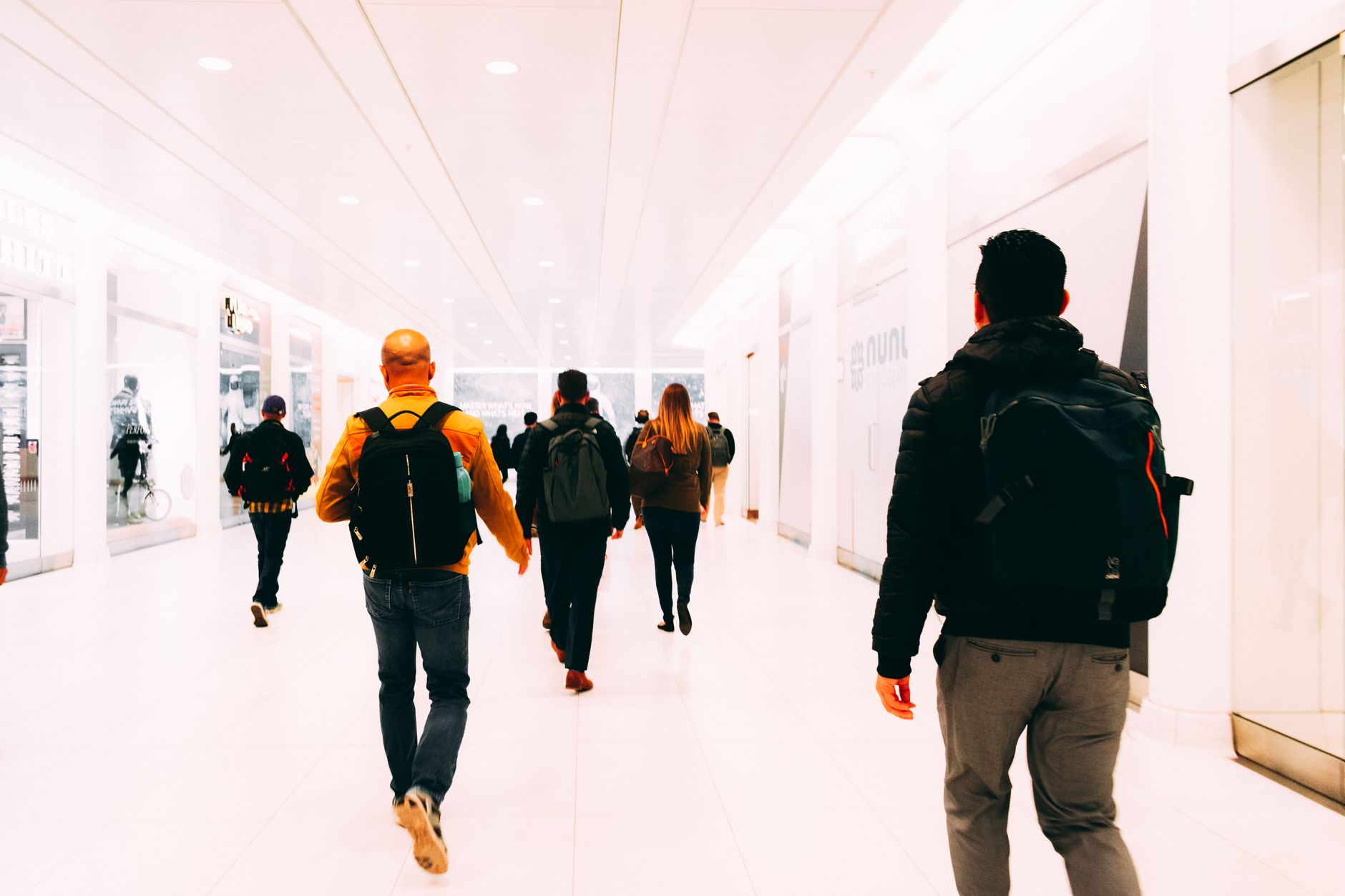
A suitcase has fixed edges. A backpack doesn’t. That’s the difference most travellers underestimate: a hard-shell case either fits the sizing cage or it doesn’t, full stop, but a backpack is soft, compressible, and can be five centimetres bigger or smaller from one packing session to the next. That makes it the most forgiving hand luggage there is — and also the piece that gets argued about most often at the gate.
Personal item or cabin bag — the difference that matters
Almost every airline splits hand luggage into two categories: the personal item, which has to fit under the seat in front, and the cabin bag, which goes in the overhead locker. A backpack can be either — just not both at once, and which category it falls into decides what you pay.
Most German and European carriers set the personal-item allowance around 40 × 30 × 15 to 20 cm — Lufthansa’s Economy Basic fare, introduced on 19 May 2026, sets it at exactly 40 × 30 × 15 cm, while Eurowings’ Basic fare allows 40 × 30 × 25 cm, noticeably deeper. A small 15–20 litre daypack usually squeezes into this allowance; a classic 30 litre hiking pack almost never does.
The cabin-bag category is the larger one, typically 55 × 40 × 20 to 23 cm depending on the airline, sometimes chargeable and sometimes included. A fully packed 40 litre travel backpack almost always belongs here — provided it’s compressed enough to actually hit those dimensions.
The costliest mistake at the gate: booking a fare that only includes the small personal item while carrying a backpack that clearly reads as a cabin bag. You’ll pay the difference at the gate, and gate fees routinely run higher than adding the bag online before the flight. For the exact dimensions and prices across airlines, see Hand Luggage Sizes by Airline.
Why backpacks get checked differently from suitcases
A hard-shell case gets measured by being pushed into the sizing cage — it fits or it doesn’t, and there’s no argument. A backpack is judged more loosely, and that’s exactly where most gate disputes come from.
Straps hanging off the side or top usually count as part of the bag for sizing purposes, even if they’re loose. Compression straps left unfastened let the pack balloon out visibly and can snag in the cage even when the main compartment would otherwise have fitted. Side pockets stuffed full — a water bottle poking out, a jacket rolled up under the compression straps — nearly always get counted by gate staff, even though they weren’t part of the manufacturer’s official dimensions at purchase.
In practice that means a backpack gets judged more strictly when it looks messy and more leniently when it sits flat and neat. That’s not a written rule, just a pattern from how boarding actually works — ground staff on full flights look at the visual impression before they measure anything. A backpack that looks like it won’t fit the overhead locker gets sent to the cage sooner than one that looks flat and orderly, even at identical packed volume.
Hiking packs with extending frames — the biggest source of arguments
Most larger trekking backpacks from around 40 litres up have an extendable lid compartment, often marketed as an “extend” system: a zip releases extra volume, usually 5 to 10 litres, once the lid is raised. That feature is exactly the problem at the airport, because a pack in its extended position can easily be 5 to 8 cm taller than fully compressed.
Manufacturer spec sheets usually list two figures — standard volume and extended volume — but airline websites only publish a single cabin-bag limit. If your 45 litre trekking pack is advertised as “up to 55 cm tall”, that’s almost always the extended measurement. What matters at the airport is the compressed, closed height — and you have to measure that yourself, with the compression straps pulled tight and the lid fully collapsed.
One more detail specific to trekking packs: external straps for an ice axe, trekking poles or a sleeping mat. If anything is actually clipped in there, it nearly always counts as part of the bag — a tent or sleeping mat lashed to the outside makes the pack effectively bigger, even if the main compartment itself is within limits. If you’re travelling with bulky gear, put the tent and mat in checked luggage and keep the cabin pack closed cleanly.
Laptop backpacks — mostly fine, but not always small enough
Classic business and laptop backpacks with a padded back panel look compact but are often taller than they appear — many models sit at 45 to 48 cm to accommodate a 15- or 16-inch laptop plus padding. That’s too tall for the personal-item category’s usual 30 cm height limit, so these backpacks almost automatically fall into the cabin-bag category, even though they feel like a small everyday piece.
That matters most with budget carriers: if you’ve only booked the personal item on a Basic fare and turn up with a 48 cm laptop backpack, you’ll be paying at the gate. A simple pre-trip test helps — lay the backpack flat and measure the actual height with a tape measure rather than trusting the online listing, which often describes the laptop compartment’s internal dimensions rather than the packed bag’s external ones.
Details on laptops, toothbrushes and other battery-powered devices that matter alongside pure size are covered in Electric Toothbrush on a Plane.
Daypacks as a personal item — the underrated advantage
A simple, flat daypack around 15 to 20 litres is the least stressful case compared with a suitcase or a full cabin backpack — it clears the personal-item allowance almost everywhere, free, without argument. The reason is shape: without a rigid back panel, an extending lid, or stiff edges, it squashes down easily when you slide it under the seat in front.
That has a practical upside: if you’re travelling with a larger cabin case but only the free personal item is included in your fare, a second small backpack is worth carrying alongside it — it soaks up whatever is heavy but small. Cables, a power bank, a book, snacks: many airlines only measure the personal item rather than weighing it, while the cabin bag has a weight limit attached. Packing heavy small items into the under-seat backpack rather than the overhead case is the surest way to avoid a reweigh at check-in.
How to compress a backpack properly before you fly
The biggest lever for getting a borderline backpack through isn’t the packing itself — it’s the last step before you leave the house: compression. Three things reliably help.
First, actually pull the side and top compression straps tight rather than just threading them loosely — on most trekking and travel backpacks that shaves 3 to 5 cm off the effective depth by squeezing the air out between items. Second, put soft, compressible items like clothing and jackets against the outer edges and corners, and hard items like shoes, chargers and toiletry bags in the middle — a pack with a soft perimeter can still be squashed down when it’s pushed into the sizing cage; one with hard edges on the outside can’t.
Third, wear the heaviest and bulkiest individual items on your body rather than packing them. A thick jacket, sturdy hiking boots, or a second pair of shoes worn rather than packed cuts both weight and volume noticeably — and for a soft-sided bag, that’s exactly the difference between fitting the cage and being checked at the gate. Packing cubes help too, by pre-compressing clothing and stopping the pack from puffing back up once you’re carrying it.
One last practical point: measure your packed, compressed backpack at home with a tape measure before you fly with it for the first time — manufacturer litre figures say nothing about actual external height, and that’s what decides things at the gate. If you want a specific airline’s hand luggage rules before booking, Eurowings Hand Luggage and Lufthansa Hand Luggage cover the detail.
A backpack still ends up the most forgiving piece of hand luggage there is — it adapts where a suitcase simply hits its edges. But that same flexibility means the responsibility for making sure it actually fits the category you booked sits more with you than with any rigid bag, and it’s worth checking properly before the trip rather than finding out at the gate.
Keep reading
Departure & Security
Turkish Airlines Hand Luggage 2026: 8 kg overhead, 4 kg under the seat, and the AJet exception
Turkish Airlines hand luggage 2026: a 55 × 40 × 23 cm cabin bag up to 8 kg plus a 40 × 30 × 15 cm personal item up to 4 kg, two bags in Business, domestic flights, and why AJet's Basic fare no longer includes a cabin bag (as of September 2026).
Sophie Bauer25 September 2026
Departure & Security
easyJet Hand Luggage 2026: Sizes, 15 kg and the €70 Gate Fee
easyJet hand luggage 2026: a free 45 × 36 × 20 cm bag at up to 15 kg, a paid 56 × 45 × 25 cm large cabin bag, €70 at the boarding gate — and why a better seat no longer buys you a second bag. As of 2026.
Sophie Bauer17 September 2026
Departure & Security
British Airways Hand Luggage 2026: Two Bags Included, Even on the Cheapest Fare
British Airways hand luggage 2026: cabin bag and personal item dimensions, why even the Basic fare keeps both pieces, and what applies flying from Frankfurt, Munich and Düsseldorf. As of 2026.
Sophie Bauer27 July 2026
Departure & Security
Lufthansa Hand Luggage 2026: The Cabin Bag, the Personal Item and the New Basic Fare
Lufthansa hand luggage 2026: cabin bag and personal item dimensions, how Light, Classic, Flex and Business differ, and what the new Economy Basic fare now costs. As of 2026.
Sophie Bauer18 July 2026
Departure & Security
Ryanair Hand Luggage 2026: The Free Bag, the Priority Upgrade and the Gate Fee
Ryanair hand luggage 2026: the free bag's dimensions, what Priority & 2 Cabin Bags really buys you, and why the gate fee is so steep (as of 2026).
Sophie Bauer15 July 2026