Lufthansa Hand Luggage 2026: The Cabin Bag, the Personal Item and the New Basic Fare
Most Lufthansa passengers still board with two free bags — but since 19 May 2026 that's no longer true on every fare, and missing the difference costs you at the check-in desk.

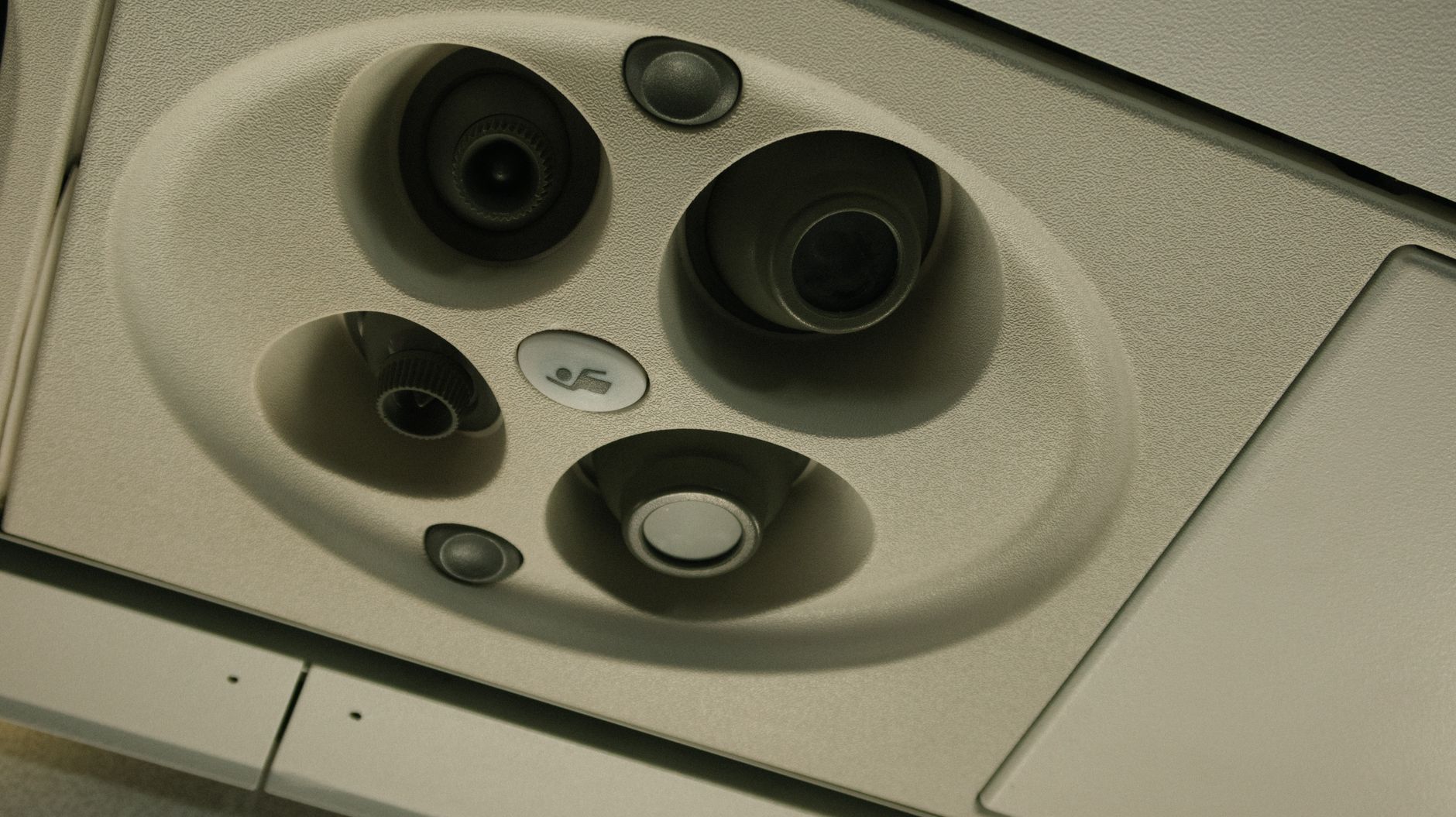
At the self-check-in kiosks in Frankfurt or Munich, Lufthansa has been asking a question since May 2026 that didn’t used to appear: whether the fare you booked actually includes a cabin bag at all. Miss that question and turn up at the gate with a rucksack and a trolley case anyway, and you’ll find out the hard way. On most other Lufthansa fares, though, a cabin bag and a personal item still travel free, exactly as before — the basic principle hasn’t changed, only one new tier sitting underneath it.
In the comparison of hand luggage sizes across the major airlines, this change shows up as a single line: Economy Basic, cabin bag addable from €15. That undersells how the system actually works, because Lufthansa is built on a fundamentally different logic than Ryanair, which splits hand luggage into a free category and a paid one from the outset, regardless of fare. At Lufthansa, what you’re allowed to bring depends on the fare tier itself — and the real work is knowing what each of the four Economy tiers and Business Class actually include, rather than trusting a single headline.
The basic principle: one bag plus a personal item — included on almost every fare
Unlike at budget carriers, hand luggage at Lufthansa has historically been part of the ticket, not an add-on. The cabin bag goes in the overhead locker, the personal item goes under the seat in front of you — both together, not one or the other. That two-piece logic is identical across Economy Light, Classic and Flex, and it widens further in Business Class to two full-size bags.
The real difference from Ryanair isn’t in the dimensions but in how the allowance is tied to the fare. At Ryanair you always pay extra for the second, larger bag, whatever fare you book — the only question is whether that surcharge is already baked into the price. At Lufthansa, by contrast, the cabin bag is included as standard in three of the four Economy tiers, and only the newest, cheapest one strips it out. Book anything other than that entry-level fare, and this distinction barely needs a second thought.
The dimensions in detail: the cabin bag, the rucksack and the under-seat test
The cabin bag may measure up to 55 × 40 × 23 centimetres and weigh up to 8 kilograms (as of 2026). One detail matters here: those dimensions include wheels, handles and any outer pockets, not just the case’s shell. That’s exactly where bags marketed as “Lufthansa-compliant” often fail — a couple of centimetres too tall once the handle is extended.
The personal item — a laptop bag, a rucksack, a handbag — may measure up to 40 × 30 × 15 centimetres (as of 2026) and has to fit entirely under the seat in front of you. Lufthansa doesn’t quote a fixed weight limit for it, which in practice means the check is really about whether it disappears under the seat rather than what it weighs on a scale. That’s one of the structural differences from Ryanair, where the small item famously carries no weight limit at all while the larger one is capped strictly.
If you’re flying with several airlines across the same year, it’s worth packing to the smallest common denominator: 55 × 40 × 20 centimetres and under 8 kilograms clears almost every carrier’s sizer, even though Lufthansa itself is three centimetres more generous on depth.
Economy Basic: the new fare with no cabin bag, live since 19 May 2026
Since 19 May 2026, Lufthansa has sold a new entry-level fare called Economy Basic on short- and medium-haul routes — bookable since 28 April 2026. Under this fare, only the personal item is free; the cabin bag is dropped entirely. Want to bring a trolley case anyway, and you add it online or through the service centre, from €15 (as of 2026), depending on route and how far ahead you book.
The change applies group-wide, so it isn’t limited to Lufthansa itself — it also covers Eurowings, Swiss and Austrian Airlines. For travellers who were only ever going to carry a rucksack, nothing really changes; Basic simply becomes the cheapest way to buy that same trip. For everyone else, it’s worth pricing it out before booking: if the fee for adding a cabin bag closes most of the gap to Economy Light, Light is often the calmer choice, since the bag is included from the start and you’re not gambling on being able to add it — at a worse price — once you’re already at the airport.
Light, Classic, Flex: how the Economy fares differ on hand luggage
Here’s the part that surprises people: on pure hand luggage, Economy Light, Classic and Flex don’t differ at all. All three include a cabin bag and a personal item, with identical dimensions. What separates these three tiers is checked baggage and flexibility, not what you’re allowed to carry on board.
Economy Light includes the cabin bag and the personal item, but no checked baggage. Rebooking costs extra, or isn’t possible at all. For travellers flying without hold luggage, Light is usually the cheapest way to get the same hand-luggage allowance.
Economy Classic adds one checked bag up to 23 kilograms, plus a seat reservation and a rebooking option for a fee. For most city breaks with a standard holiday case, this is the most practical tier.
Economy Flex builds on Classic and adds free rebooking along with considerably more refund flexibility; on some long-haul routes it even includes a second checked bag. For hand-luggage-only travellers, Flex buys nothing extra over Light where the cabin bag itself is concerned — the value is entirely in the added certainty.
Because fare names and their exact inclusions shift occasionally at Lufthansa, as at most airlines, it’s worth checking the list of inclusions actually shown at checkout before booking, rather than relying on the tier name alone.
Business Class: two bags, or the garment bag instead
Business Class doubles the hand-luggage allowance: you’re permitted two cabin bags, each up to 55 × 40 × 23 centimetres and 8 kilograms, on top of the personal item. As an alternative to one of the two cabin bags, you can bring a foldable garment bag measuring 57 × 54 × 15 centimetres instead — practical for suits or dresses that need to travel on a hanger rather than rolled up.
The personal item stays at 40 × 30 × 15 centimetres, though in Business Class it’s rarely put on a scale in practice. Combined with the checked allowance — two bags up to 32 kilograms each — Business is the one Lufthansa cabin where overhead-locker space is essentially never an issue, partly because Business passengers board through dedicated lanes and use overhead bins near the front that fill up far less.
Full flights: what happens when the overhead lockers run out of room
This is where the biggest contrast with Ryanair shows up. On heavily booked flights, Lufthansa often already knows on the morning of departure that the overhead lockers won’t hold every cabin bag. Rather than dealing with it only at the gate, the airline frequently emails a portion of affected passengers in advance: the flight is heavily booked, so the cabin bag can be checked in free of charge at the check-in desk instead of being carried through security.
Passengers who skip that offer, or never received it, can still end up dealing with it at the gate, where on certain regional and heavily used routes even fully compliant hand luggage gets loaded into the hold for free once it’s clear the lockers won’t stretch far enough. The crucial difference from Ryanair: none of this costs anything. It isn’t a penalty for misjudging a bag — it’s ordinary logistics on a full flight, and any correctly sized case can be affected, no matter how carefully it was packed.
The practical takeaway: valuables, electronics, medication and anything you’ll actually need in flight belong in the personal item, which always stays with you in the cabin — the cabin bag, on a full flight, can end up in the hold at any point, through no fault of your packing.
Special cases: infants, musical instruments and medical equipment
Not everything you’re carrying at the gate counts against your standard hand-luggage allowance. Travellers with a child under two, flying without a purchased seat for the infant, keep their own full allowance and can additionally bring a foldable pushchair or a car seat free of charge — usually checked right at the aircraft door and handed back on the jet bridge after landing.
Lufthansa is more generous with musical instruments than many carriers. Smaller instruments, such as a violin, simply travel as part of the personal item or the cabin bag, as long as the dimensions are respected. For larger instruments — a cello, a full-size guitar — you can book a dedicated extra seat, on which the instrument may measure up to 110 × 42 × 50 centimetres and weigh up to 75 kilograms; alternatively, it travels padded in the hold.
Medical equipment, such as wheelchairs, walking aids or devices essential for the journey, doesn’t count against your free allowance at all and is carried in addition to it. It’s still worth registering equipment like this at booking, or at the latest 48 hours before departure, so ground staff have enough time to plan for it properly.
How strict are the checks? Weighing, measuring and the contrast with Ryanair
Checks at Lufthansa often start earlier than at budget carriers — at the bag-drop desk or the self-check-in kiosk, where scales and sizing frames are usually built in. If the cabin bag is too big or too heavy, that tends to show up there, well before you ever reach the gate.
At the gate itself, Lufthansa relies less on a fixed sizing cage than Ryanair, which sets one up at every single departure — checks here are more sample-based and depend heavily on how full the specific flight is. Fully booked short-haul flights, especially those flown by regional aircraft with smaller overhead lockers, still draw closer scrutiny. The personal item is almost never weighed, but if it’s visibly too big to fit under the seat, that alone is enough to get flagged at the gate.
The fundamental difference from Ryanair, though, holds up: at Lufthansa, an oversized or overweight cabin bag typically just gets checked into the hold for free, not hit with a €60–€75 charge like at a Ryanair gate. The real risk at Lufthansa isn’t a steep penalty fee — it’s having booked the wrong fare in the first place. Turn up on Economy Basic with a large trolley case and no add-on booked in advance, and you still pay for the bag either way, just at a worse price and under time pressure at the desk rather than calmly online beforehand.
Packing your Lufthansa hand luggage properly
Measure your cabin bag at home with the handle extended and the wheels attached, not from the manufacturer’s spec for the shell alone — it’s exactly those extra two or three centimetres that get caught at bag drop.
Pack heavy, small items — charging cables, a power bank, a thick book — into the personal item rather than the cabin bag where you can. It’s weighed far less often, and because it stays with you regardless, it’s still within reach even if the cabin bag ends up checked into the hold on a full flight.
If you’ve booked Economy Basic and can already tell you’ll need more than one bag, add the cabin bag at booking or well ahead of departure — the online price starting at €15 is noticeably lower than a last-minute add-on at the desk, assuming there’s still capacity to add it at all. And if you’re torn between two fares, compare the ticket price plus the baggage you’ll actually need, not the headline fare alone — the same logic set out in the comparison of hand luggage sizes.
What you’re allowed to carry in liquids across both bags, and how the 100-millilitre rule is enforced at the checkpoint, is covered separately in the guide to liquids in hand luggage — that limit applies at Lufthansa equally to both bags, regardless of fare.
A British airline with an even more generous system, decoupled almost entirely from fare tier, is British Airways, covered under British Airways hand luggage.
How hand-luggage rules differ at sister airline Eurowings, across BASIC, SMART and BIZclass, is covered under Eurowings hand luggage.
In the end, Lufthansa’s system remains what it’s been for decades, with a single new exception: book anything above the cheapest Basic fare, and you travel with a case and a rucksack without ever needing to think about fees or sizing cages. The decision that actually matters gets made at the point of booking, not at the gate — which is exactly where it pays to look twice at what the fare in front of you really includes.
Keep reading
Departure & Security
British Airways Hand Luggage 2026: Two Bags Included, Even on the Cheapest Fare
British Airways hand luggage 2026: cabin bag and personal item dimensions, why even the Basic fare keeps both pieces, and what applies flying from Frankfurt, Munich and Düsseldorf. As of 2026.
Sophie Bauer27 July 2026
Departure & Security
Ryanair Hand Luggage 2026: The Free Bag, the Priority Upgrade and the Gate Fee
Ryanair hand luggage 2026: the free bag's dimensions, what Priority & 2 Cabin Bags really buys you, and why the gate fee is so steep (as of 2026).
Sophie Bauer15 July 2026
Departure & Security
Condor Hand Luggage 2026: Sizes, the 8 kg Rule and the Full Fare Matrix
Condor hand luggage 2026: 55 × 40 × 23 cm since 1 May, eight kilos for case and bag combined, Economy Zero from €9.99 — plus gate charges and the reservable overhead bin. As of 2026.
Sophie Bauer17 September 2026
Departure & Security
easyJet Hand Luggage 2026: Sizes, 15 kg and the €70 Gate Fee
easyJet hand luggage 2026: a free 45 × 36 × 20 cm bag at up to 15 kg, a paid 56 × 45 × 25 cm large cabin bag, €70 at the boarding gate — and why a better seat no longer buys you a second bag. As of 2026.
Sophie Bauer17 September 2026
Departure & Security
Power Banks on a Plane in 2026: Cabin Bags, Watt-Hours and Which Airlines Ban Using Them
Power banks on a plane in 2026: cabin baggage only, two at most, the 100 and 160 Wh thresholds — and which airlines ban charging on board, from Lufthansa to Ryanair and Wizz Air (as of September 2026).
Sophie Bauer25 September 2026