easyJet Hand Luggage 2026: Sizes, 15 kg and the €70 Gate Fee
easyJet's free bag is the most generous in the low-cost field — which is exactly why so many people miss the rule that has shifted: an Up Front or Extra Legroom seat no longer earns you a second cabin bag, according to easyJet's own table.

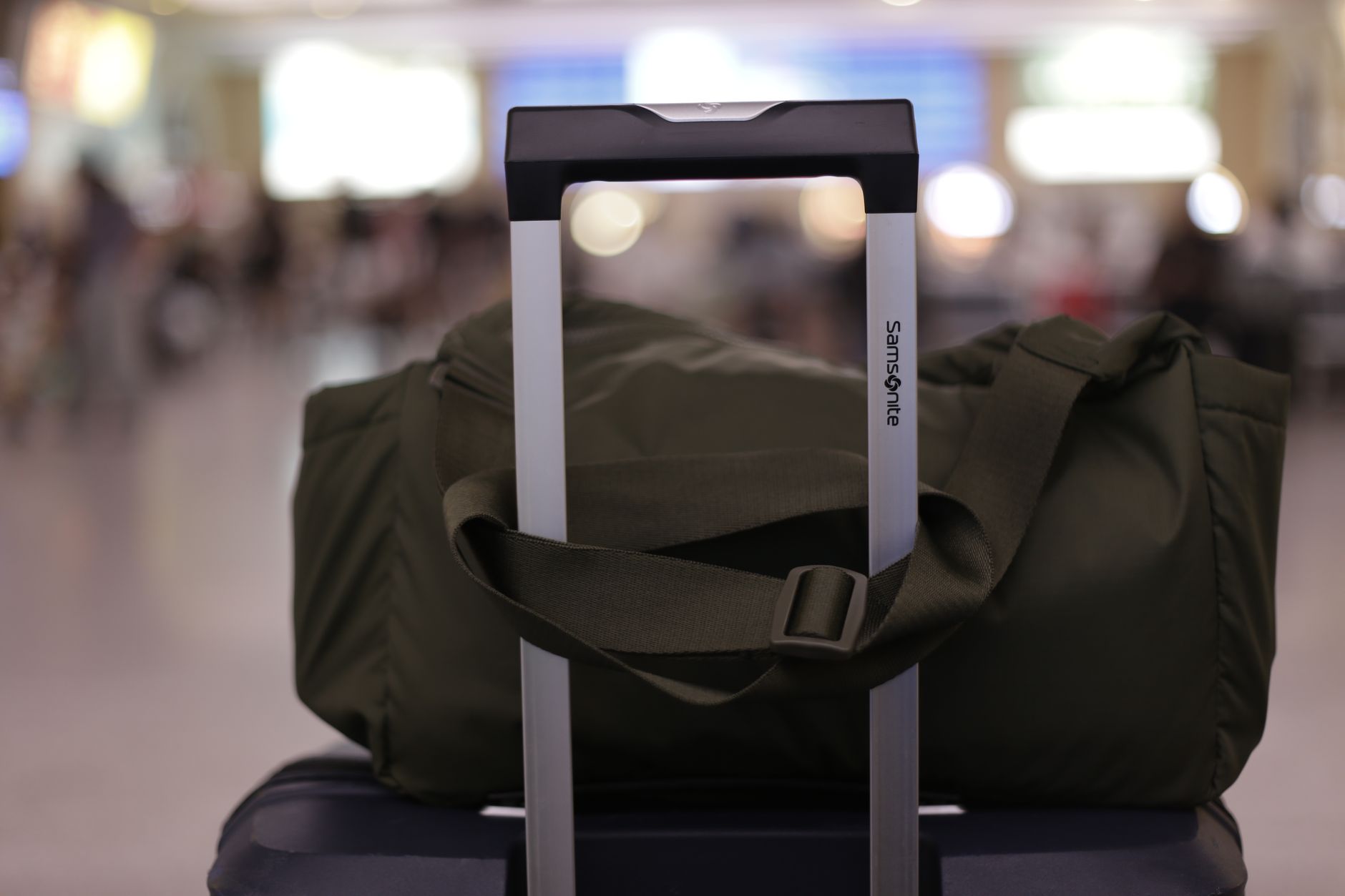
Move from Ryanair to easyJet and the first thing you notice at the gate is a pleasant one: the bag you just had to force through Ryanair’s frame slides under the seat in front with room to spare. easyJet’s free cabin bag measures 45 × 36 × 20 cm and may weigh up to 15 kg — a weight figure no other budget carrier states anywhere near as generously.
That generosity is precisely why the second half of easyJet’s system catches so many people out. It is called the large cabin bag, measures 56 × 45 × 25 cm, and is included in no standard fare. And the route to it that plenty of guides still describe — just buy an Up Front or Extra Legroom seat — no longer leads anywhere, according to easyJet’s own cabin bag table. In the comparison of hand luggage sizes across the major airlines, easyJet is the most generous row in the table; this piece covers what that row leaves out.
The free cabin bag: 45 × 36 × 20 cm, up to 15 kg
easyJet states the rule on its baggage page without a back door: every passenger may bring one small cabin bag free of charge, maximum 45 × 36 × 20 cm including any handles and wheels, and it has to be kept under the seat in front. It can weigh up to 15 kg, with one condition attached: you need to be able to lift and carry it yourself.
Do the arithmetic against the competition. 45 × 36 × 20 cm is roughly 32 litres of volume. Ryanair’s free bag at 40 × 30 × 20 cm comes to 24 litres — easyJet’s free allowance is about a third bigger, with nothing added to the booking. In practice that means a compact cabin trolley with no hope of passing as Ryanair’s free item clears easyJet’s limit, as long as it stays inside 20 cm of depth. easyJet names a small trolley case, a handbag, a rucksack and a laptop bag as examples.
The 15 kg is the second thing that stands out. Ryanair states no weight limit at all for its free item, Condor counts eight kilos for case and bag combined, Lufthansa eight kilos for the cabin case. easyJet names a figure, and it is close to double what the field considers normal. For a weekend that is plenty — and if the question is what you are actually packing for, it helps to know what a single day between the Römer, the Zeil and the museum embankment actually demands: solid shoes, a rain jacket, not much else.
easyJet offers a bag sizing tool in its app that measures your bag through the phone camera, though only on iOS. The airline says of it that the tool should be used as a guide only and that the best way to know is still a tape measure. Take that seriously: at the airport the measuring is done with a baggage gauge, and the gauge measures the bag exactly as it stands in front of it, packed.
The large cabin bag: 56 × 45 × 25 — and the seat no longer counts
The second bag is a separate, paid product at easyJet. It may measure a maximum of 56 × 45 × 25 cm, again including any handles and wheels, has to fit in an overhead locker, and may likewise weigh up to 15 kg. Book one and Speedy Boarding comes with it automatically.
The volume sum is worth doing here too: 56 × 45 × 25 is 63 litres. Ryanair’s Priority bag at 55 × 40 × 20 gives 44 litres; Condor and Lufthansa sit at just under 51 litres with 55 × 40 × 23. easyJet’s large cabin bag is therefore the biggest cabin item among the airlines compared here — noticeably deeper than anything else allowed into the lockers. If you own a 25 cm deep hard-shell case, it is worth knowing it clears easyJet and almost nothing else.
And now the point where most guides are out of date. easyJet’s cabin bag table lists the possible combinations, and for the large cabin bag it says this (as of 2026):
| Seat or bag booked | Small cabin bag | Large cabin bag |
|---|---|---|
| No seat selection | yes | no |
| Standard seat | yes | no |
| Up Front or Extra Legroom seat | yes | no |
| Large cabin bag added to your booking | yes | yes |
| Inclusive Plus | yes | yes |
| easyJet Plus | yes | yes |
The third row is the one that matters. A paid seat in the front rows or with extra legroom does not, on this table, entitle you to the large cabin bag. easyJet spells the same thing out elsewhere for the edge case: if you are auto-allocated an Up Front or Extra Legroom seat at check-in, your allowance is still one small under-seat bag.
Two cabin bags per person is the ceiling in any case — one small one for everybody, one large one for those who have it through a fare, a membership or a paid add-on.
Three routes to a second bag
There are exactly three ways to get the large cabin bag on board legitimately, and they differ sharply in price and in reliability.
One: add it separately. You can do this when booking, later through Manage Bookings, or in the app — even, easyJet says, after you have checked in. The airline publishes no fixed price: fees vary by demand, route, flight date and when you book, and you see the exact amount only at the point of purchase. easyJet also warns that large cabin bag options are not always available on a given flight, and recommends adding bags at the time of booking. Leave it until the airport and you pay a flat amount instead — the one described below.
Two: easyJet Plus. The paid membership includes a large cabin bag alongside the small one, free choice of any seat on the aircraft, a dedicated bag drop, Fast Track at selected airports and Speedy Boarding. The mechanics matter: you still have to actively add the large cabin bag to the booking and enter your membership number at checkout for it to be added free. Skip that and your large bag is only carried subject to available space — if the cabin is full it goes into the hold, at no charge. easyJet’s own benefits page puts the membership’s value at up to £401.88 across six single flights a year (as of June 2026); it does not state the annual fee, which appears only once you start the sign-up.
Three: the Inclusive Plus fare, previously called FLEXI. It covers both cabin bags, a free seat in the front rows (or a discounted upgrade to extra legroom), Fast Track Security at 45 airports, lounge access up to three hours before departure, and free route changes within one day either side of the original date. The catch: Inclusive Plus fares are capped per flight, sold through travel agent partners, and can only be bought within three months of travel. easyJet also notes that both names — FLEXI and Inclusive Plus — may appear interchangeably for a while during the changeover.
In passing, easyJet lists a Smart+ fare among those entitled to Speedy Boarding but does not describe it anywhere else on the same fares page. So do not rely on the fare name; rely on the baggage lines in your actual booking.
The structural difference from Ryanair’s Priority model is one of sequence. At Ryanair you buy a boarding product that comes with a second bag attached. At easyJet you buy a bag that comes with Speedy Boarding attached. The outcome at the gate looks similar; the price comparisons do not — at easyJet the line on your receipt is a piece of luggage, at Ryanair it is a boarding order.
15 kg per bag, not 15 kg for both
On weight easyJet does something unusual for the low-cost segment: each cabin bag may weigh up to 15 kg. Not combined — individually. Bring both and you may carry up to 30 kg into the cabin.
For comparison: Condor counts eight kilos for trolley and bag together in economy, and Ryanair allows ten for the Priority bag. easyJet’s figures are a multiple of those. The real constraint, then, is not a number but a sentence easyJet repeats for both bags: you need to be able to lift and carry the bag yourself. A 15 kg cabin case you cannot get into the locker unaided is a problem even when it is formally within the rules.
That produces a calculation worth running at easyJet more often than at other airlines: two cabin bags totalling up to 30 kg comfortably beat a standard 23 kg hold bag — and you wait at no belt after landing. For a beach holiday with snorkel gear and walking boots that can replace the hold case entirely. Travel that way and the time you save is worth protecting at the other end: what the run from Palma airport to the coves and hotel zones actually costs often shapes a Mallorca arrival day more than the baggage question does.
€70 at the boarding gate: the number easyJet publishes itself
Unlike Ryanair, which names no official fixed price for its gate fee, easyJet writes the amount into its own fees table. For the large cabin bag, under “airport”, it lists a single figure: €70 — at the boarding gate (as of 2026).
There are two ways to trigger it. Either your cabin bag is bigger than the maximum size allowed, or you turn up at the gate with a large cabin bag without having booked one. In both cases the bag cannot travel in the cabin; it goes into the hold and the charge applies. easyJet’s wording leaves no room for discretion.
The same €70 applies at the bag drop desk for any hold bag up to 23 kg that was not bought in advance. This is worth reading closely, because easyJet contradicts itself across two of its own pages: the German hold luggage help page says “up to €65 per bag”, while the fees table says €70. Trust the fees table — it is the page easyJet’s own baggage texts point you to, and it quotes the higher figure.
The practical difference from Ryanair is not the amount but the predictability: at easyJet you can work out in advance what a mistake costs. If the online price for the large cabin bag is below €70 — and it almost always is — the decision is settled before you leave for the airport.
Two price lists, two currencies: read the right one
Here is the trap that sets easyJet apart from nearly every other airline. easyJet maintains a separate fees table per language version. The German page quotes euro amounts, the English page sterling, and each sits there as its own figure rather than as a conversion of the other. Side by side it looks like this (as of 2026):
| Item | German table | English table |
|---|---|---|
| Large cabin bag at the gate | €70 | £60 |
| Hold bag at the bag drop desk | €70 | £60 |
| Extra weight online, per 3 kg | up to €18 | up to £15 |
| Excess weight at the airport, per kilo | €15 | £12 |
| Small sports equipment online / airport | €52 / €62 | £45 / £52 |
| Large sports equipment online / airport | €64 / €72 | £55 / £60 |
| Infant fee per flight | €31 | £25 |
| Rescue fee at the airport | €129 | £110 |
For a departure from Germany, the left-hand column applies. Do not convert any of the right-hand figures — the tiers do not map cleanly onto each other, and anyone reading a British source and converting into euros reliably lands next to the amount actually charged.
That the separation is not even cleanly maintained inside easyJet is visible on the German fees page itself: its link labelled “more information on cabin bags” points at the English cabin bag page. Follow it and you are suddenly in the sterling world with nobody telling you so. It is also why third-party baggage comparisons get easyJet wrong so often — they mix the two lists.
Hold luggage: five tiers and the three-kilo steps
When the cabin allowance is not enough, easyJet sells hold luggage in five weight tiers: 15, 23, 26, 29 or 32 kg. Every traveller, children and infants included, can buy up to three bags. The standard bag is 23 kg, the hard ceiling is 32 kg per item, and total dimensions — length plus width plus height — must stay under 275 cm.
The cleverest mechanism in the field is the granularity: extra weight can be bought online in steps of three kilos, at up to €18 a step. On a booked 15 kg bag you can top up to 27 kg after booking. Total weight may be split across the bags you have booked, as long as no single bag exceeds 32 kg.
Why that matters shows up in the counter-calculation at the desk. Excess weight there costs €15 per kilo, per item, per flight. A 23 kg case that hits the scales at 26 kg therefore costs €45 — for the same three kilos that would have cost up to €18 online. Three kilos accumulate fast: a pair of shoes and two bottles of wine will do it. How that sits alongside other airlines’ excess baggage practice is covered under excess baggage: what extra weight costs.
Pushchairs, changing bags and smart luggage
A few special cases are specific enough at easyJet to be worth reading.
Travelling with an infant on your lap, you may bring an additional changing bag of up to 45 × 36 × 20 cm, which goes under the seat in front. If the infant occupies its own seat, it gets a cabin bag plus a changing bag; children over two have the same allowance as adults. The infant fee for a lap infant is €31 per flight (as of 2026).
On top of that you may bring up to two items per child from a fixed list: travel cot, pushchair, double buggy, buggy, car seat, collapsible or non-collapsible pram, booster seat or baby back carrier. You hand these over at bag drop before security — or, if you need the buggy as far as the gate, right there before boarding.
Smart luggage, meaning a bag with a built-in lithium battery or power bank, is only carried if the battery can be disconnected and removed. In the cabin it may stay inside the bag once disconnected; if the bag is going into the hold, the battery has to come out at bag drop and travel in the cabin, with exposed terminals taped over. If you cannot remove it, the bag does not fly.
And finally, the items that do not count against your allowance at all: an umbrella, a coat, crutches, a walking stick, and one standard shopping bag of goods bought at the airport.
Decide before the airport, not at the gate
In Germany easyJet is largely a Berlin affair: at BER it was the second-largest airline in 2025, with around 4.2 million passengers, behind Ryanair. Fly from there and you meet a terminal where easyJet’s rules are routine and the pre-boarding check is correspondingly well drilled.
Arriving by car gives you the last comfortable moment to repack, in the car park — jacket on, heavy book into a coat pocket, water bottle out. Which BER car park actually works out cheaper for which length of stay comes out differently for a week than for two nights. And if you are coming without a car and want to know whether a taxi is worth it at all, there is an overview of indicative airport taxi costs from the terminal at the major German airports.
On balance, easyJet’s hand luggage system is one of the friendliest in the budget segment and simultaneously one of the most frequently misreported. Friendly, because the free item is bigger than at any direct competitor and the 15 kg per bag is more generous than anything Lufthansa, Condor or Ryanair permit. Misreported, because two price lists sit side by side and because the old route via a better seat no longer appears in the current table. If you need the large cabin bag, book it as what it is — a bag, not a seat — and do it before you set off for the airport. After that it costs €70, plus an uncomfortable moment in front of a waiting queue.
Keep reading
Departure & Security
Ryanair Hand Luggage 2026: The Free Bag, the Priority Upgrade and the Gate Fee
Ryanair hand luggage 2026: the free bag's dimensions, what Priority & 2 Cabin Bags really buys you, and why the gate fee is so steep (as of 2026).
Sophie Bauer15 July 2026
Departure & Security
Wizz Air Hand Luggage 2026: 40 × 30 × 20 Free, a Trolley Only With WIZZ Priority
Wizz Air hand luggage in 2026: a free 40 × 30 × 20 cm bag up to 10 kg, a 55 × 40 × 23 cm trolley only with WIZZ Priority, what Priority costs online and at the airport, and what awaits at the gate (as of September 2026).
Sophie Bauer25 September 2026
Departure & Security
Condor Hand Luggage 2026: Sizes, the 8 kg Rule and the Full Fare Matrix
Condor hand luggage 2026: 55 × 40 × 23 cm since 1 May, eight kilos for case and bag combined, Economy Zero from €9.99 — plus gate charges and the reservable overhead bin. As of 2026.
Sophie Bauer17 September 2026
Departure & Security
British Airways Hand Luggage 2026: Two Bags Included, Even on the Cheapest Fare
British Airways hand luggage 2026: cabin bag and personal item dimensions, why even the Basic fare keeps both pieces, and what applies flying from Frankfurt, Munich and Düsseldorf. As of 2026.
Sophie Bauer27 July 2026
Departure & Security
Lufthansa Hand Luggage 2026: The Cabin Bag, the Personal Item and the New Basic Fare
Lufthansa hand luggage 2026: cabin bag and personal item dimensions, how Light, Classic, Flex and Business differ, and what the new Economy Basic fare now costs. As of 2026.
Sophie Bauer18 July 2026