Ryanair Hand Luggage 2026: The Free Bag, the Priority Upgrade and the Gate Fee
There's a metal frame at the gate, and underestimating it costs you: Ryanair splits hand luggage into a free category and a paid one — and the gate fee makes the gap between them painfully clear.

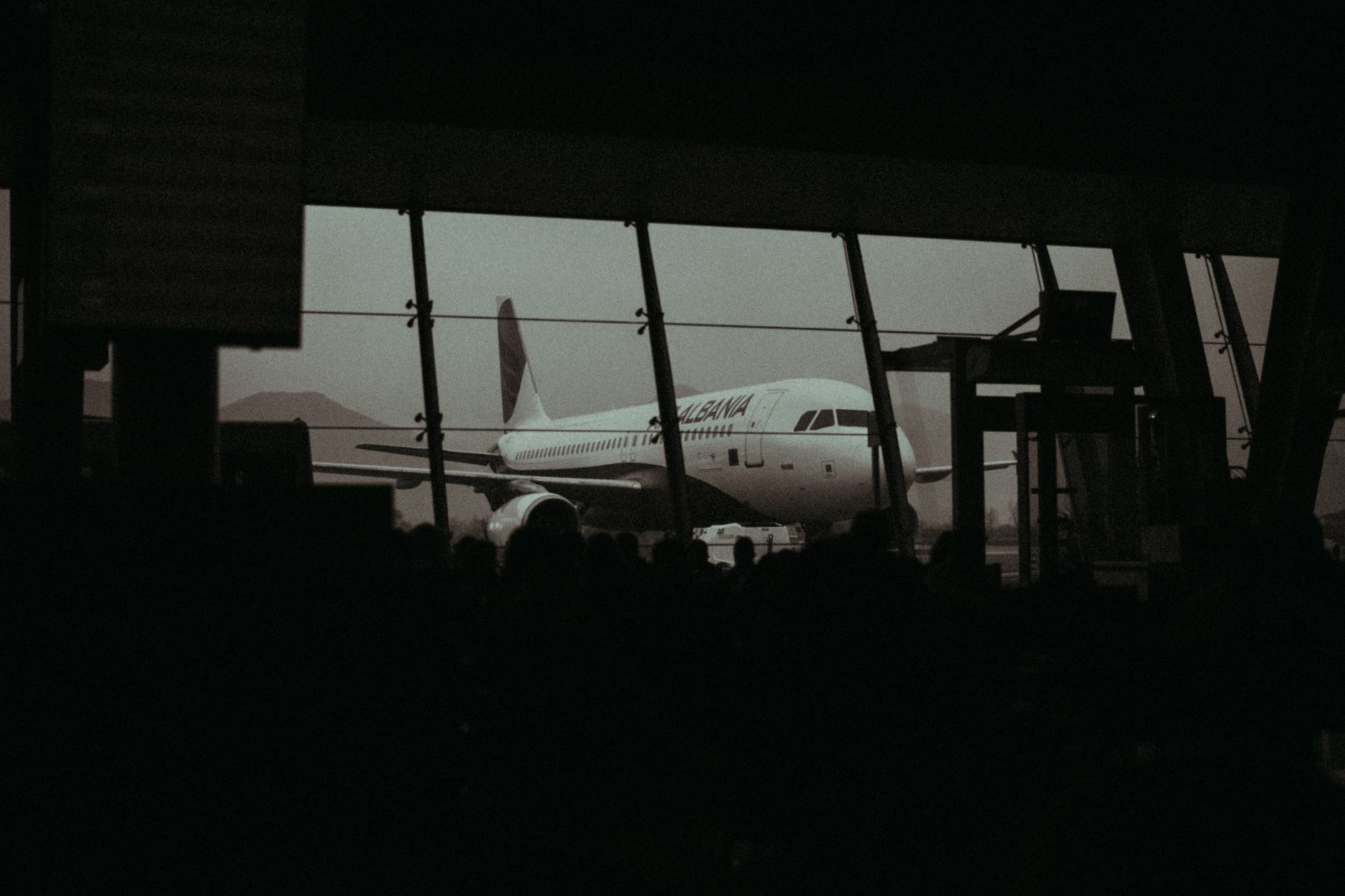
A metal frame stands wedged between the seating area and the jet bridge at the gate, about knee height, with an opening that looks smaller than it actually is. Book with Ryanair without Priority and still turn up with a mid-sized case, and you learn right there what that means: with this airline, “hand luggage” covers two entirely different things — one that’s free, and one that gets expensive the moment the frame won’t close around it.
In the comparison of hand luggage sizes across the major airlines, Ryanair shows up as a single row in a table. That undersells it: no other carrier in the German market draws such a hard line between what’s genuinely free and what you have to buy separately, and none enforces that boundary quite so unforgivingly if you misjudge it. This piece follows that logic through: what the free bag actually allows, what Priority & 2 Cabin Bags really buys you, and what happens at the gate when the sums don’t add up.
Ryanair’s two-tier system: why “hand luggage” doesn’t mean the same thing twice
Most airlines run one hand-luggage allowance, or two with broadly similar dimensions. Ryanair runs two categories that are deliberately treated differently, and the distinction isn’t a technicality — it’s the backbone of the entire fare model.
Category one is the small personal item — a bag, a rucksack, a laptop case — included automatically with every ticket, no surcharge, no add-on required. Category two is the larger cabin bag, which goes in the overhead locker above your seat and which you’re only allowed to bring if you’ve paid for Priority & 2 Cabin Bags — either bought separately or included automatically because of the fare you booked.
That split is older and stricter at Ryanair than at most competitors, and it’s enforced at every gate with a physical frame, not just on paper. Mix the two categories up, or simply hope nobody looks too closely at the gate, and that frame is exactly where the bill lands — a bill that, as the sections below spell out, comes in noticeably higher than what you’d have paid at booking.
The free small bag: dimensions and limits
The free item that comes with every Ryanair ticket may measure no more than 40 × 30 × 20 centimetres (as of 2026) and has to fit entirely under the seat in front of you. That’s the only test that actually matters: not the inner pocket, not the brand on the label, just whether it disappears under the seat once you’re on board.
Ryanair doesn’t quote a fixed weight limit for this item. In practice that doesn’t mean weight is irrelevant — a rucksack you can barely lift off the floor still draws attention at the gate, because staff will pick it up if it looks suspiciously full. The real limit, in other words, is less a number on a scale than the gate agent’s judgement on the day.
What fits in this category: a flat rucksack, a shoulder bag, a laptop backpack without a bulky outer pocket, a normal handbag. What usually doesn’t: most rigid-shell trolley cases, including some of the smallest “cabin trolleys” sold and marketed for other airlines. That’s exactly the trap first-time Ryanair flyers fall into — a case that clears easyJet’s or Lufthansa’s sizer often doesn’t clear Ryanair’s free-item limit at all.
Priority & 2 Cabin Bags: the second bag and what it costs
Want to bring more than the small bag, and you need Priority & 2 Cabin Bags — an add-on that buys two things at once: earlier boarding, and permission to carry a larger cabin bag in addition to the free item, up to 55 × 40 × 20 centimetres and 10 kilograms (as of 2026). That second bag goes in the overhead locker, not under the seat.
The price isn’t fixed. Ryanair prices Priority & 2 Cabin Bags dynamically, much like the fare itself: book weeks ahead on a quiet route and you’ll pay noticeably less than someone grabbing it three days before a fully booked summer flight. As a rough guide for 2026, the add-on typically sits in the low double-digit euro range, but it can climb well beyond that when demand is high — Ryanair deliberately avoids publishing a fixed price, because the model responds to demand rather than a fee schedule.
The sequence matters here. Priority can be added right up until shortly before departure, through manage-my-booking or the app, not just at the original point of sale — but the catch is timing. The closer you get to departure, the more it costs, and at some point, generally once online check-in closes, the option disappears from the app altogether. From that moment, Priority simply isn’t for sale any more. What’s left at the gate isn’t a late version of the same product — it’s something else entirely, which is where the next section picks up.
Regular, Plus, Flexi Plus: what each fare actually includes
How you end up with Priority & 2 Cabin Bags also depends on which fare you booked. Ryanair sells tickets in 2026 across three tiers, which differ mainly in the extras bundled in, not in the flight itself.
Regular is the cheapest fare and includes only the small free item. Seat selection, Priority boarding and the second cabin bag aren’t included and have to be added separately if you need them.
Plus includes Priority & 2 Cabin Bags as standard, along with a seat reservation. If you were always going to travel with more than the small bag, Plus often costs little more than Regular plus Priority bought separately — worth working out on paper rather than defaulting to the cheapest headline fare.
Flexi Plus builds on Plus and adds free date changes, fast-track security and one checked bag. For hand-luggage-only travellers this is usually the most expensive route to what Plus already covers — the extra value here is flexibility, not baggage.
Ryanair revises the names and exact contents of these tiers fairly often; what’s sold as “Plus” in 2026 was called something else in earlier years. Before booking, it’s worth checking the actual list of inclusions shown at checkout rather than relying on the tier name alone.
The gate sizer: how the size check really works
The size check doesn’t happen at check-in — it happens at the gate, shortly before boarding, and Ryanair enforces it more consistently than almost any other airline. That’s where the metal frame stands, sized to the free item’s exact dimensions. Anyone queuing with a bag that looks larger than allowed gets pulled aside and asked to push it into the frame.
Fit, and you carry on without further discussion. Don’t fit — and this is unforgiving for hard-shell cases in particular, since unlike soft bags they can’t be squeezed down — and there’s no negotiating. Gate staff have no real discretion here, even over a couple of centimetres.
Checks are done on a sample basis, not for every passenger, but the odds rise sharply on full flights, because that’s when overhead locker space genuinely runs out. On a half-empty midweek early flight you’re more likely to walk through unchecked than on a packed Friday-afternoon holiday departure. That’s not something worth relying on, though — the frame is set up at every departure, whether it gets used or not.
The gate fee: the most expensive avoidable mistake on Ryanair
Fail the gate check and your bag doesn’t just get turned away — it gets tagged and loaded into the hold, and a fee applies that bears little resemblance to the online price for Priority & 2 Cabin Bags. Traveller reports and forums regularly cite figures of roughly €60 to €75 for this gate fee through 2026 (as of 2026) — Ryanair doesn’t publish one official fixed amount, but the range is strikingly consistent across routes and time periods.
The gap to a bag booked in advance isn’t marginal, it’s drastic: add the same extra bag at booking, or even a few days before departure, and you’ll typically pay a fraction of what’s charged at the gate. The gate fee is deliberately priced to sting — it isn’t a service you choose on a whim, it’s a penalty for a misjudgement that was avoidable in the first place.
There’s a further wrinkle: the fee is usually taken only in cash or by card, right there at the gate, under time pressure, with the queue behind you and boarding already under way. There’s practically no room to argue in that moment — refuse or can’t pay, and the airline can refuse to carry the bag at all, leaving it behind. The only genuinely reliable strategy is to settle this before the gate: either the bag demonstrably fits the free allowance, or Priority gets booked online the moment packing shows it’s going to be tight.
Special cases: duty-free, baby gear, medical equipment
Not everything you’re carrying at the gate counts against the free item. A few exceptions are worth keeping in mind.
Duty-free purchases made past security or on board come on top of the free allowance, provided they’re in the sealed security bag with the receipt visible. More on this rule, and what else counts at the checkpoint, is covered in the guide to liquids in hand luggage.
Travelling with an infant entitles you to an additional baby bag on top of your own free item, and a pushchair or car seat can be checked free of charge at the gate rather than at the regular bag drop. This applies regardless of fare and is one of the few places where Ryanair is more generous than its reputation suggests.
Mobility aids such as wheelchairs and walking frames also don’t count against the free allowance and are carried at no charge, whichever category they’d otherwise fall into.
Musical instruments are one area where Ryanair shows little flexibility. A small instrument has to fit within the free-item or Priority-bag dimensions; there’s no option to buy an extra seat for a cello or a larger guitar, as some full-service carriers offer. Travelling with a bigger instrument means checking it as special baggage or looking at a different airline altogether.
How to make sure you get through every time
A handful of habits separate a relaxed boarding from an argument at the gate.
Measure your own bag at home, not from the manufacturer’s spec sheet. Wheels, handles and outer pockets all count, and it’s exactly those extra two or three centimetres that fail at the frame.
Pack the free item soft rather than rigid, if you have the choice at all. A rucksack or a fabric holdall can be pushed into the frame when it’s tight; a hard-shell case can’t. At Ryanair that’s not a cosmetic difference — it can be the difference between boarding and paying the gate fee.
Book Priority at the latest while you’re packing, not at the airport, the moment it looks like you’ll need the second bag. The gap between the online price and the gate fee is wide enough that even a late top-up through the app the night before is almost always cheaper than risking the gate.
Wear your heaviest single items rather than pack them. A jacket, heavy shoes or a thick book all add weight to the bag, but not if you’re wearing them or they’re in a coat pocket — and on an airline with no fixed weight limit for the free item, what matters is still whether the bag fits under the seat once it’s packed full.
Flying from a smaller airport like Frankfurt-Hahn, where Ryanair is by far the dominant airline, means you’re more likely to meet consistently enforced gates in the first place — one more reason to size your bag honestly at home rather than hope for leniency once you’re standing there.
How that compares at a traditional network carrier with a more generous free allowance is covered under Lufthansa hand luggage.
Unlike Ryanair’s paid second bag, British Airways keeps the twin-bag principle almost regardless of fare, covered under British Airways hand luggage.
How Eurowings’ three-tier system differs from Ryanair’s paid second bag is covered under Eurowings hand luggage.
easyJet builds the same two-tier split the other way round — there you buy a bag that comes with earlier boarding attached, and the free item is considerably bigger than it is here: easyJet hand luggage.
In the end, Ryanair’s hand-luggage system isn’t arbitrary — it’s a pricing logic worked out with real precision. The free item is small enough that most passengers feel the pinch, and that’s exactly the moment Priority & 2 Cabin Bags offers the obvious, comparatively cheap fix. Skip that step and gamble on the gate instead, and you end up paying more — not because gate staff are unfriendly, but because the fee is calculated precisely so that gambling doesn’t pay off. Know your bag and book ahead, and none of this toughness ever touches you.
Keep reading
Departure & Security
easyJet Hand Luggage 2026: Sizes, 15 kg and the €70 Gate Fee
easyJet hand luggage 2026: a free 45 × 36 × 20 cm bag at up to 15 kg, a paid 56 × 45 × 25 cm large cabin bag, €70 at the boarding gate — and why a better seat no longer buys you a second bag. As of 2026.
Sophie Bauer17 September 2026
Departure & Security
Lufthansa Hand Luggage 2026: The Cabin Bag, the Personal Item and the New Basic Fare
Lufthansa hand luggage 2026: cabin bag and personal item dimensions, how Light, Classic, Flex and Business differ, and what the new Economy Basic fare now costs. As of 2026.
Sophie Bauer18 July 2026
Departure & Security
Wizz Air Hand Luggage 2026: 40 × 30 × 20 Free, a Trolley Only With WIZZ Priority
Wizz Air hand luggage in 2026: a free 40 × 30 × 20 cm bag up to 10 kg, a 55 × 40 × 23 cm trolley only with WIZZ Priority, what Priority costs online and at the airport, and what awaits at the gate (as of September 2026).
Sophie Bauer25 September 2026
Departure & Security
British Airways Hand Luggage 2026: Two Bags Included, Even on the Cheapest Fare
British Airways hand luggage 2026: cabin bag and personal item dimensions, why even the Basic fare keeps both pieces, and what applies flying from Frankfurt, Munich and Düsseldorf. As of 2026.
Sophie Bauer27 July 2026
Departure & Security
Power Banks on a Plane in 2026: Cabin Bags, Watt-Hours and Which Airlines Ban Using Them
Power banks on a plane in 2026: cabin baggage only, two at most, the 100 and 160 Wh thresholds — and which airlines ban charging on board, from Lufthansa to Ryanair and Wizz Air (as of September 2026).
Sophie Bauer25 September 2026