Frankfurt Airport Departures: How Much Time You Actually Need
Security is the one part of a Frankfurt departure whose length you cannot know in advance. Since FRA SmartWay arrived you can turn that unknown into an appointment — free of charge, but only at three checkpoints and only three days ahead.

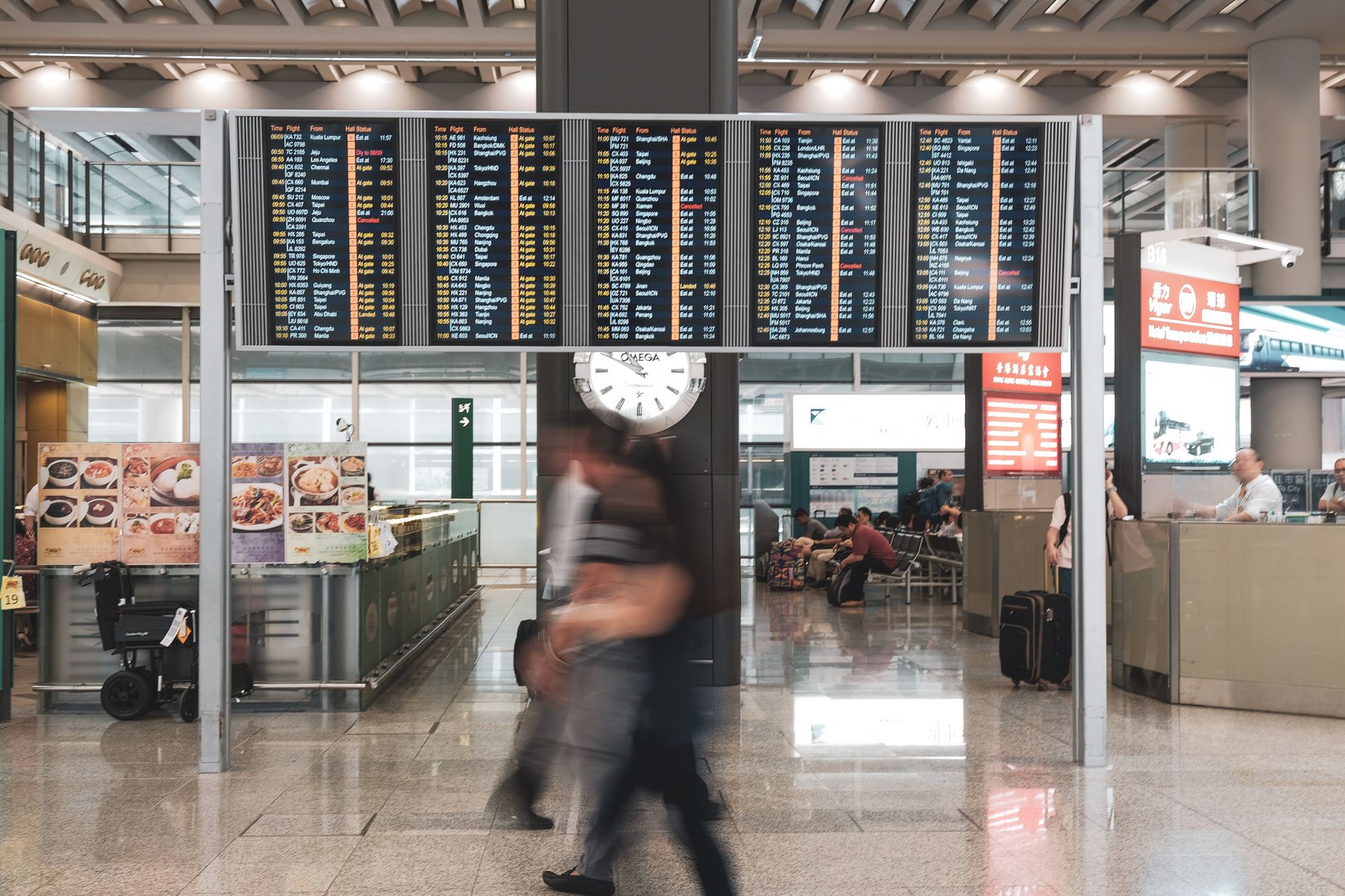
Two questions come up before a Frankfurt departure, and they get tangled together constantly. The first — where do I have to go? — has had a new answer since the 2026 rebuild, and it is worked through under Frankfurt Airport: which terminal, which route. This piece is about the second: when do I have to leave?
At an airport that handled roughly 63.2 million passengers in 2025, almost every slot in your timetable is a known quantity — except one. The journey in, bag drop and the walk to your gate take as long as they take. Security, by contrast, can swallow eight minutes or forty-five, and nobody tells you in advance which figure applies to you. That is exactly why every published recommendation carries such generous buffers: they are calculated for the bad case, not the normal one. For a while now Frankfurt has offered a way to remove that unknown — free, and carrying a catch that rarely gets mentioned.
What FRA SmartWay is — and what it explicitly is not
FRA SmartWay is a free service run by Frankfurt Airport that lets you reserve a time slot for the security checkpoint in advance. At your booked time you enter the assigned checkpoint through a dedicated access rather than joining the back of the queue.
What matters just as much is what that does not mean. SmartWay is not a fast track and not priority treatment: the screening runs with the same rules and the same thoroughness as for everybody else. You get an appointment instead of a queue — the airport spreading demand across the day rather than letting individuals jump ahead. And the airport still describes the service as undergoing a test run, which is why it covers three selected checkpoints only (as of 2026):
- Terminal 1, area A (level 2) — Schengen flights only
- Terminal 1, area B, west and east accesses (level 2) — Schengen and non-Schengen
- Terminal 3, central control (level 3) — Schengen and non-Schengen
This is where older write-ups stop being true. At launch, SmartWay sat in Terminal 1 and Terminal 2. Terminal 2 has been closed to passengers since 9 June 2026, and Terminal 3 has been in service since 23 April 2026, so anything telling you the service covers T1 and T2 was written before the rebuild. What does not determine your eligibility: airline, booking class, fare or status programme. It hangs entirely on which checkpoint your flight goes through.
Booking: 72 hours ahead, no charge, fifteen minutes of grace
Booking runs through the airport’s own website and is deliberately low-friction. No registration is required — a name, an email address and your flight details, and that is the whole of it. The rules worth knowing:
The booking window opens 72 hours before departure, no earlier, and slots are limited — so book the moment it opens. If nothing is left for the time you want, you use the general access lanes as normal; SmartWay is an extra, not a prerequisite.
A group fits into one slot, though the airport quotes two different numbers: its German page says a maximum of six people, its English page says five. Travelling with a larger family, read the figure in the booking form itself. Children need their own slot from the age of five; up to and including four they may use the appointment accompanied by a legal guardian who has booked one.
On the day, your boarding pass is enough — a separate QR code is no longer required, though the name on the reservation must match the name on the flight booking. And one detail for travellers based outside Europe: booking is currently only possible from European countries or from the USA and Canada.
The airport allows a fifteen-minute grace period before your slot; arrive more than fifteen minutes early, or miss it, and it explicitly directs you to the regular checkpoint. For your planning that carries a practical implication: the slot does not replace your buffer, it relocates it. Position it so that roughly half an hour of slack sits between reaching the terminal and your appointment, covering parking and bag drop. A slot missed because of a late S-Bahn has done nothing for you.
Frankfurt security queues, honestly assessed
If you do not get a slot, or you fly from a checkpoint that does not offer them, you need a realistic idea of what you are walking into. Under normal conditions, Frankfurt queues run between ten and twenty-five minutes. At peaks, thirty to forty-five minutes is realistic, and individual days go beyond it. That is a statement about distribution rather than about the airport: hubs bunch departures into waves instead of spreading them evenly. The densest windows fall early in the morning, roughly between five and nine, when the short-haul and feeder wave goes out, and again in the late afternoon and early evening. Then come the familiar outliers: the first day of the Hessen school holidays, the Friday before a long weekend, the Sunday everyone travels home.
So the most useful action on the day is not a bigger buffer but a glance: the airport publishes continuously updated waiting times on its website and in its app. They are measured in real time from the boarding-pass check onwards and are, as the airport itself says, snapshots — as a basis for deciding whether to leave half an hour earlier, that is enough.
There is good news at the checkpoint itself. Most checkpoints in Terminal 1 and all of them in Terminal 3 now use modern CT scanners, and at those, liquids may stay in your hand luggage up to two litres with no transparent bag, and laptops stay in the bag too. The old 100 ml rule still applies at a handful of positions, among them gates C1, C2, C4 and C6 and certain transfer checkpoints. If you are not sure which lane awaits you, pack to the stricter rule — the detail is under liquids in hand luggage, and what else happens at the lane is under the airport security checkpoint.
How early to be at Frankfurt Airport
The airport publishes three figures, and publishes them explicitly as guide values rather than rules (as of 2026):
| Your situation | Airport’s recommendation |
|---|---|
| Passengers from non-EU countries | at least 3 hours before departure |
| EU passengers with checked baggage | about 2.5 hours before departure |
| EU passengers with hand luggage only | about 2 hours before departure |
The tiering follows from what sits between arrival and gate. On a hand-luggage-only Schengen flight there are two items: security and the walk. Add hold baggage and you add a queue; leave the Schengen area and you add passport control — which has a spread of its own that no SmartWay slot can flatten, because SmartWay covers security screening only.
On long-haul I would read the three hours as a floor rather than a ceiling. Not because of security, but because of volume: a long-haul departure delivers 300 to 400 people to the same desks at roughly the same moment, and then bag drop is the bottleneck. The commonest miscalculation: those hours count from the moment you are standing in the terminal — not from leaving home, and not from the car park.
Terminal 1 buffers: the sum that actually works
Terminal 1 has grown over decades and is correspondingly warren-like, but it holds one big advantage: both railway stations, long-distance and regional, are here. Arrive by train for a T1 departure and you have the shortest walk on the airport. The sum for a Schengen flight with a checked bag:
| Segment | Time |
|---|---|
| Platform → check-in desks | 10–15 minutes |
| Bag drop (desk or self-service) | 10–25 minutes, more at peaks |
| Security | 10–25 minutes, 30–45 at peaks |
| Security → gate within T1 | 5–15 minutes, depending on the pier |
A good fifty minutes on a quiet morning, then, and comfortably over an hour and a half on a bad one — at which point the 2.5-hour recommendation stops looking generous and starts looking tightly costed. Whether your gate sits in A, B, C or Z decides the last ten minutes; the allocation is in the Terminal 1 deep dive.
Two numbers cap the plan. At the front: check-in desks typically open two to three hours before departure, depending on the airline — turn up earlier and you are standing at a closed desk. At the back: the baggage acceptance deadline falls roughly 40 to 60 minutes before departure, again set by your carrier rather than the airport. If your buffer turns out too large after all, the point at which a trip into the city starts to pay is worked through in the long layover guide for Frankfurt.
Terminal 3 eats the buffer you calculated for Terminal 1
If your flight leaves from Terminal 3, the sum above no longer holds, for one reason: there is no railway station at Terminal 3. You arrive at Terminal 1 and have to change buildings.
The new Sky Line handles that. It has been back in service since 15 June 2026, after technical faults took it out of traffic for a period, and has run throttled to 50 km/h ever since rather than at its design speed, from 04:00 to 23:00 every two to three minutes. Between 23:00 and 04:00 it stands still and a shuttle bus covers the gap.
In practice: budget for the T1-to-T3 change not the eight minutes of riding time but around twenty minutes platform to check-in, and in the night window, with the bus, closer to half an hour. On top of that, the distances inside T3 are long: from the central checkpoint on level 3 to a far gate in piers G, H or J, ten minutes is normal and fifteen is possible.
The plain consequence: allow half an hour more for Terminal 3 than for Terminal 1. Arriving by car sidesteps the terminal change entirely — head straight for the P11 car park at T3 rather than the familiar exit towards T1. What the individual car parks cost, and which one pays from which length of stay, is broken down in this comparison of Frankfurt Airport parking charges.
The early flight, where the arithmetic changes
The 06:30 departure is the case in which every rule of thumb wobbles at once. Two hours ahead means 04:30 at the terminal: the S-Bahn is not yet running at its daytime frequency, the Sky Line is stationary until 04:00, check-in desks open no earlier than the small hours — and this is exactly the window in which the checkpoints are busiest, because the whole morning wave turns up together.
Three tools help. The SmartWay slot is the best of them, because it removes the last remaining unknown. The second is evening check-in, which some airlines offer at Frankfurt — sometimes for a fee, sometimes only for certain departure times; whether it applies to your flight is a question for your airline, not the airport. The third is the journey itself: when public transport does not run at the hour you need, a pre-booked transfer is usually calmer than hailing a taxi outside your front door at four in the morning, and the going rates for a taxi or transfer to Frankfurt Airport are itemised there.
Getting there with the buffer built in
One rule covers the journey: for Terminal 3, take the connection one departure earlier. The terminal change eats precisely the margin you saved on the timetable.
From the city, the S-Bahn is the obvious route to the regional station beneath Terminal 1; which lines run, how often and what a ticket costs is set out in this guide to the S-Bahn to and from Frankfurt Airport. Driving in from the surrounding region, plan on a realistic journey time rather than the best case: drive times and indicative taxi fares across the Rhine-Main area are collected in the route data for Frankfurt Airport, including the runs where the A5 ruins the calculation in the morning.
If you take one thing away, make it the order of operations: book the SmartWay slot first, then build the journey around it. A slot chosen to fit a train you had already booked is just another entry in the calendar. One you construct your morning around turns the only unplannable part of the travel day into a planned one — and at a price of nothing at all, that is the best deal Frankfurt Airport currently offers.
Everything here reflects the position as of 2026. FRA SmartWay is explicitly set up as a test run and its scope has already changed once since launch; which checkpoints are taking part right now is on the airport’s own page. More of the sequence from check-in to gate is under Departure & Security.
Keep reading
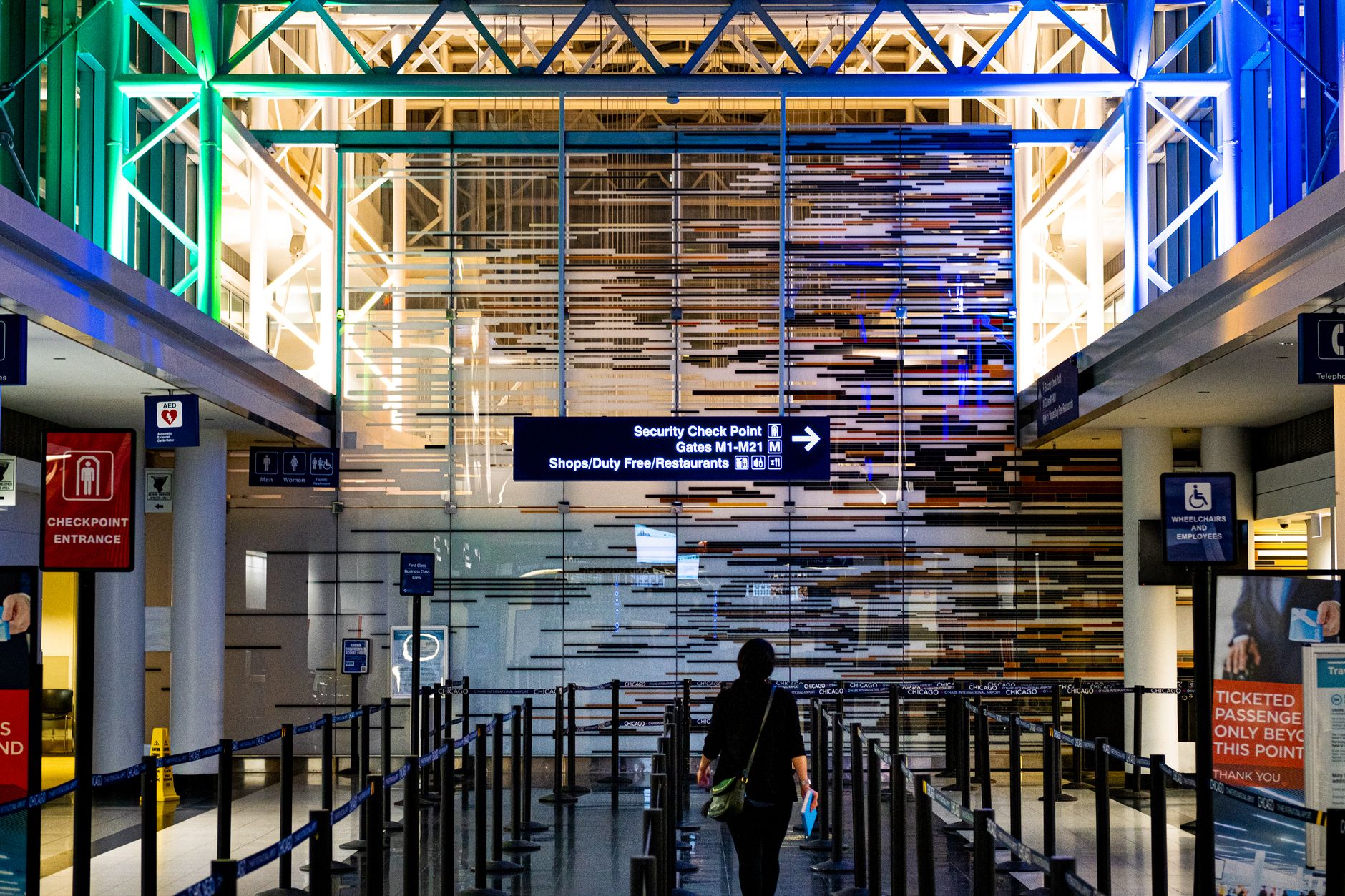
Departure & Security
Departures at Stuttgart Airport: Four Terminals, One Booked Slot
Departing from Stuttgart Airport: which terminal, when you need to be there, and how to book a free time slot for the security check in advance.
Sophie Bauer14 August 2026
Departure & Security
Hamburg Airport Departures: two terminals, one security check, one slot
Departing Hamburg Airport: which airlines check in at Terminal 1 or 2, the central security checkpoint in the Airport Plaza, Slot & Fly, evening-before check-in and how much time to allow (as of 2026).
Sophie Bauer25 September 2026
Departure & Security
Munich Airport Departures: Terminal 2 for Star Alliance, Terminal 1 for Everyone Else
Departing Munich Airport: Terminal 2 belongs to Star Alliance, Terminal 1 to everyone else. The new pier, security checks and how much time you need (as of 2026).
Sophie Bauer9 July 2026
Departure & Security
Düsseldorf Airport Departures: one hall, three piers, three security checks
Departing Düsseldorf Airport: the central check-in hall, the checkpoints at piers A, B and C, DUSgateway, the SkyTrain from the long-distance station, the S11 and U80, and how much time to allow (as of 2026).
Sophie Bauer25 September 2026
Departure & Security
BER Airport Departures: Terminal 1 or 2, security without a slot, and a detour-prone journey
Departing Berlin BER in 2026: the three airlines that check in at Terminal 2, why Terminal 5 is gone, evening-before bag drop, CT scanners instead of BER Runway, the 2.5-hour rule and this autumn's rail engineering works.
Sophie Bauer25 September 2026