Frankfurt Airport Arrivals: Terminal 1 or 3, Baggage, Customs and the Way Out
Since June 2026 Frankfurt has only two arrivals terminals — and only one of them has a railway station. Which building you walk into after landing shapes every step that follows, to the train, the taxi rank or the hotel shuttle.

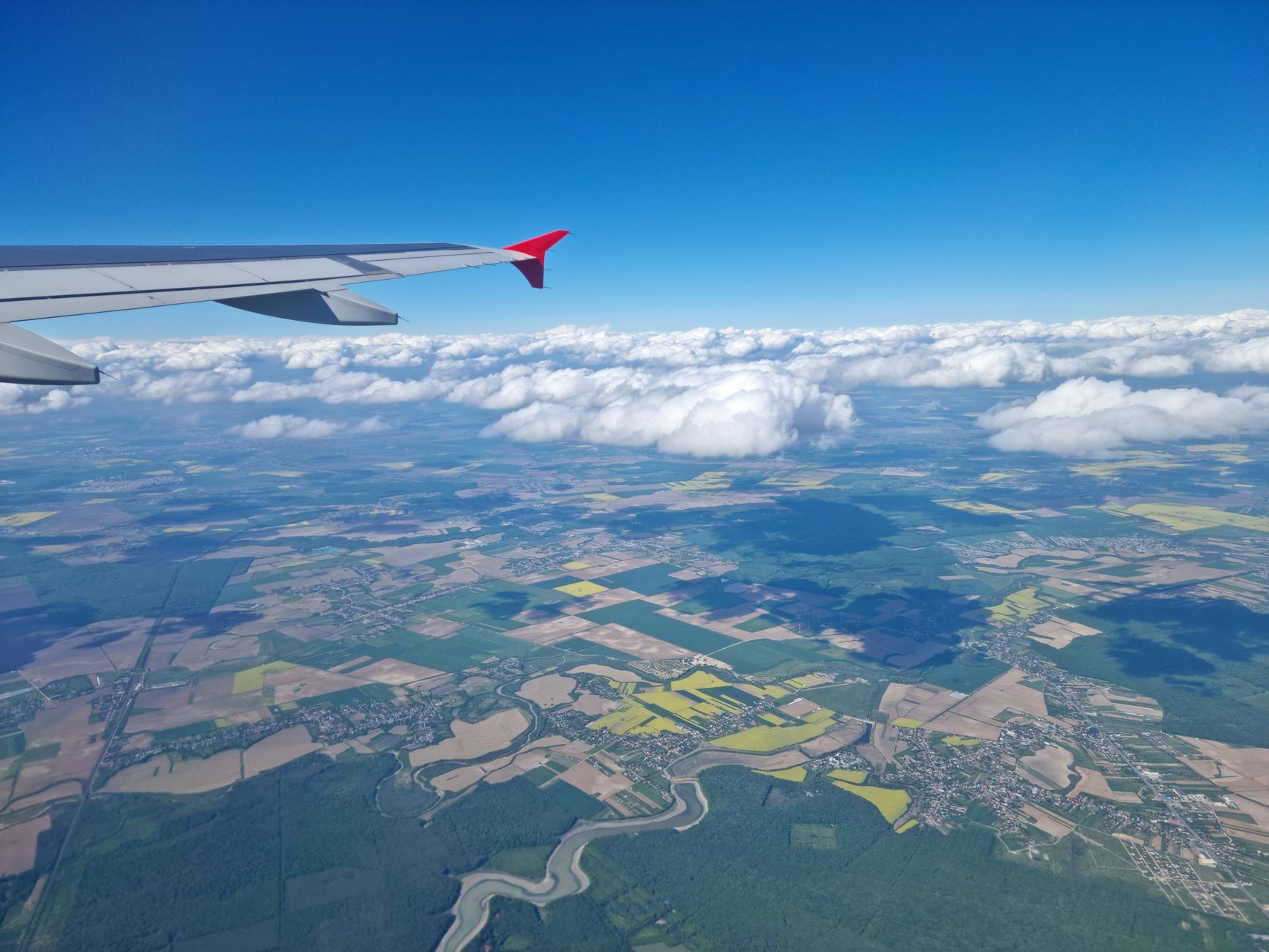
Once you’ve landed in Frankfurt there is one question to settle before anything else makes sense: are you in Terminal 1 or Terminal 3? Terminal 2 is no longer a possible answer. It closed to passengers on 9 June 2026, and its airlines moved to Terminal 3, which entered regular service on 23 April 2026. Frankfurt now has two arrivals buildings that differ in one fundamental way — and it isn’t the architecture. It’s the railway station.
The opposite direction — how early to be here for a flight out — is covered in the piece on Frankfurt Airport departures. This one only runs outwards: from the aircraft door to the platform, the taxi rank or the car.
Terminal 1 or Terminal 3: your airline decides, not you
Arriving is passive. You come in wherever your airline is handled, and there’s nothing to choose. The working rule for 2026: Lufthansa, the rest of the Lufthansa Group and the Star Alliance partners arrive at Terminal 1, as does Condor, whose move to Terminal 3 has been announced for 2027. Every airline that used to sit in Terminal 2 now arrives at Terminal 3 — Fraport puts it that way on its own Terminal 3 page, without exceptions. That includes the big Gulf carriers as well as the oneworld and SkyTeam members. The finer split is set out in the guide to Terminal 1.
One thing that catches plenty of people out: not every aircraft pulls up at an air bridge. Frankfurt uses a large number of remote stands, including the positions in front of the closed Terminal 2, which are still in use. You then go down the steps and take a bus to the working terminal. Depending on the stand that adds ten minutes or more — and it usually means the bus passengers end up at the back of the passport queue.
Passport control: only from outside Schengen — and with EES since April 2026
Arriving from a Schengen country, there is no passport control after landing; you head straight for baggage reclaim. Carry your ID all the same, because spot checks can happen at any time.
Arriving from outside Schengen — the UK, Turkey, the US, the Gulf — your route goes through the Federal Police border check. Here 2026 brought a real change: the EU’s Entry/Exit System (EES) has been fully operational since 10 April 2026. Non-EU nationals entering for a short stay are registered on their first entry with fingerprints and a facial image, and the passport stamp is gone. For EU citizens nothing changes: they keep using the lanes for EU, EEA and Swiss passports, where the automated EasyPass gates are also found. Who may use those gates, from what age, and why a passport sometimes gets turned away is covered in EasyPASS at German airports.
In practice, if you hold a non-EU passport and are entering for the first time since the system went live, expect a noticeably longer stop at the desk. Registration is a one-off; later entries only need a match. If you’re an EU citizen travelling with family members from outside the EU, don’t split the group — go to the staffed desk together.
Baggage reclaim: belts, trolleys, left luggage
In Terminal 1, arrivals are on level 1. The reclaim areas are named after the terminal sections — baggage reclaim B, for example, leads out through exits B1 and B2 into arrivals hall B. That’s also where you’ll find the left-luggage office (area B, level 1), open around the clock, which is handy if you want to shed a case before hotel check-in or an evening in town.
In Terminal 3, the arrivals hall is on the ground floor. Fraport gives the new terminal up to 15 baggage belts, plus an information desk and restaurants and shops on the arrivals level. T3’s left-luggage office is in area J on level 2 and keeps fixed hours, 06:30 to 21:30 daily (as of 2026) — land late and you either keep the case with you or take it to T1.
The screens in front of reclaim tell you which belt your flight is on. If your bag doesn’t show, don’t leave the area before reporting it at your airline’s baggage services desk — it’s inside the reclaim hall, and once you’re past customs there’s no way back in. What deadlines apply after that and what the damage report actually does for you is set out in delayed and lost baggage.
Customs: red, green — or neither
After the belt comes customs, and where you’ve flown from decides what happens. From another EU state you simply walk out, with nothing to declare. From outside the EU, German customs describes the split like this: you may use the green exit only if everything you carry is for private use and within the allowances. Anything beyond that, or anything subject to bans or restrictions, is declared at the red exit.
The figure most people steer by: travelling by air from outside the EU, anyone aged 15 or over may bring in goods worth up to €430 free of duty, with separate quantity limits for tobacco and alcohol. Cash of €10,000 or more has to be declared when entering from a non-EU country. Frankfurt is a hub with a heavy long-haul arrivals programme, and customs checks the green channel here regularly. If you’re unsure whether the laptop from Dubai or the watch from New York takes you over the limit, use the red exit — asking there is not an admission of anything.
Being met: a meeting point with a door number
“See you at the exit” doesn’t work in Frankfurt. Terminal 1 has several arrivals areas with their own exits, and Terminal 3 is several hundred metres away as the crow flies, on the far side of the runways. Whoever is collecting you needs three things in advance: terminal, arrivals area, exit. The arrivals board on Fraport’s website shows your flight’s terminal and status; message the exit once you’re standing at the belt.
If you’re being collected by car, the driver should head straight for the right building. Terminal 3 has its own link to the A5 and a drop-off zone out front for quick set-downs and pick-ups; for a longer wait the car park is the calmer option. What an hour of waiting in a car park costs, and which one suits which terminal, is worked through in the comparison of Frankfurt Airport parking prices.
Out of Terminal 1: two stations, taxis, hotel shuttles
Terminal 1 is the easier place to arrive if you’re continuing by train, because both stations are here.
The regional station sits beneath Terminal 1 on level 0 and can be reached from every terminal section. Fraport’s advice is to follow the “Bahnhöfe” (stations) signs and then “Regionalbahnhof”. This is where the S8 and S9 S-Bahn lines run, along with the regional trains RB58, RE59, RE2 and RE3, to Frankfurt, Offenbach, Hanau, Aschaffenburg, Rüsselsheim, Mainz and Wiesbaden. The S-Bahn gets you to the main station in a little over ten minutes; which ticket you need from the airport — the cheap city fare won’t do — is explained in the guide to the S-Bahn from the airport into town.
The long-distance station for ICE and IC trains is set a little apart; Fraport reckons on about a five-minute walk from Terminal 1. Follow the signs for the long-distance station, not the regional one — mixing them up costs ten minutes with a case, and sometimes a connection.
Taxi ranks are in front of the terminal buildings on the arrivals forecourts. What the ride into the centre or to Sachsenhausen really costs depends on Frankfurt’s tariff; a realistic breakdown is in the overview of Frankfurt taxi fares. For destinations further out in the Rhine-Main area, it’s worth checking indicative fares and drive times from Frankfurt Airport before you discuss the route at the rank.
And then the point where Terminal 3 and Terminal 1 meet: every hotel shuttle at the airport leaves from one single spot — outside Terminal 1, Arrivals B, between door 5 and door 6. There is no stop at Terminal 3 (as of 2026).
Out of Terminal 3: the Sky Line first, everything else after
Terminal 3 has no railway station. Right outside you have only the bus station, which sits on the arrivals level with step-free access. Local buses run from there to Darmstadt, Frankfurt, Walldorf and Groß-Gerau, among others — useful if that’s exactly where you’re going, a detour for everyone else.
For the train and for the hotel shuttles, then, your first move is back to Terminal 1. That’s what the Sky Line is for: free, running from 04:00 to 23:00 every two to three minutes (as of 2026). Fraport itself allows about 10 to 15 minutes from Terminal 3 to the regional or long-distance station; with luggage, the wait and finding your feet in the other building, I’d budget twenty. In T3, follow the signs for the Sky Line; in Terminal 1, carry on from the station towards “Bahnhöfe”.
Taxis also wait on the Terminal 3 arrivals forecourt. If you’re taking one anyway, you skip the trip to Terminal 1 entirely — the one case where T3 carries no penalty for the onward journey.
Landing late at night
Between 23:00 and 04:00 the Sky Line stops and a shuttle bus links the terminals instead, stopping in front of each building on the arrivals forecourt. On its orientation page Fraport gives the bus window as 22:00 to 05:00, so it overlaps the train’s last and first hour. At night, allow half an hour to get from T3 to T1.
Night-time also makes left luggage an issue: in T3 it closes at 21:30, while in T1 it’s open around the clock. And check the last S-Bahn connection in the RMV app before settling down for a coffee after reclaim — the night timetable is thinner than the daytime one.
If you’re not leaving, but flying on
Some arriving passengers never leave the airport at all. If your onward flight goes from the other terminal, that’s a genuine change of building with a fresh security check. Fraport itself publishes no minimum connecting time for this; the 60 minutes you often see quoted is Lufthansa’s own figure for Frankfurt since 30 March 2025. What that means for separately booked tickets is covered in the guide to connecting at Frankfurt Airport.
My routine on every Frankfurt arrival is now the same: check the terminal in the app while still on the aircraft, send the exit to whoever’s collecting me once I’m at the belt, and — if it’s T3 — treat the trip to Terminal 1 as a fixed part of the journey rather than an irritating extra. Frankfurt hasn’t become more complicated since the changeover, just more uneven: Terminal 1 has the stations and the shuttle stop, Terminal 3 has the shorter walks inside the building. Know which of the two you’re in, and you’ll be out faster than anyone navigating by memories of the old Terminal 2.
All details are as of 2026, based on information from Fraport, German customs and the European Commission. Operating hours, terminal allocations and routes can change, particularly during Terminal 3’s first year of operation.
Keep reading
Arrival & Baggage
Munich Airport Arrivals: Two Terminals, Two Levels
Arriving at Munich Airport in 2026: Terminal 1 on level 4, Terminal 2 on level 3, baggage claim centralised across 14 belts, the new Terminal 1 pier open since April 2026 — and the route through customs.
Sophie Bauer16 August 2026
Arrival & Baggage
Arriving at BER Airport: One Level, Two Exits, Two Terminals
Arriving at Berlin BER in 2026: baggage reclaim on level E0, eight belts in Terminal 1 and three in Terminal 2, the station two levels down, the FEX to Hauptbahnhof in 23 minutes — and the meeting point almost everyone gets wrong.
Sophie Bauer17 September 2026
Arrival & Baggage
Stuttgart Airport Arrivals: level 2, two halls and three ways into the city
Arriving at Stuttgart Airport in 2026: baggage reclaim and exits in Terminals 1 and 3 on level 2, customs and EES, pick-ups with 8 free minutes or an hour on P0, S2/S3, the U6 since 2021, the N8 night bus and taxis.
Sophie Bauer25 September 2026
Arrival & Baggage
Düsseldorf Airport Arrivals: Two Stations, Three Terminals
Arriving at Düsseldorf Airport: which terminal serves which airline, how long baggage takes, and why there are two different railway stations.
Sophie Bauer14 August 2026
Arrival & Baggage
Arriving at Hamburg Airport: From Gate to City Centre in 40 Minutes
Arriving at Hamburg Airport: central baggage reclaim, the S1 to the main station in 25 minutes, taxi fares — and the train split that catches people out.
Sophie Bauer14 August 2026