Delayed and Lost Baggage: The PIR, the Deadlines and What the Airline Actually Pays
A bag is missing from the carousel, and from that moment a clock is running. The rules are not in your airline's conditions of carriage but in the Montreal Convention, and four numbers from it are enough to run the case properly.

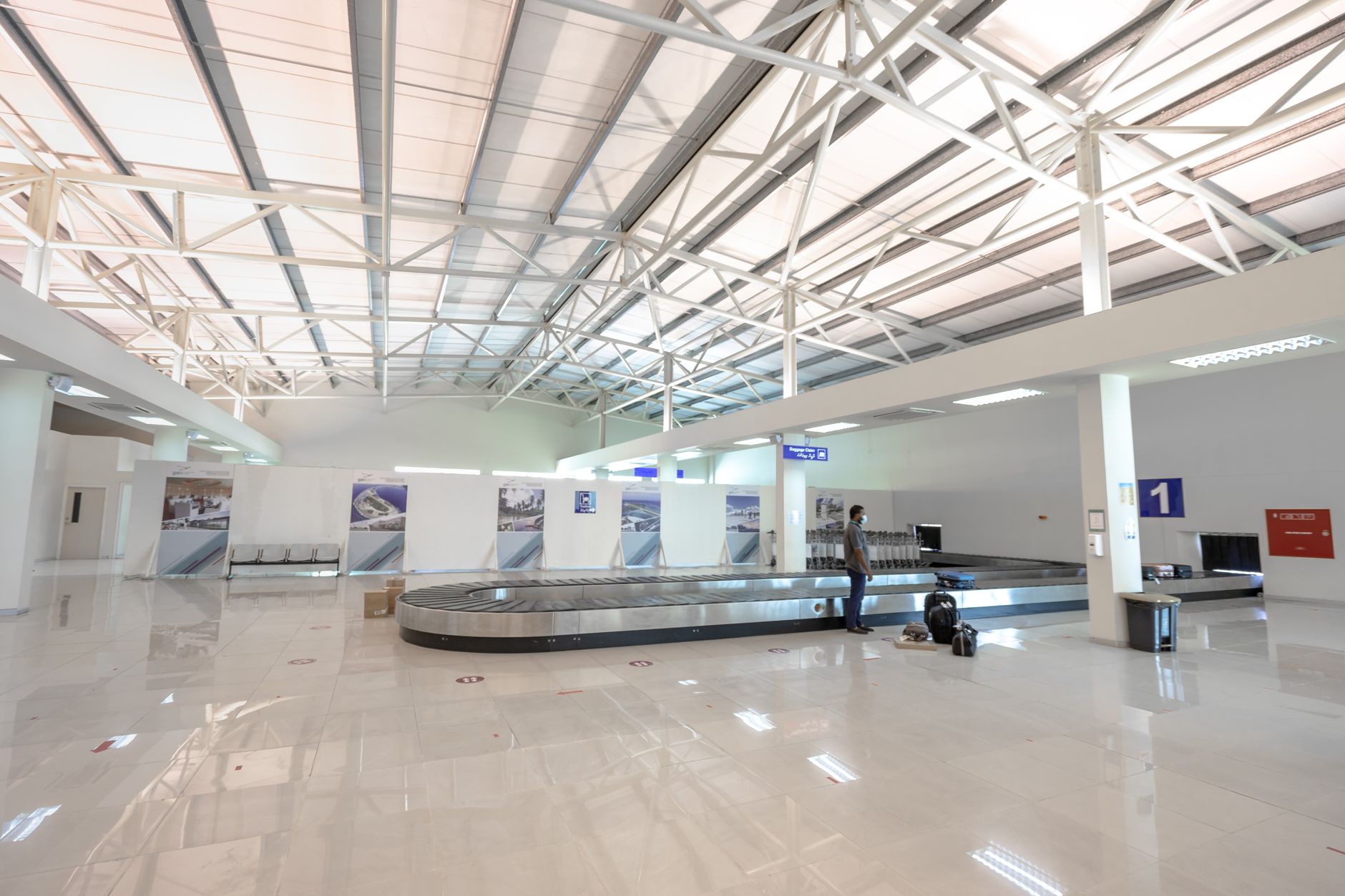
The belt empties, the last cases are gone, and yours is not among them. What you do in the next twenty minutes decides the case — more than anything you write afterwards. The law here is unusually clear and unusually unforgiving: the Montreal Convention of 28 May 1999 applies, given effect in the EU by Regulation (EC) No 2027/97 as amended by Regulation (EC) No 889/2002. That framework contains two short notice deadlines, one ceiling and one limitation period. Miss one of them and the claim is gone entirely, not reduced.
One distinction first, because it saves a lot of arguing: your suitcase has nothing to do with Regulation 261/2004, the source of the familiar 250, 400 or 600 euros. That flat sum belongs to the delayed flight, not to the delayed bag. Both can exist side by side, and each is claimed separately. What a delay or cancellation of the flight itself entitles you to is set out under Strikes, delays and cancellations.
When the case does not arrive: the first twenty minutes in the hall
Report it before you leave the baggage hall. The baggage tracing desk sits in the arrivals area of every German airport, usually right beside the carousels, staffed by the airline or its ground handler; at Munich you will find it at baggage reclaim itself, as described under Munich Airport arrivals.
The reason for the hurry is Article 31(1): receipt of checked baggage without complaint is prima facie evidence that it was delivered in good condition and in accordance with the document of carriage. Receiving it without complaint means walking out and saying nothing. From that point you have to prove the damage happened in transit, rather than the carrier having to prove it did not.
Take to the desk: boarding pass, booking reference and above all the baggage tag stub from check-in. It is the only direct proof of which item belonged to which flight. And give an address where you can genuinely be reached over the next few days — not your home address if you are three nights into a hotel stay.
The PIR: what it does, and what it is not
The desk raises a Property Irregularity Report, the PIR. You get a ten-character reference: three characters for the airport, two for the airline, then five digits. Under that number your case runs in WorldTracer, SITA’s industry system, which its operator says is used by more than 500 airlines and around 2,800 airports.
The PIR is a missing-property report, not an application for money. It opens the search and preserves your evidence — claiming damages is a second, separate step: in writing, to the airline, with receipts and figures. This is exactly where most cases quietly die. The bag is reported, the matter feels handled, and nobody ever files a claim. German consumer bodies make the point explicitly: the PIR does not replace notifying the airline, or, on a package holiday, the tour operator as well.
What tracing actually does, and when a bag counts as lost
Tracing is not a search party, it is a matching exercise. Every unclaimed bag anywhere in the world is logged as on-hand property, with tag number, routing, surname, case type and content features; the system continuously compares those records against open loss reports and proposes matches. That is why every minute you spend on the description at the desk pays off — make, colour, shell material, a distinctive strap, what is in the front pocket. A case logged only as “black, medium” is competing with tens of thousands of others.
For scale, the SITA Baggage IT Insights report of June 2025: in 2024 the mishandling rate was 6.3 bags per 1,000 passengers, 33.4 million bags in total. Of those, 74 per cent were delayed, 18 per cent damaged or pilfered and 8 per cent lost or stolen; over 66 per cent of files were closed within 48 hours. The odds are firmly with you — your case is usually not gone, just one aircraft behind you.
When delayed becomes lost is set precisely by Article 17(3): if the carrier admits the loss of the checked baggage, or if the baggage has not arrived at the expiration of 21 days after the date on which it ought to have arrived, the passenger is entitled to enforce the rights flowing from the contract of carriage. That is a switch, not the end of the search: many airlines keep looking internally, and bags do surface weeks later. Legally, though, from day 22 you may settle the full loss instead of waiting.
Seven days, twenty-one days, two years
Article 31(2) sets two notice deadlines, and they run from different days:
- Damage: forthwith after discovery, and for checked baggage at the latest within seven days from the date of receipt — that is, from the day you got the bag.
- Delay: within 21 days from the date on which the baggage was placed at your disposal — so the clock only starts when the bag comes back, not on the day you landed.
Paragraph 3 requires writing; paragraph 4 is the sanction: if no complaint is made within those times, no action lies against the carrier, save in the case of fraud on its part. For total loss Article 31 sets no separate deadline of its own — the notice duty covers damaged and delayed baggage. Do not rely on that anyway; report a loss in writing in the same week.
Above all of it sits Article 35: an action can only be brought within a two-year limitation period, reckoned from arrival or from the date the aircraft ought to have arrived. This is a hard cut-off rather than a limitation period you can suspend or restart, as with the three-year period that applies to air passenger rights claims in Germany — after two years the right to damages is extinguished.
1,519 Special Drawing Rights: a ceiling, not a payout
Article 22(2) limits liability for destruction, loss, damage or delay of baggage to a sum per passenger — 1,000 Special Drawing Rights in the original text. Article 24 has that figure reviewed for inflation every five years. Following ICAO’s review, the limit has been 1,519 Special Drawing Rights since 28 December 2024; before that, from 28 December 2019, it was 1,288.
Special Drawing Rights are not a currency but the International Monetary Fund’s unit of account, and their value moves daily. On the IMF valuation of 17 September 2026 one SDR was worth roughly 1.19 euros, putting the ceiling at about 1,810 euros; Germany’s conciliation body for travel and transport likewise puts the new limit at “etwa 1.800,00 EUR”. A curiosity worth knowing: the information notice annexed to Regulation 889/2002 still says 1,000 SDR to this day. It does not govern — Article 3(1) of the Regulation refers the liability of EU carriers to all relevant provisions of the Convention, and therefore to whatever revised figure is current.
The essential sentence about that number: it is a ceiling, not a cheque. The conciliation body spells out that a flat payment at that level was never intended. What is paid is documented loss up to the limit, which means your inventory decides the sum, not the height of the cap. Anyone who regularly checks in valuables can raise the ceiling under Article 22(2) by making a special declaration of interest in delivery when handing the bag over and paying the supplementary sum; the tariff for that has to be made available on request. What checking in extra pieces costs in the first place is under excess baggage fees. And the ceiling falls away entirely where the damage was caused intentionally or recklessly under Article 22(5) — rare in practice, but it is in the text.
Interim purchases: what you may buy in the meantime
You are reimbursed for what was necessary. That is neither a blank cheque nor nothing at all, but a question of circumstance: arriving for a week’s walking holiday takes more than underwear and a toothbrush, while flying home in the evening to a full wardrobe takes practically nothing. Airlines like to turn that into a blanket line that nothing is payable on the return leg — the Convention does not say so, and Article 19 draws no distinction between the outbound and the way home. It comes down to what was necessary in your situation.
How it gets settled genuinely does vary: some carriers reimburse documented purchases in full, some deduct a share because you keep the items, some pay a daily allowance. Keep the till receipts, buy in the price bracket you normally buy in, and photograph the labels. If you are stuck in Frankfurt and need something to wear quickly, the Zeil, MyZeil and Skyline Plaza sit close together and are minutes from the main station.
When the bag does turn up, most airlines deliver it to your address free of charge — but only within a radius each carrier sets for itself. Outside it, you will be asked whether you can collect it. Before agreeing, do the arithmetic: distances, drive times and indicative taxi fares from the German airports show quickly whether the trip beats a courier — and what a taxi from Munich Airport into the city really costs is a more honest yardstick than a vague sense that it is not far.
Damaged baggage is a different calculation
With a damaged case the short deadline applies — seven days from receipt — and the argument is a different one: not whether something is missing, but whether the damage is recoverable at all. Article 17(2) expressly relieves the carrier of liability to the extent the damage resulted from the inherent defect, quality or vice of the baggage. In carrier practice that means scratches, scuffs and abrasion count as normal wear, while broken wheels, torn-off handles and cracks in the shell impair the case’s function and get put right. Whether that means repair or payment, and whether depreciated value is applied instead of the new price, differs between airlines — ask at the desk what their procedure actually is rather than assuming.
The commonest mistake here: the crack only shows up in the car park while loading. That means walking back to arrivals, and the quarter of an hour in short-stay parking costs noticeably more right at the terminal than further out. If you are being collected by car, walk once around the case while you are still in the hall — it is the cheapest minute of the whole trip.
Airport lost and found is a different desk
The airport’s lost property office and the airline’s baggage tracing are constantly confused, and the confusion costs days. Frankfurt Airport puts it unambiguously on its own page: the lost property office is not responsible for lost checked baggage; that is the airline’s baggage tracing. What it does handle is what you leave behind in the terminal or on board — a jacket, a laptop, a pushchair. In Frankfurt it sits in Terminal 1, Area A, level U1, open daily from 07:00 to 18:00; found items are kept for three months and then auctioned. You file a loss report online free of charge, and the more precise the description, the more realistic a match becomes.
Who the claim actually runs against
Your counterparty is the airline, not the airport — even where a ground handler physically loaded the bag. Article 30 puts the carrier’s servants and agents under the same limits of liability, and the aggregate recoverable from all of them may not exceed that limit. The airport operator is, at this point, simply the place where it happened.
On codeshares and through-booked itineraries, the information notice in Regulation 889/2002 is clear: where the operating carrier is not the contracting carrier, you may address your complaint or claim to either of them. Article 36 adds for successive carriage that the first and the last carrier are jointly and severally liable — so on a three-airline chain you do not first have to work out which apron your case is standing on. Article 33 lets you sue, among other options, at the place of destination, which for most return flights means Germany. And because Regulation 2027/97 expressly extends the Convention’s rules to carriage by air within a single member state, the same framework covers a domestic Munich–Hamburg hop, even though the Convention itself only reaches international carriage. How the route from belt through customs works at one of Germany’s big arrival airports is under arriving at BER.
If you want it on one sticky note, the whole case fits into four lines: report it at the belt, secure the PIR number, put a figure on it in writing within seven or twenty-one days respectively, keep every receipt. The rest is patience — and knowing that the airline can take two years to string you along, while you have exactly the same two years to sue.
Keep reading

Arrival & Baggage
Arriving at Hannover Airport: Three Terminals, One Arrivals Level
Arriving at Hannover Airport in 2026: Terminals A, B and C share one arrivals level, plus baggage claim, customs and the S5 to Hauptbahnhof in around 17 minutes.
Sophie Bauer19 August 2026
Arrival & Baggage
Munich Airport Arrivals: Two Terminals, Two Levels
Arriving at Munich Airport in 2026: Terminal 1 on level 4, Terminal 2 on level 3, baggage claim centralised across 14 belts, the new Terminal 1 pier open since April 2026 — and the route through customs.
Sophie Bauer16 August 2026
Arrival & Baggage
Dortmund Airport Arrivals: One Terminal, Two Ways Into Town
Dortmund Airport arrivals in 2026: baggage claim, customs and choosing between the AirportExpress bus and a regional train via Holzwickede into town.
Sophie Bauer6 July 2026
Arrival & Baggage
Düsseldorf Airport Arrivals: Two Stations, Three Terminals
Arriving at Düsseldorf Airport: which terminal serves which airline, how long baggage takes, and why there are two different railway stations.
Sophie Bauer14 August 2026
Arrival & Baggage
Frankfurt Airport Arrivals: Terminal 1 or 3, Baggage, Customs and the Way Out
Arriving at Frankfurt Airport in 2026: where you land now Terminal 2 has closed, how passport control, baggage reclaim and customs work, and how to get onward from Terminal 1 and Terminal 3.
Sophie Bauer25 September 2026