Sports Equipment on a Plane 2026: Skis, Bikes, Golf Bags and Surfboards — Fees and Rules at Five Airlines
Skis fly free with Lufthansa, Condor charges nearly three times its online price for the same pair at the desk, and almost nobody will take an e-bike. How sports baggage really works in 2026, from registration and bike boxes to the oversize baggage counter.

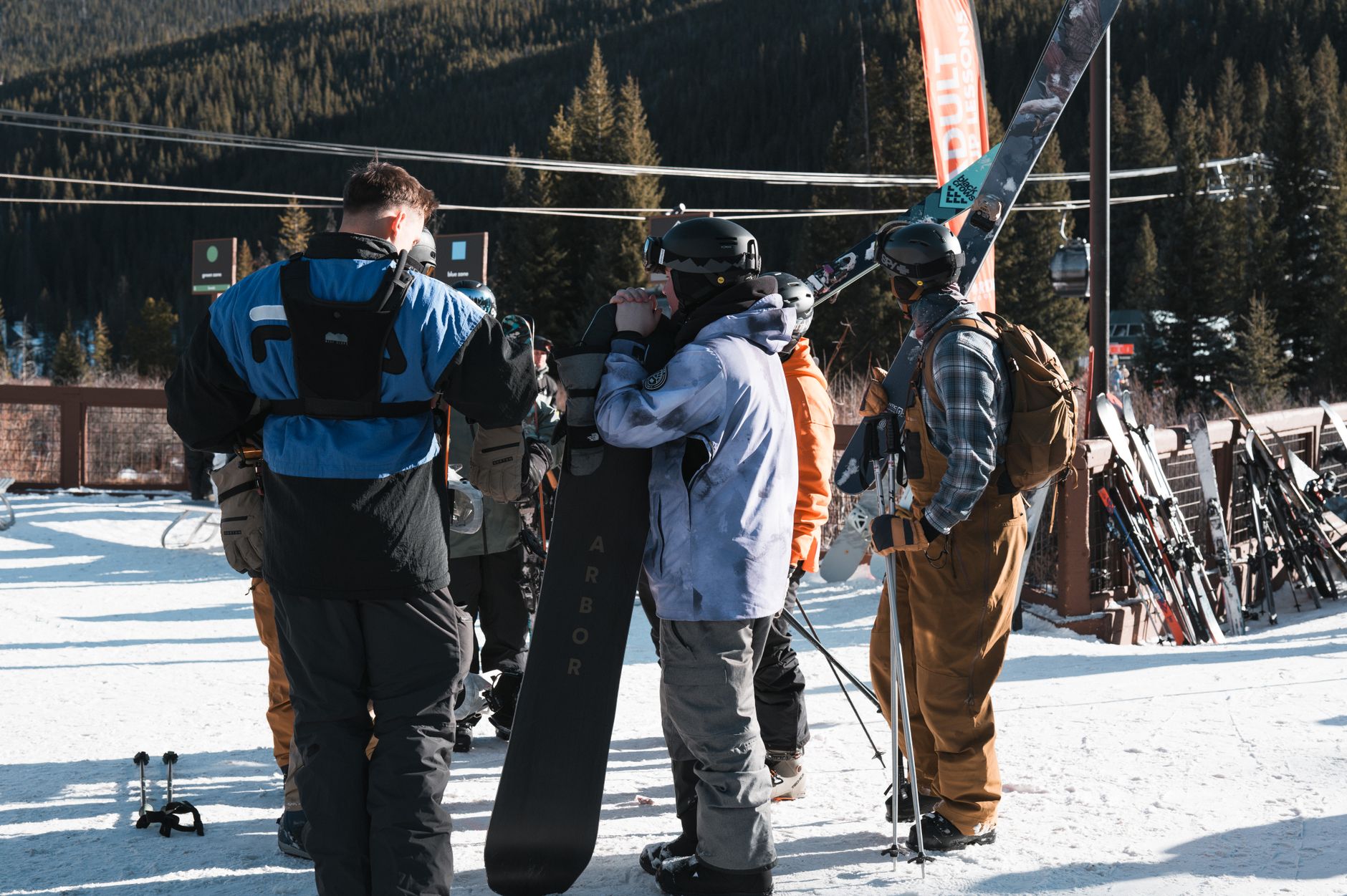
Sports equipment rarely comes unstuck over money. It comes unstuck over a hold that is already full, a registration that was never sent, or a bike that still has its pedals on. The fees are the smaller part of the problem — and, annoyingly, the part that is easiest to look up. So this piece starts with what the airlines mention almost in passing.
The basics of checked and excess baggage — piece versus weight systems, per-kilo charges and the 32 kg ceiling — are covered in excess baggage fees. This one is about everything that won’t fit in a suitcase.
Registering matters more than paying
Lufthansa, Condor and Eurowings all state plainly that sports equipment only travels if there is room in the hold, and easyJet caps large items per booking for the same reason. Registering is therefore not paperwork but a reservation, and the deadlines vary a lot:
Lufthansa wants sports equipment registered as early as possible and no later than 72 hours before departure, online or through a travel agent. Carriage is only guaranteed once it shows as confirmed in your booking — and that explicitly includes skis and snowboards travelling free of charge.
Condor needs registration with the correct dimensions no later than eight hours before departure, via My Booking or your travel agent. Leave it later and you pay more at the airport and risk there being no space at all.
Eurowings accepts registrations online until web check-in closes, again only while there is space in the hold.
easyJet lets you add sports equipment when booking, later in Manage Bookings, or during online check-in; you can also do it at the airport or through customer services, but it costs more there. Online bookings are limited to six large items, and once bought there is no refund (as of July 2026).
Ryanair splits its fees table into two columns: the price on ryanair.com at booking, and the price after booking or at the airport. Add the bike a few days later and you are already on the higher rate.
What the airlines charge in 2026
Condor and Ryanair quote their prices per one-way flight; all figures as of 2026.
Lufthansa publishes no amounts and points you to its baggage calculator instead. The logic: sports equipment can count towards your free allowance if the number of pieces and the weight stay within your travel class — except on Economy Light. If it goes beyond that but stays under 32 kg, sports equipment flat rates apply, which you can also pay at the airport. Golf equipment travels free for HON Circle members, Senators and Star Alliance Gold, except on Basic fares on short and medium haul, Economy Light, and routes to and from the US and Canada. How Lufthansa’s economy fare tiers differ on cabin bags is covered in Lufthansa hand luggage.
Eurowings always charges a supplement: from €50 for bikes, surfboards and sporting firearms, from €30 for skis and snowboards. Adding it at the airport desk may cost extra. It is free for Eurowings credit card holders and their companions, provided the equipment was booked online and both the flight and the add-on were paid with that card.
Condor prices by destination zone and lists online and airport prices separately. For Zone 1 — domestic flights, Italy, Croatia, Austria, Faro, Switzerland, Spain excluding the Canaries, and Czechia — skis cost from €44.99, a bike from €49.99, golf from €54.99 and boards from €59.99. Zone 2 (including Greece, Turkey, Egypt and the Canaries) adds €10 to each. At the airport every one of them costs €120, or €135 on long haul. In Condor Business Class the first piece of sports equipment is free.
Ryanair uses fixed rates: a bike is €60 at booking and €75 afterwards or at the airport; skis €45 / €50; golf €50 / €60; general sports equipment €40 / €45. Surfboards, canoes and kayaks count as bulky items at €60 / €70.
easyJet gives no amounts on its sports equipment page, referring you to its fees table instead; you see the price during booking.
Size and weight: where the limits sit
The airlines differ more here than on price, so if you switch carrier, measure again.
| Airline | Weight per item | Dimensions |
|---|---|---|
| Lufthansa | up to 32 kg | bike 280 cm (H+W+D), golf bag 220 cm, skis 200 cm long, boards 200 or 315 cm long depending on type |
| Eurowings | skis/snowboard up to 32 kg in max. 2 pieces | no individual dimensions on its sports page |
| Condor | up to 30 kg | 200 × 40 × 100 cm or 300 × 40 × 60 cm |
| Ryanair | up to 20 kg, bikes up to 30 kg | – |
| easyJet | small up to 20 kg, large up to 32 kg | – |
Two details that matter in practice. Condor’s dimensions don’t apply on flights operated by its partners Helvetic Airways and German Airways, where smaller aircraft mean 200 × 40 × 80 or 120 × 100 × 80 cm — and anything larger than Condor’s limits isn’t carried at all. On Ryanair, every kilo over 20 (over 30 for a bike) is billed at the excess baggage rate per kilo.
Pooling weight doesn’t work either. easyJet explicitly forbids combining the weight of sports equipment and hold luggage, and Condor requires sports equipment to be packed separately from your other baggage and to contain only sports gear — no clothing. Check-in staff may spot-check and refuse carriage, and if you don’t pack separately, everything is charged at excess baggage rates. Padding the ski bag with jumpers is a bad idea.
Skis and snowboards: when they fly free
On Lufthansa, one set of ski equipment travels free on top of your baggage allowance: one piece with skis or a snowboard, a second with poles, boots and a helmet, up to 200 cm long. The exceptions are flights to and from the US, Mexico and Central America, Basic fares on short and medium haul, and Economy Light. The weight has to stay within your travel class limits.
That is exactly where comparing before you book pays off. Book Basic or Light on a European route and the skis cost extra; from Classic upwards they are included. On Condor, a ski bag in Zone 1 — which includes Austria and Switzerland — costs from €44.99 each way online, on Eurowings from €30, on Ryanair €45.
Bikes: box, pedals, handlebars
On bikes the airlines agree in substance, just with differing precision:
- Packaging. Lufthansa and Ryanair require a bike case or bike bag, or a protective box. Eurowings accepts soft bags and cardboard boxes only with padding and protective inner packing. easyJet allows one bike per box or bag, with nothing else inside.
- Handlebars and pedals. Eurowings: handlebars turned parallel to the frame, pedals and other protruding parts removed. easyJet: handlebars flush with the frame, pedals removed or flush against it.
- Tyres. Eurowings requires reduced tyre pressure.
- E-bikes. Lufthansa, Eurowings, Ryanair and easyJet won’t carry them. Condor takes bikes with electric motors only with the battery removed — and the battery itself cannot travel.
Lufthansa adds a line that saves many a trip if read in advance: packaging cannot be bought at the airport. At Frankfurt there is a way round it all the same. The airport’s baggage service, FGS, offers a transport box for bicycles, in Terminal 1 at baggage reclaim B, belt 11 (the Kofferstelle), daily 08:00 to 19:00. FGS only quotes prices on request by email, so if you are counting on it, ask first.
Golf bags and surfboards
A golf bag is the least complicated piece of sports equipment. At Lufthansa, one bag with clubs, balls and tees plus a pair of shoes counts as a single item up to 220 cm, with everything packed inside the bag. Battery-powered golf trolleys fall under the battery rules.
Boards are trickier because they push against the length limits. Condor always requires boards to be registered with their dimensions and defines an item precisely: one board, one mast, one sail — or for kiteboarding up to two boards, three kites, bar and lines and a wetsuit, all in one bag. Bodyboards are exempt and travel within your free allowance. Eurowings is content with a protective bag for surfboards and bodyboards. Ryanair charges surfboards as bulky items up to 20 kg.
How much you can take into the cabin alongside depends on your fare; the big airlines’ limits are compared in hand luggage sizes by airline.
At the airport: oversize baggage at Frankfurt and Munich
Sports equipment doesn’t go through the machines. Condor states outright that self-service desks can’t be used for it, and Munich Airport sends bulky baggage to your airline’s regular staffed check-in desks.
At Frankfurt, Lufthansa takes ski baggage at oversize desks 301 to 304, between departure halls A and B, and advises being at check-in at least 90 minutes before departure. At Munich, Lufthansa uses desks 425 and 426; the airport itself has bulky baggage counters in Terminal 1, Terminal 2 and the Munich Airport Center near the regular check-in desks, open during check-in and night-before check-in hours.
Driving in? Take a tip from Fraport seriously: drop large bulky items such as a surfboard at your departure terminal first, then drive on to your booked car park. Nobody enjoys a shuttle bus with a bike box, so which Frankfurt Airport car parks sit closest to the terminals and what they charge also decides how the return trip with the bike goes. And if you need to store something before the flight or have the bike case wrapped, where left luggage and lockers are at Frankfurt Airport is set out in an A-to-Z guide.
A worked example: one bike, Frankfurt to Munich
Take a route like Frankfurt–Munich as a yardstick. Condor’s domestic rate for a bike is from €49.99 online and €120 at the desk; Ryanair charges €60 or €75. That is per direction, so double it for the return. The same trip exists by road, and the distance and drive time between Frankfurt and Munich take a minute to check. With two bikes, the journey to the airport and the return, the sums tip quickly. In Munich the next problem is the onward journey: a bike box doesn’t fit every taxi, and what a taxi from Munich Airport into the city costs partly depends on whether you need a bigger car.
What I do before every sports trip
I book the sports equipment in the same transaction as the flight, never later. Then I check that it shows as confirmed in the booking rather than merely requested — on Lufthansa that is the difference between guaranteed and pot luck. I measure the bike case with the wheels and handles on rather than trusting the manufacturer’s figure, and I don’t put a jacket in the ski bag.
On the day I allow an extra half hour, because sports equipment is handed in at a staffed desk rather than a machine. On flights leaving Schengen I often win that time back at the border with an EU passport, thanks to the EasyPASS eGates. In the end sports baggage is less a pricing puzzle than a question of sequence: register, get it confirmed, pack it properly, and be at the right desk early.
Keep reading
Departure & Security
Excess Baggage Fees 2026: What an Overweight Case Really Costs
Excess baggage in 2026: why the same case costs double at the desk, where the 23 kg, 32 kg and 158 cm limits sit — and when repacking or shipping beats paying.
Sophie Bauer24 August 2026
Departure & Security
Flying With a Dog or Cat: Eight Kilos, the Microchip and the Cabin-or-Hold Question
What a dog or cat may weigh in the cabin, the point at which the animal has to travel in the hold, why snub-nosed breeds are excluded, what the EU pet passport actually requires — and where animals are handed over at Frankfurt and Munich.
Sophie Bauer17 September 2026
Departure & Security
British Airways Hand Luggage 2026: Two Bags Included, Even on the Cheapest Fare
British Airways hand luggage 2026: cabin bag and personal item dimensions, why even the Basic fare keeps both pieces, and what applies flying from Frankfurt, Munich and Düsseldorf. As of 2026.
Sophie Bauer27 July 2026
Departure & Security
Electric Toothbrush on a Plane 2026: The Battery Rules for Hand Luggage
Electric toothbrushes, power banks and e-cigarettes in hand luggage: watt-hour limits, loose versus built-in batteries and what happens at security (as of 2026).
Sophie Bauer2 August 2026
Departure & Security
Power Banks on a Plane in 2026: Cabin Bags, Watt-Hours and Which Airlines Ban Using Them
Power banks on a plane in 2026: cabin baggage only, two at most, the 100 and 160 Wh thresholds — and which airlines ban charging on board, from Lufthansa to Ryanair and Wizz Air (as of September 2026).
Sophie Bauer25 September 2026